

I once counted: of the 20 things I love most about Tbilisi, 17 are free. The fortress — free. The courtyards — free. A waterfall in the city centre — free. Sunset from the hill — free. Even the cats lying on the warm stones of the bathhouse district with that "I own this place" expression — free. Before you fly, check the 2026 insurance requirement for Georgia.
When someone says "Tbilisi is expensive," I know exactly what happened: they ate on Shardeni Street (100% markup), took a taxi without Bolt (200% markup) and bought a magnet on Leselidze (300% markup). The real Tbilisi costs whatever you are willing to spend. If you are not willing — here are 12 places the city will not charge you a penny for.
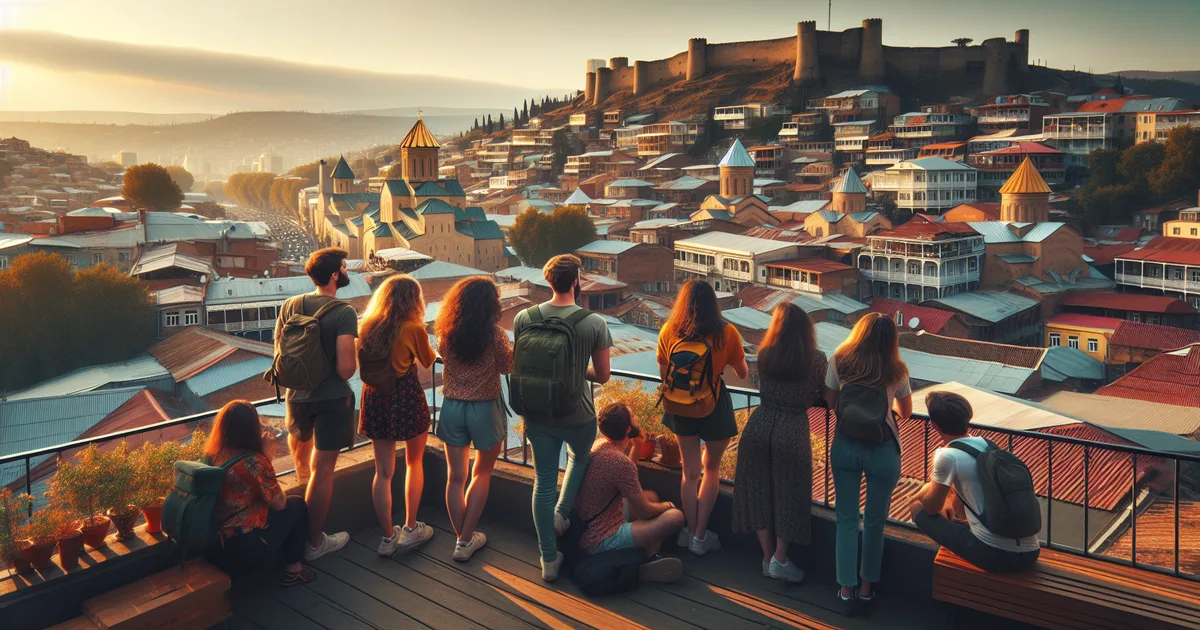
1. Narikala Fortress — 1,600 years, zero lari
A 4th-century fortress on the hill above the city. Walls built by Romans, Arabs, Mongols and Ottomans — every conqueror added a layer, like a pastry of empires. At the top: a panorama of all Tbilisi — river, bridges, domes, minarets.
On foot from the sulphur baths — 15 minutes along a steep path. It is a climb, but the trail is ancient: the people who built these walls walked it. If they could manage in armour, you will manage in trainers.
Best time: Sunset. The city turns golden, then pink, then becomes a sea of lights. And you are standing on a wall that is 1,600 years old, and nobody is charging admission.
I bring tourists here at least twice a week and always walk up from the baths — not to save on the cable car, but because the views along the way are ones you cannot see from the top. Tip: bring water; the last kiosk is at the base.
2. The courtyard-wells — the whole city as a museum
Tbilisi's courtyards are what photographers pay for flights to see. And you — you simply walk through an archway. Any archway. On Leselidze, in Sololaki, on Betlemi.
Inside: a vertical world of cast-iron staircases, wooden balconies, grapevines on the third floor, a grandmother calling across the yard to her neighbour, a cat asleep on the railing. This is not a museum — people live here. But the doors are open, and it is perfectly fine to step in.
I know 15+ courtyards that appear in no guidebook. One has a secret garden on the roof. Another has an inscription from 1920 on the wall. A third has a cat that poses for photographs as if it were paid for the work. (It is not.)
3. Legvtakhevi Gorge — a waterfall in the city centre
Five minutes from the sulphur baths — and you are in a canyon with a waterfall. In a city of two million people. Cliffs, greenery, a bridge, the sound of rushing water. Georgians do not brag about this because for them it is normal — a waterfall in the centre. For everyone else, it is the moment when reality outpaces Instagram.
4. Botanical Garden — almost free (₾1)
₾1 is 25 euro cents. For that you get: waterfalls, a tropical greenhouse, 3,500 plant species, views of Narikala, and 2–3 hours of quiet. In summer, when the Old Town is 38°C, this is all shade and cool air.
Enter from the sulphur baths (lower entrance) or descend from Narikala (upper entrance). The second is more scenic.
5. All churches and cathedrals — free
Tsminda Sameba (Holy Trinity) — the largest Orthodox cathedral in Georgia. The golden dome is visible from everywhere. Inside: marble, icons, overwhelming scale. Free.
Anchiskhati — the oldest church in Tbilisi, 5th century. Small, quiet, smelling of incense and eternity. Free.
Metekhi — on a cliff above the river. Views over the Old Town. Free.
Sioni — the cathedral. It holds the Cross of Saint Nino, woven from grapevine. Free.
Dress code: Covered shoulders and head for women. Scarves are available at the entrance — also free.
6. Dry Bridge — a free open-air museum
You do not have to buy anything (though resisting is difficult). Just walk and look: Soviet medals, Georgian daggers, vinyl records, oil paintings, porcelain cups, someone's medals for the storming of Berlin. Every object is someone's history.
The sellers are a genre in themselves. Conversations with them are part of the free show.
7. Sololaki entrance halls — Paris for nothing
The neighbourhood of the former aristocracy. Walk into the entrance halls (all are open): plasterwork, stained glass, cast-iron banisters, marble staircases. Everything is crumbling — and it is more beautiful for it than if it had been restored. In ten years, half will be demolished or renovated. Right now is the perfect moment.
8. Rustaveli Avenue
1.5 kilometres of boulevard: plane trees, the Opera Theatre, Parliament, the National Museum (outside!), Freedom Square with Saint George on his column. An evening stroll along Rustaveli is a free ritual of the Tbilisi residents.
9. Dezerterka Market — free aromatherapy
A covered market where mountains of spices create a scent that makes your head spin. Churchkhela hangs in garlands. Cheese rises in white pyramids. Honey gleams golden in the comb. You do not have to buy anything — but your body will not let you walk past.
And if you do give in — a lobiani (flatbread with bean filling) for ₾2 will turn a "free" day into an "almost free" one.
In my experience, Dezerterka is the place where tourists lose track of time. I usually give a group 40 minutes and almost always end up needing an hour. Come before 10am — the sellers are calmer, the bargaining is possible, and the spices are freshest from the morning spread.
10. Betlemi Street — a climb with a view
The steepest (in every sense) street in the Old Town. The ascent is strenuous, but at the top there is a view that competes with Narikala — without the cable car queue and without the tourists. The houses lean over you, the balconies nearly touch each other, and you feel as if you are inside a painting.
11. Rike Park and the Bridge of Peace
A riverside park: fountains, benches, views of Metekhi church. The Bridge of Peace flashes LED lights at night, transmitting in Morse code the chemical elements of the human body. A free art object that performs every night.
12. Sunset — from anywhere
Tbilisi sits in a basin surrounded by hills. Sunset is visible from everywhere: from Narikala, from Betlemi, from Mtatsminda, from the bridge. Every evening the city puts on a free show simply because it can.
How to spend a full day in Tbilisi for almost nothing
| Time | What | Cost |
|---|---|---|
| 09:00 | Abanotubani baths district + waterfall | ₾0 |
| 10:00 | Courtyard-wells | ₾0 |
| 11:00 | Narikala Fortress (on foot) | ₾0 |
| 12:00 | Botanical Garden | ₾1 |
| 13:00 | Lobiani at Dezerterka | ₾2 |
| 14:30 | Rustaveli + Dry Bridge | ₾0 |
| 16:00 | Sololaki entrance halls | ₾0 |
| 17:30 | Betlemi Street | ₾0 |
| 18:30 | Rike Park + Bridge of Peace | ₾0 |
| 19:30 | Sunset | ₾0 |
| Total | ₾3 (€1) |
You will have seen more than 80% of tourists who paid 50 times as much. I recommend this exact order — tested on hundreds of tours. Legs are fresh in the morning for the Narikala climb, the market feeds you at midday, and by sunset you know the city and understand exactly where to photograph it from best. The one thing I would add: between Sololaki and Betlemi, step into any open courtyard — that is where the thing you flew here for is waiting.
Free events and festivals in Tbilisi: when to come
Tbilisi is not only a beautiful city — it is also a generous one. Several times a year the city hosts free celebrations where you can spend a full day without a single lari in your pocket.
Tbilisoba — the main city festival (October)
Held on the last weekend of October. The entire Old Town becomes one large fair: street food, craftspeople from across Georgia, concerts on several stages, traditional dances. Entrance is free. Food costs money, but cheaper than usual — lobiani, churchkhela, homemade wine in a plastic cup for ₾3. This is the best day for immersing yourself in Tbilisi if you are visiting in October.
New Wine Festival (April–May)
Georgia has 8,000 years of winemaking history. Every spring Tbilisi hosts a tasting of the new harvest. Some events have paid tasting tickets (from ₾30–50), but the street events, concerts and markets are free. Winemakers from across the country gather in Rike Park and Freedom Square. Key public events are always free.
Orthodox holidays
Tbilisi lives by the Orthodox calendar. Three major celebrations with free public gatherings:
- Giorgoba (23 November) — Saint George's Day, patron saint of Georgia. Processions, concerts near Tsminda Sameba, street food.
- Mariamoba (28 August) — Dormition of the Mother of God. The main service at Metekhi, thousands of people.
- Christmas (7 January) — Alilo: a procession through the city singing carols. A spectacle you will not forget.
Art-Geni (November)
Tbilisi's contemporary art festival. Exhibitions, installations and performances across the city — in galleries, courtyards, abandoned buildings. Some expositions are free. For those interested in contemporary art, this is a European-biennial-level event, only ten times more intimate and alive.
Free outdoor cinema (summer)
From June to September, free open-air film screenings are held periodically in city parks and courtyards. Follow Tbilisi Open Air and Fabrika on Facebook/Instagram — they announce 3–5 days in advance.