
Tbilisi in one day — the optimal itinerary: Abanotubani sulfur baths (09:00), Narikala Fortress and city walls (10:30), Kutaisi courtyards and Bridge of Peace (12:00), lunch with khinkali and wine (14:00), Rustaveli Avenue (16:00), sunset from the cable car (18:30). All walkable plus the cable car — no more than 8 km. Budget: from ₾30–50 per person without a guide, from ₾100 with a private tour. Since 2026 Georgia requires travel insurance for all visitors, so sort it out before the trip.
Is your one day a weekend? If it falls on a Saturday, the markets change the plan — see Saturday in Tbilisi for the weekend version.
One day in Tbilisi covers 8 km on foot through 6 key stops: Abanotubani sulfur baths (09:00, private cabin ₾40-80), Narikala Fortress via cable car (₾2.50 one way, 10:30), Old Town courtyards and Bridge of Peace (12:00), lunch with khinkali and wine (₾20-35 per person, 14:00), Rustaveli Avenue (16:00), and sunset from the Rike Park cable car (18:30). Total budget without a guide: ₾80-150 ($29-55). With a private walking tour: from ₾100 ($34) per person.
09:00 — Abanotubani: The City That Began with Hot Water
5th century. King Vakhtang Gorgasali was hunting with a falcon. The falcon caught a pheasant. Both fell into a hot spring. Both were cooked. The king tasted the water and said: "Hot water straight from the ground? We build a city here." "Tbili" in Georgian means "warm." Tbilisi — "the warm place."
The domed brick bathhouses are exactly what you see on every postcard. In the morning it's quiet here, smelling of sulfur — not unpleasant, more like a hot mineral spring. By 11:00 the tour buses will arrive. By then you'll be long gone.
10:00 — The Courtyard Alleyways
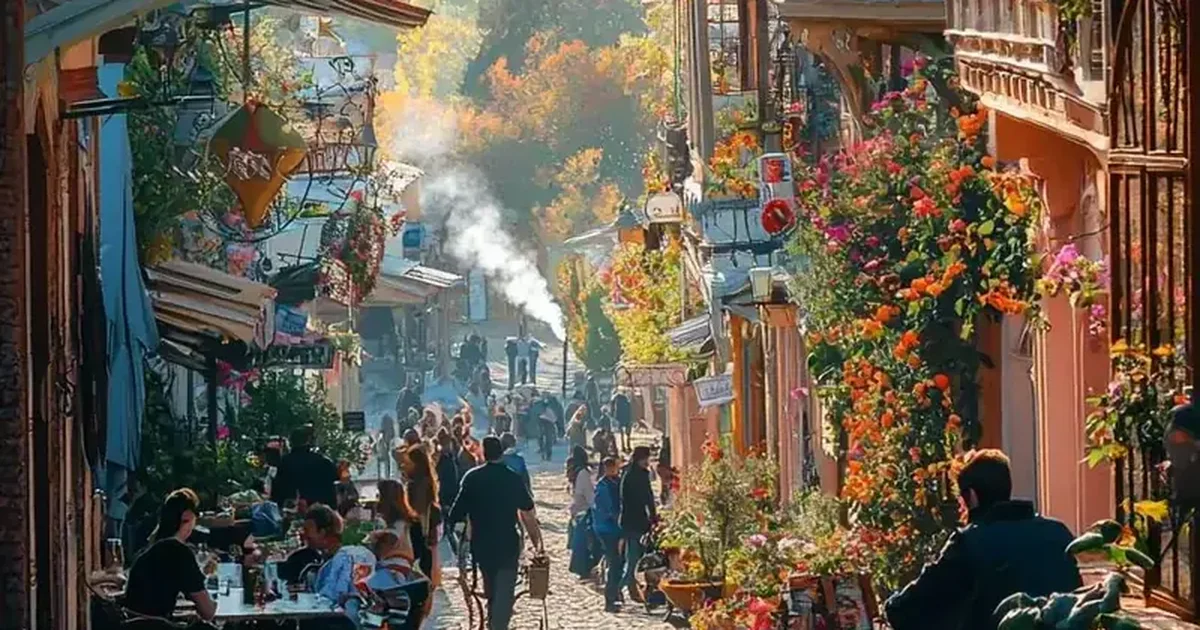
A Tbilisi courtyard is a vertical world. You step through an arch off the street. In front of you — a well of walls rising upward. Cast-iron staircases spiral up. Real grapevines hang from balconies — harvested in autumn to make wine. Laundry stretches between the walls. Somewhere a radio plays. That same autumn harvest — rtveli — is celebrated across the city at Tbilisoba, the city festival.
This is not a museum. People live here. And the doors are always open — in Tbilisi, a closed door is considered rude. Come in. Look around. Take photos. If you're lucky, someone will invite you in for coffee. If you're very lucky — for wine.
11:30 — Narikala: The View That Explains Everything
Two ways up: cable car from Rike Park (₾5, 2 minutes) or on foot from the baths (15 minutes, steep climb).
At the top — ruins of a 4th-century fortress and a view that Google Maps cannot convey. The Kura River splits the city in two. To the left — old Tbilisi with balconies and domes. To the right — the new city with the Presidential Palace, which locals call "the glass egg."
12:30 — Lunch
The Tbilisi rule: the worse a place looks, the better the food. No sign on the door, plastic chairs, a TV showing football — you've found the right place. Don't eat on Shardeni Street — it's beautiful, but prices are double and khachapuri quality is half.
- Khinkali. Eat with your hands. Hold the knot, bite the side, drink the broth, then eat the dumpling. Never with a fork.
- Imeruli khachapuri. Round, sealed, filled with cheese. ₾6–8.
- Lobio. Bean stew in a clay pot with mchadi cornbread.
14:00 — Bridge of Peace → Metekhi → Rustaveli
The Bridge of Peace. Tbilisians call it "Always Ultra" (for its shape). At night it's lit up, with LEDs blinking out the chemical elements of the human body in Morse code.
Metekhi — a 12th-century church perched on a cliff with an equestrian statue of Vakhtang Gorgasali. Rustaveli — the main avenue. If you have 40 minutes, step into the National Museum (₾15): the Colchian Gold hall holds jewelry from the third millennium BC. Five. Thousand. Years.
16:00 — Dry Bridge Market
A flea market open every day. Soviet medals and pins. Georgian daggers. Wine horns. Oil paintings. Silverware. Bargain — the first price quoted is 2–3 times the real one. Walk away and see what happens. Sellers take it personally if you don't haggle.
19:00 — Dinner
Head to Agmashenebeli Avenue. This was the Armenian quarter — not touristy, this is where Tbilisians actually eat.
- Adjarian khachapuri — a bread boat filled with egg and butter. Tear off the edge, dip, eat.
- Mtsvadi — meat grilled over grapevine wood, not charcoal.
- Wine. A bottle of Saperavi — ₾15–30. Georgians have been making it for 8,000 years.
We had one day in Tbilisi — a layover. We thought we wouldn't have time for anything. Timur put together an itinerary perfectly tailored to us: baths in the morning, courtyards, Narikala, khinkali — and by evening we knew we wanted to come back. We ended up rescheduling our return flight three days later. Tbilisi pulls you in.
21:30 — The Finale
Option A: Sulfur baths. ₾50–150 for a private room for an hour. Hot sulfurous water, marble slabs, and keifi — the Georgian art of doing absolutely nothing.
Option B: Night walk. Return to the Bridge of Peace. The fortress is lit up, the river shimmers, music drifts from the courtyards. Or — join a night tour of Tbilisi with a guide: bars, courtyards, views.
Option C: Both. Baths until 23:00, then the night city. Tbilisi doesn't sleep until two.
Getting Around Tbilisi
Tbilisi is compact — most spots on this itinerary are 10–15 minutes on foot from each other. But it's useful to know your transport options. If you want to see more in a single day than any guidebook shows, a hidden Tbilisi tour covers 4–5 hours of places that are genuinely hard to find on your own.
Metro — runs from 06:00 to midnight. Costs ₾1. You need a "Metro" card, sold at any turnstile (card + first ride = ₾2). Key stations for this itinerary: Avlabari (near the baths and Metekhi), Rustaveli (the avenue and museum), Station Square (Dry Bridge Market).
Bolt — the best taxi option. Works like any ride-hailing app, accepts cards and cash. A ride across the center costs ₾5–10. Airport — around ₾20.
On foot — the best way to explore the old city. GPS can be unreliable on the narrow lanes of Sololaki. Navigate by the bath domes and Narikala — visible from almost anywhere.
Cable car from Rike Park up to Narikala — ₾5 one way, 2 minutes with a river view. Operates 10:00–22:00.
Essential Tips Before Your Visit
A few things that save money and hassle on your first day.
Money
Georgian lari (₾). Exchange rate to euro — around ₾3 per €1. ATMs everywhere, fees are low. Most cafes and shops accept cards; at markets (Dezerter Bazaar, Dry Bridge) cash is better. Exchange euros or dollars at exchange offices on Rustaveli or at the airport (slightly worse rates).
Food and Tipping
Tips are not mandatory, but 10% is appreciated. In many restaurants it's already included in the bill — check for a "service charge" line. Khinkali are counted by the piece: a normal portion is 6–10. The knot on top of a khinkali is not eaten — that's how the waiter knows how many you've had.
Language
The Georgian alphabet is unreadable to outsiders, but it's not a problem. In tourist areas everything is duplicated in English. Gestures and smiles always work in cafes and shops.
Safety
Tbilisi ranks in the top 10 safest cities for tourists in Europe. The main annoyances are pickpockets at markets (Dezerter Bazaar) and inflated prices for tourists (mainly on Shardeni and at tourist cafes). Nothing dangerous — just keep your phone in your pocket at the market.
Shopping and Souvenirs
What to bring home from Tbilisi: wine (₾10–30 a bottle at the supermarket, best selection at Carrefour or Wine Factory), churchkhela (₾5–10), homemade adjika (₾5–8), Georgian spices — utskho-suneli, khmeli-suneli (₾3–5). Souvenirs with traditional patterns are 2–3 times cheaper at Dry Bridge than on Shardeni.
Budget for One Day in Tbilisi
| Item | Cost |
|---|---|
| Cable car to Narikala | ₾5 |
| National Museum | ₾15 |
| Lunch | ₾20–30 |
| Souvenirs (Dry Bridge) | ₾20–50 |
| Coffee / drinks | ₾5–10 |
| Dinner with wine | ₾50–70 |
| Sulfur baths (optional) | ₾50–100 |
| Total | ₾165–280 (€50–85) |