
I am Timur, and I have been running tours in Tbilisi since 2023. Over that time I have developed a clear list of places that are worth your time — and places that are overrated. This guide contains only the former. I know every spot personally: the best time to visit, the entry fee, where to find the best photo angle, and what secret lies behind the facade. Entry rule since 2026: every visitor needs health cover — see our Georgia travel insurance guide.
Tbilisi is a city that reveals itself in layers. Tourists usually see the first layer: Narikala, the bathhouses, the Bridge of Peace. But the real Tbilisi is the courtyards of Sololaki, the rooftops of the Old Town, the wine cellars of Avlabari, and the quiet streets of Vera. That is where I take my guests, and that is what this guide is about.
Prefer to see it with a local? Here's how a guided Tbilisi tour works.
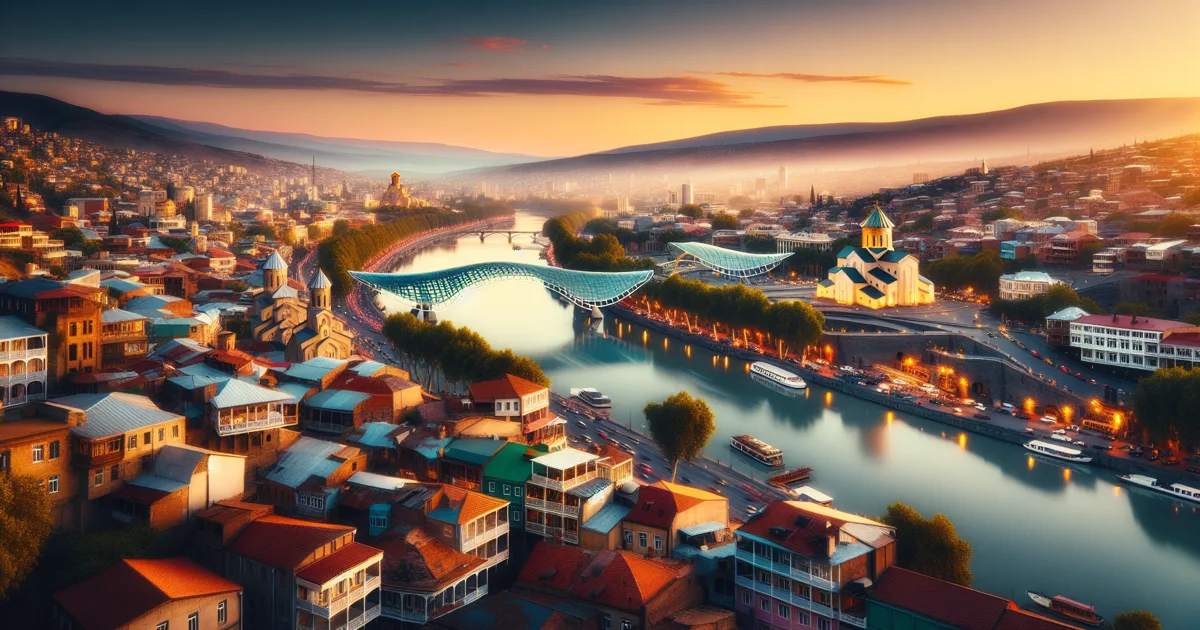
Old Town (Kala): 10 Places
Tbilisi's Old Town is the area between Narikala Fortress and Meidan Square. Narrow winding streets, carved wooden balconies, the scent of fresh bread from a tone oven, and cats on every corner. You can get lost here for an entire day — and that is the best thing that can happen to you in Tbilisi.
1. Narikala Fortress
A 4th-century fortress on the hill above the city — the best viewpoint in Tbilisi. You can walk up (a steep 15-minute climb from Abanotubani) or take the cable car from Rike Park (7 GEL return, operates 11:00–23:00). Entry to the fortress is free. Inside you will find ruined walls and the statue of Kartlis Deda (Mother of Georgia) holding a sword and a cup of wine.
My tip: arrive 30 minutes before sunset. The sun drops behind the mountains, the city below lights up — it is one of those moments that alone justifies a trip to Tbilisi. During the day it is hot up here with nowhere to hide from the sun.
2. Sulphur Baths (Abanotubani)
The sulphur bath district is Tbilisi's calling card. Brick domes of the bathhouses have stood here since the 17th century. Inside — hot sulphurous water from natural springs. The smell of sulphur is sharp, but you get used to it within 2 minutes. After the bath, your skin feels like silk.
Where to go: "Orbeliani" (the blue facade with minarets) is the most photogenic from outside, but nothing special inside. For a first visit I recommend the Royal Bath — 80–120 GEL for a private room for 2–4 people, 1 hour. The communal hall costs 5–10 GEL per person. Open 08:00–00:00. Detailed bathhouse guide →
3. Leghvtakhevi Waterfall
A waterfall right in the city centre — behind the sulphur baths, in a gorge. About 20 metres tall. The path to the waterfall runs through a picturesque canyon with brick walls. Entry is free, open 24 hours. Best in spring — after rain the waterfall is powerful. In summer it can dry to a thin trickle.
My tip: continue the path past the waterfall — it leads into the Botanical Garden (entry 4 GEL). This is the back entrance that not all tourists know about.
4. Meidan Square
The main square of the Old Town. All tourist routes branch out from here. Around the perimeter — restaurants (expensive and touristy — I do not recommend eating here), currency exchanges (rates are fair), souvenir shops. The square itself is small, 5 minutes to look around. But as a starting point it is ideal.
5. Shardeni Street
A pedestrian street with bars and restaurants. During the day — empty and unremarkable. In the evening — atmosphere: live music from every bar, wine for 6 GEL a glass, crowds of people. If you want to sit with a drink and people-watch — this is the place. But dining here is expensive and not necessarily great — prices are 30–40% higher than two blocks away.
6. Sioni Cathedral
The main historical cathedral of Tbilisi (6th–7th century). The cross of St Nino — who brought Christianity to Georgia — was once kept here. Entry is free. Inside it is dark, intimate, with ancient frescoes. Open 08:00–20:00. Dress code: covered shoulders and knees. Free scarves are available at the entrance.
My tip: step into the cathedral courtyard — it is quiet, with benches and old trees. The perfect place to rest in the middle of the busy Old Town.
7. Bridge of Peace
A pedestrian glass bridge over the Kura River, built in 2010 by an Italian architect. It connects the Old Town with Rike Park. During the day — just a bridge. In the evening (after 20:00) — a light show: thousands of LEDs blink in a specific rhythm. It is free and beautiful.
From the bridge you get an excellent view of Narikala, the Presidential Palace, and the modern concert hall. The shot "bridge + Narikala in the background" is a must-have photo.
8. Metekhi Church
A 13th-century church on a cliff above the Kura — one of Tbilisi's symbols. Beside it stands the equestrian statue of King Vakhtang Gorgasali (the city's founder). From here you get the best view of the Old Town from below — the fortress, the baths, the balconies. Entry to the church is free. The climb from the river takes 5 minutes up a staircase.
9. Kote Abkhazi Street (formerly Leselidze)
The main shopping street of the Old Town. Here you will find souvenir shops, wine stores, bakeries (shotis-puri bread from a tone oven — 1.5 GEL), antique shops. It stretches from Meidan to Freedom Square. Pleasant to stroll. For buying — compare prices; souvenir shops mark things up 50–100% compared to the Dezerter Market.
My tip: duck into the courtyards. Gates along Abkhazi lead to interior courtyards with carved balconies, grapevines, and the scent of mandarins. This is the real Tbilisi — not the one on postcards.
10. Caravanserai
A former 19th-century trading courtyard on Sioni Street. Today it houses the restaurant "Chimney Sweep" and several shops. The architecture features a two-storey courtyard with arched galleries. Entry is free — just walk through the arch. A beautiful spot for photos and for understanding what Silk Road trade looked like.
Want to see the Old Town with a local guide?
Tbilisi walking tour — all the highlights + secret courtyards and rooftops in 4 hours
Avlabari and the Left Bank: 7 Places
Avlabari is the district on the left bank of the Kura, across the bridge from the Old Town. It was once home to the Armenian community; today it is a cultural mix. The neighbourhood is changing fast — trendy coffee shops and galleries are appearing — but the spirit of old Tbilisi is still alive here. It is quieter and more authentic than the Old Town.
11. Holy Trinity Cathedral (Tsminda Sameba)
Georgia's main cathedral. Built in 2004, but it looks centuries older. Enormous — 101 metres tall, the third-tallest Orthodox cathedral in the world. The grounds are a well-kept park with fountains. Entry is free. Inside — golden frescoes, icons, silence.
Opening hours: 08:00–21:00 daily. Strict dress code: women need a headscarf and skirt (provided at the entrance); men need long trousers. Getting there: a 10-minute uphill walk from Avlabari Square.
12. Rike Park
A modern park on the left bank of the Kura, between the Bridge of Peace and Metekhi. Here the cable car to Narikala starts (7 GEL), you will find odd tube-shaped buildings (a never-opened theatre), a playground, and a public piano. Fountains run in summer. The park is beautifully lit in the evening.
My tip: sit on a bench facing the Old Town after sunset. The view of illuminated Narikala and the bridge is one of the best free evening views in the city.
13. Avlabari Square
A transport hub with character. Here you will find the "Avlabari" metro station, several restaurants and cafes. The main attraction is the "Mimino" sculpture (the characters from the beloved Soviet film). Everyone takes photos. Nearby — a viewpoint overlooking the Old Town and the Kura. Walk to the edge of the car park by the sculpture — the view is spectacular and free.
14. "New Tiflis" District
The blocks around Ketevan Tsamtavadze Street (formerly Kalinina). Here you will find Italian-style courtyards, crumbling 19th-century mansions, small art galleries. The area has not yet been polished by renovation — it is raw, real, with the smell of old wood and cats in every stairwell. Almost no tourists. Visit during the day to see the light in the courtyards.
15. Dezerter Market (Dezertirka)
Tbilisi's main market — between Station Square metro and the train station. Enormous, chaotic, loud. Here you will find spices (Svan salt 3 GEL, khmeli-suneli 2 GEL), churchkhela (2–4 GEL), cheese (suluguni 12–15 GEL/kg), wine (homemade in plastic bottles 5–8 GEL/litre), tkemali sauce (3–5 GEL). Open 07:00–17:00, closed Mondays.
My tip: arrive before 10:00 — fresher produce, fewer people. Taste before buying — vendors will let you sample everything. Do not miss the second floor — clothing and kitchenware at absurd prices. Keep your wallet in your front pocket.
16. Dry Bridge (Flea Market)
A bridge over the old Kura riverbed, turned into a flea market. Open daily 10:00–17:00 (in rain, not all vendors come). You will find Soviet badges (1–5 GEL), daggers (50–200 GEL), drinking horns (20–80 GEL), vinyl records (3–10 GEL), antique carpets, silver. Bargaining is expected — 20–30% off is realistic.
My tip: look for Soviet Christmas ornaments (3–10 GEL), copper coffee cups (10–20 GEL), and old maps of Tiflis (15–40 GEL). These are the best souvenirs from Tbilisi — unique and with history.
17. National Gallery (Blue Gallery)
Located on Rustaveli Avenue, but I group it with the left bank by spirit. Here you will find the collection of Niko Pirosmani (Georgia's most famous primitivist painter), along with Lado Gudiashvili and other Georgian masters. Entry — 15 GEL. Open 10:00–17:00, closed Mondays. Allow 1–1.5 hours.
Mtatsminda and Rustaveli: 6 Places
Mtatsminda is the mountain above Tbilisi and the neighbourhood at its foot. Rustaveli Avenue is the city's main street: theatres, museums, parliament. This district is the "grand" face of Tbilisi: wide boulevards, mansions, cultural life. For the collections, see the best museums in Tbilisi; for how the city came to be, read the history of Tbilisi.
18. Mtatsminda Park and Funicular
A park at the summit of Mount Mtatsminda (770 m). Get there by funicular (lower station on Chonkadze Street, 17 GEL return, operates 10:00–01:00). At the top — an amusement park (retro-Soviet style), cafes, a viewing platform, and the TV tower. The view over all of Tbilisi is the best in the city. On a clear day you can see Mount Kazbek.
My tip: go up in the evening — the illuminated city from above is more impressive than during the day. Rides operate until 23:00 (Ferris wheel — 10 GEL). You can simply stroll through the park for free without entering the amusement zone.
19. Pantheon of Writers (Mtatsminda)
A cemetery on the slope of Mtatsminda where Georgia's greatest writers, poets, and public figures are buried. Here you will find the grave of Alexander Griboyedov and his wife Nino Chavchavadze. Entry is free. A quiet spot with a view of the city. A 10-minute walk up from the funicular station.
20. Rustaveli Avenue
Tbilisi's central avenue, 1.5 km long — from Freedom Square to Rustaveli Square. On both sides — theatres (Rustaveli, Opera), museums, parliament, the Marriott hotel, cinemas. Wide pavements, shade trees. Best for walking in the morning or evening (hot during summer days).
Do not miss: the Parliament building (Soviet modernism), the Rustaveli cinema (1930s Art Deco), the Kashveti Church (across from parliament, free entry — beautiful Lado Gudiashvili frescoes inside).
21. Georgian National Museum
Rustaveli Avenue 3. The country's main museum: Colchian gold (4th–3rd millennium BC), Dmanisi skulls (1.8 million years old — the earliest humans found outside Africa), and the Soviet Occupation exhibit (a separate floor). Entry — 15 GEL. Open 10:00–18:00, closed Mondays. Allow at least 2 hours.
My tip: start with the Treasury Hall — the Colchian gold is staggering. Then the Dmanisi hall. The Soviet floor is heavy but essential for understanding the country.
22. Freedom Square
A round square with a column topped by a golden St George statue. This is where Rustaveli ends and the Old Town begins. Around the perimeter — city hall, banks, hotels. The square itself is a transport hub (metro "Tavisuplebis Moedani"). Not a place for lingering, but an important landmark and a good starting point for a walk.
23. Fabrika
A former Soviet sewing factory converted into a hostel + coworking + courtyard with bars and cafes. Address: Ninoshvili Street 8 (Mtatsminda area). Entry is free — just walk into the courtyard. Here you will find 10+ bars and cafes, a bookshop, a barbershop, and a tattoo studio. On weekend evenings — DJs and parties. The crowd is 25–35 year-olds, expats and local creatives.
My tip: come on a Friday after 21:00 — peak atmosphere. Try the cocktails at "Alcatraz" (inside Fabrika) — 15–25 GEL per cocktail, world-class bartenders.
Vera and Sololaki: 6 Places
Vera is a quiet residential neighbourhood west of Rustaveli. Sololaki sits between Rustaveli and Narikala. Both represent the "deep" Tbilisi: cobblestone streets, Art Nouveau facades, basement cafes, artists' studios. Locals live here — tourists rarely stay in this area.
24. Vera's Streets
Vera is a grid of quiet streets with two- and three-storey houses from the early 20th century. Key streets: Barnovi, Tabidze, Tazirishvili. Here you will find third-wave coffee shops (Coffee Lab, Prospero's Books), wine bars (Vino Underground, g.Vino), independent shops. Good for walking at any time. Especially lovely in the early morning when cafes are just opening and the streets are empty.
My tip: Irakli Abashidze Street is Tbilisi's "restaurant mile." Over 20 establishments in 300 metres. Quality is higher and prices 20% lower than the Old Town. My favourite — "Shavi Lomi" (Zandukeli Street 28): Georgian author cuisine, lunch for two — 50–70 GEL with wine.
25. Agmashenebeli Avenue
The pedestrian section (from Marjanishvili Square to Theatre Square) is a "second Rustaveli" without the pomp. Restored 19th-century facades, street cafes, shops. Locals consider this the "real" Tbilisi — fewer tourists, more life. On weekend evenings — street musicians.
Do not miss: Marjanishvili Theatre (beautiful facade), Keramika cafe (Agmashenebeli 150, breakfasts 8–15 GEL), the market on Agladze Street (fruit, cheese, homemade wine).
26. Sololaki — Rooftops and Balconies
Sololaki lies between Rustaveli and Narikala Fortress. The main street is Asatiani. Here you will find Tbilisi's most beautiful houses: carved wooden balconies, stained-glass windows, wrought-iron railings. Many buildings are crumbling — that is part of the charm and simultaneously the tragedy of the city.
My tip: walk up Botanikuri Street to the very end — it connects to the trail up to Narikala. Along the way — dozens of photogenic courtyards. Peek through open gates — Georgians do not mind. Just smile and say "gamarjoba."
27. Synagogue and Armenian Church
In Sololaki you will find a unique cluster: the Great Synagogue (Leselidze Street 47), the Armenian Surb Gevork Church (Samgebro Street 5), and the Georgian Sioni Cathedral — all within 200 metres of each other. All are active, all have free entry. This is a rare example of the religious tolerance Tbilisi has been known for across centuries.
28. Chaikhana Cafe and Sololaki's Basements
Hidden in the basements of Sololaki houses are tiny establishments: tea rooms, wine bars, art studios. They have no signage — look for chalk writing on walls or simply descend into basements. "Chaikhana" (Makashvili Street 4) — tea, hookah, rugs on the floor, 5–10 GEL per pot. Open until 01:00.
29. Tamada Monument
A bronze sculpture of a man holding a drinking horn (Ioane Shavteli Street, Sololaki). It is a replica of a 7th-century BC gold figurine found during excavations. Small and easy to miss, but symbolic — wine and toasts have been part of Georgian culture for 2,700 years. Look for it on a building wall — easy to walk past without a guide.
Saburtalo and Vake: 5 Places
Saburtalo and Vake are residential neighbourhoods north and west of the centre. Tourists rarely venture here, but this is where the parks, universities, and "non-touristy" Tbilisi live. If you are in the city for more than 3 days — definitely make the trip.
30. Vake Park
A sprawling park on a hill (entrance from Chavchavadze Avenue). Alleys, fountains, the Unknown Soldier memorial at the top. There is a cable car (2 GEL) to the upper section — Turtle Lake (Kus Tba). The park is a 30–40 minute walk or a Bolt ride from the centre (5–7 GEL). Ideal for a morning run or a picnic. Locals come with wine and cheese at sunset.
31. Turtle Lake (Kus Tba)
A small lake on the hill above Vake. Get there by cable car from Vake Park (2 GEL) or on foot (25 minutes from the upper avenue). Around the lake — a walking path (15 minutes to circle), cafes, loungers in summer. The water is green; the brave swim in it. The real draw is the view over Tbilisi from above. Few tourists. Open year-round.
32. Tbilisi State University (TSU)
The main building is on Chavchavadze Avenue 1. A monumental Soviet structure from the 1930s with columns. The campus is open for walks. Interesting as an example of Stalinist architecture. Nearby — bookshops, student cafes (lunch 8–12 GEL), a park. Not a must-see, but if you are passing by — worth a look.
33. Open Air Ethnographic Museum
On the hillside above Turtle Lake. Over 70 traditional houses from different regions of Georgia: Svan towers, Kakhetian marani (wine cellars), highland dwellings. The grounds cover 52 hectares. Entry — 7 GEL. Open 10:00–18:00, closed Mondays. Allow 2–3 hours. Getting there — on foot or by taxi only.
My tip: visit on a weekday — weekends bring local picnickers. Bring water and comfortable shoes — the paths are steep with little shade.
34. Saburtalo — Everyday Life
If you want to see how Tbilisi residents actually live (rather than how they appear to tourists) — come to Saburtalo. Here you will find Soviet apartment blocks, small shops, markets, shawarma for 5 GEL, and not a single tourist. Metro stations "Delisi" or "Medical University." Not a classic attraction — but if you want to understand the city, spend a lunchtime here.
Around Tbilisi: 6 Places
These places are 20–60 minutes from the centre. Each can be seen in half a day, or you can combine them into day trips from Tbilisi with a guide.
35. Mtskheta — the Ancient Capital
20 km from Tbilisi (20–30 minutes by car). Georgia's former capital (until the 5th century). Key sites: Svetitskhoveli Cathedral (11th century, free entry), Jvari Monastery (6th century, on a hilltop — the best view of the confluence of the Kura and Aragvi rivers). Marshrutka from Didube metro — 2 GEL, every 15 minutes. Bolt — 15–20 GEL one way.
My tip: Jvari and Svetitskhoveli are different locations. The marshrutka does not go to Jvari — you need a taxi (10 GEL from Mtskheta). Or take a guided tour to Mtskheta — everything included, 3 hours. A visit to Georgia is incomplete without Mtskheta.
36. Chronicles of Georgia
A monument on a hill near the Tbilisi Sea (15 km from the centre). 16 colossal columns, 35 metres tall, with reliefs depicting Georgian history. Conceived as a "Georgian Stonehenge" — never completed, but the scale is impressive. Entry is free, open 24 hours. Getting there — only by taxi (10–15 GEL from the centre).
My tip: come at sunset — the columns against an orange sky with the Tbilisi Sea behind them look epic. Nobody around — the site is not heavily promoted. Combine with the Tbilisi Sea (swimming in summer, cafes on the shore).
37. Tbilisi Reservoir (Tbilisi Sea)
An artificial lake 15 km east of the centre. In summer — beaches, cafes, boat hire. The water is clean and swimmable. Public beach entry is free. Club beaches — 20–40 GEL (lounger, umbrella, bar). Bolt from the centre — 12–18 GEL. On summer weekends — queues for taxis back, book in advance.
38. Botanical Garden
Technically within city limits, but it feels like a countryside walk. 128 hectares of greenery, waterfalls, footbridges, trails. Entry — 4 GEL. Main entrance — from the Leghvtakhevi gorge (behind the sulphur baths) or from above (from Narikala Fortress). Open 09:00–19:00 in summer, 09:00–17:00 in winter. Allow at least 3 hours for a full visit.
My tip: enter from below (from Leghvtakhevi), climb the trail to the upper waterfall, exit at the top through Narikala. This creates a logical route with no backtracking. Bring water — there is nowhere to buy it inside.
39. Turtle Lake and the Health Trail
From Turtle Lake (Kus Tba) a trail leads to Mount Mtatsminda — 6 km through forest. The trail is marked, not difficult, but with elevation gain. Takes 2–3 hours. This is the best way to combine nature and city views. The finish is at Mtatsminda Park, from where you can descend by funicular. Bring water and sunscreen.
40. David Gareja Monastery
90 km from Tbilisi (1.5 hours by car). A 6th-century cave monastery in a semi-desert landscape on the border with Azerbaijan. A unique place: frescoes in caves, views over an endless steppe, a feeling of being at the edge of the world. No public transport — only with a guide or a rental car.
My tip: only worth the trip in good weather (April–June, September–October). Summer brings extreme heat (40+); winter means mud and closed trails. The climb to the upper monastery takes 20 minutes up a steep slope. Comfortable shoes are a must. Best done as a day trip from Tbilisi with a transfer.
Practical Tips
Getting between places
The Old Town, Avlabari, and Sololaki are all walkable. Distances are short: from Meidan to the Bridge of Peace — 5 minutes. From the Bridge of Peace to Avlabari — 10 minutes. From Rustaveli to Vera — 10 minutes. Between neighbourhoods — Bolt (3–7 GEL). Metro — for trips to Didube (market), Samgori, and Saburtalo.
Best times for each area
| Time of Day | Best Places | Why |
|---|---|---|
| Morning (08:00–11:00) | Dezerter Market, Sololaki, Botanical Garden | No crowds, fresh produce, morning light for photos |
| Midday (11:00–16:00) | Museums, Mtskheta, Sameba | Too hot for streets; better indoors or out of town |
| Evening (16:00–20:00) | Narikala, Mtatsminda, Vera | Golden light, cooler air, best views |
| Night (20:00+) | Bridge of Peace, Shardeni, Fabrika | Illuminations, bars, atmosphere |
Budget for attractions
Most places in Tbilisi are free. Paid admissions over 5 days will total 80–100 GEL per person at most:
- Cable car — 7 GEL (return)
- Mtatsminda funicular — 17 GEL (return)
- Sulphur baths (private room) — 80–120 GEL for 2–4 people
- National Museum — 15 GEL
- Botanical Garden — 4 GEL
- Ethnographic Museum — 7 GEL
- Gallery (Pirosmani) — 15 GEL
What to see in Tbilisi in the evening
Tbilisi after dark is a separate experience. Narikala Fortress is illuminated, the Bridge of Peace shimmers, the entire Old Town glows in warm yellow light. Route: Bridge of Peace → Rike Park (view of the lit-up city) → cable car to Narikala (operates until 23:00) → walk down through the bathhouse district → Shardeni → dinner. The full night tour of Tbilisi is 3 hours with a guide, including secret rooftops and hidden viewpoints.
What to see in Tbilisi in 1 day
If time is very short: Meidan → Abanotubani (bath photos) → Leghvtakhevi Waterfall → Narikala (cable car) → descent to Metekhi → Bridge of Peace → lunch on Abkhazi → Freedom Square → Rustaveli (walk to the end) → evening in Vera. That is 6–8 hours of walking with stops. With a guide — faster and more enriching.
What to see in Tbilisi in 3 days
Day 1 — the entire Old Town (places 1–10 from this list). Day 2 — Mtatsminda in the morning + Rustaveli + Vera + Fabrika in the evening. Day 3 — Mtskheta (half day) + Dry Bridge + Dezerter Market + farewell dinner in Vera. Three days is the minimum to actually feel the city rather than rush through it.
Need a private tour in Georgia?
12 routes, groups up to 7 people, hotel pickup. Timur shows you the city from the inside — courtyards, rooftops, cellars, and stories.
What to see near Tbilisi
If you have already seen everything in Tbilisi — even more powerful experiences await outside the city. Kakheti (1.5 hours) — vineyards, tastings, Sighnaghi. Kazbegi (3 hours) — mountains, Gergeti Trinity Church, the Georgian Military Highway. Mtskheta (30 minutes) — two UNESCO-listed temples. All are available as day trips from Tbilisi with return to the city by evening.