
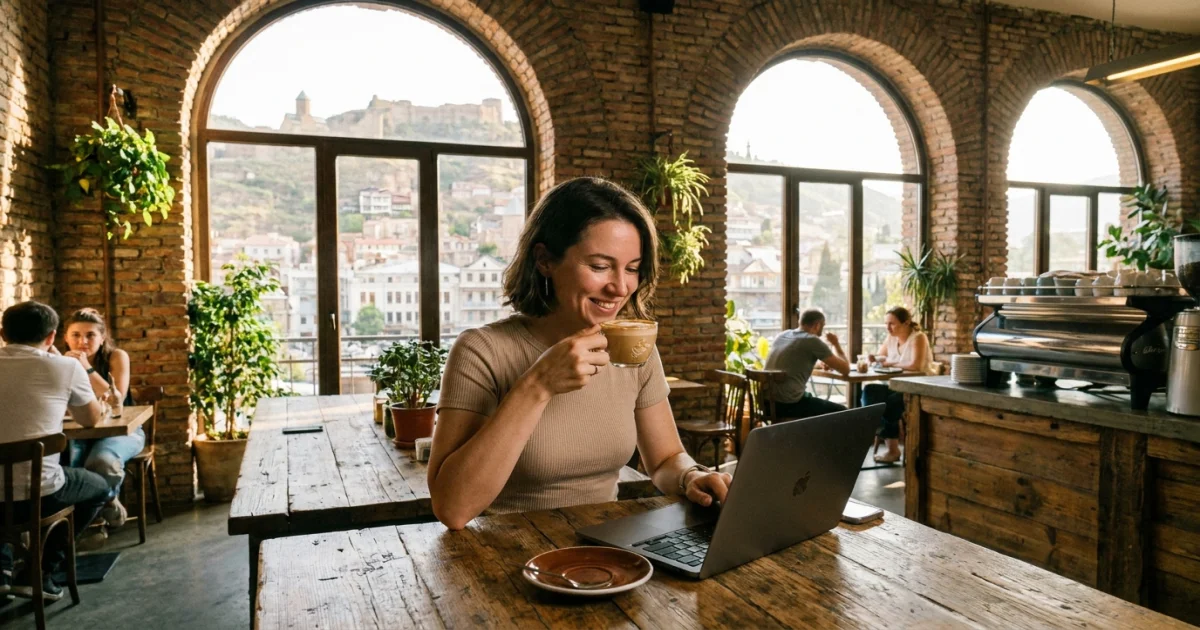
Why Tbilisi for Remote Work in 2026
If you've been researching where to base yourself as a remote worker, Tbilisi keeps coming up — and there are specific reasons for that, not just vague talk about "vibes". I've hosted hundreds of nomads on city orientation tours over the past three years, and the ones who come for two weeks and stay six months always point to the same combination of factors.
Compared to the classic nomad circuit — Lisbon, Bali, Chiang Mai, Mexico City — Tbilisi delivers lower costs with infrastructure that genuinely supports remote work. The city has invested heavily in fiber optic networks, and the result is that internet complaints from remote workers here are nearly nonexistent, which is remarkable at this price point.
Key advantages of Tbilisi remote work
- 365-day visa-free access for citizens of 95+ nationalities — USA, all EU countries, UK, Canada, Australia, Japan, South Korea, Israel, Turkey, and more. No application, no bureaucracy, no 90-day border runs.
- Territorial tax system: Georgia does not tax income earned from foreign clients. For most remote workers, this means working from Tbilisi has zero Georgian tax implications.
- Genuinely fast internet: fiber in coworkings runs 100-300 Mbps. Home fiber (Silknet, Magti) costs ₾30-50/month (~$11-18) for 100+ Mbps. Mobile 4G is reliable citywide.
- Affordable cost of living: comfortable budget of $1,200-1,500/month, budget possible at $700-900. Dramatically cheaper than Western Europe with similar infrastructure quality.
- UTC+4 time zone: overlaps morning hours with Europe, afternoon with parts of the US — workable for most international teams.
- Exceptional quality of life outside work hours: Georgian food is extraordinary, wine culture is deep, the old town is genuinely beautiful, and the Caucasus mountains are 2.5 hours away.
- Safety: Tbilisi is genuinely safe. Low petty crime, hospitable local culture, I walk clients through the old town late at night without a second thought.
Visa & Entry for Remote Workers
The Georgia visa situation for remote workers is one of the most favorable in the world. Georgia operates a visa-free policy for citizens of 95+ countries, and the allowed stay is not 30 days or 90 days — it's 365 days per calendar year. You enter as a tourist, stay and work remotely for virtually an entire year, then you can leave and re-enter for another 365 days.
Eligible countries include: USA, all EU member states, UK, Canada, Australia, Japan, South Korea, Ukraine, Kazakhstan, Armenia, Azerbaijan, Turkey, Israel, and many more. Check the full list on the Georgian Ministry of Foreign Affairs website if your nationality isn't in the common list above.
Practical rules to know
- 365 days per calendar year — not per entry. The clock starts when you cross the border.
- No registration required for stays under 183 days. Above 183 days you technically become a Georgian tax resident, but for most nomads earning from foreign clients, this has no practical tax impact.
- Border crossing: Tbilisi International Airport is the easiest. Land borders with Armenia, Turkey, and Azerbaijan are also options. See our guide on Georgia entry requirements for details.
- Insurance: since January 2026, travel insurance is mandatory for all foreigners entering Georgia. Minimum coverage $30,000. For long stays, a Georgian policy (Aldagi, Liberty Insurance) from 50-80 ₾/month includes outpatient.
Best Coworking Spaces in Tbilisi 2026
The Tbilisi coworking scene has matured significantly. What started as a few shared desks has become a genuine ecosystem with options for every working style — from social creative hubs to quiet professional environments. Here are the spaces I recommend to every nomad on my city tours, based on real feedback over three years.
Fabrika Tbilisi — Best for Community
Fabrika is the most famous workspace in Tbilisi, built inside a converted Soviet textile factory in Chugureti. The main courtyard is surrounded by cafes, bars, a hostel, a vinyl shop, and boutiques — a neighborhood within a neighborhood. The coworking occupies the repurposed factory floor: open-plan desks, meeting rooms, a well-equipped kitchen. The community is a mix of Georgian startups, international nomads, designers, and freelancers. If you want to meet people quickly, Fabrika is the place. I've seen clients make friends there within their first hour of arriving in the courtyard.
Impact Hub Tbilisi — Best for Focus & Professional Networking
Part of the global Impact Hub network, this is the most professional environment in Tbilisi. Soundproofed meeting rooms, ergonomic chairs, a proper coffee machine, and regular entrepreneurship and sustainability events. The community skews toward local Georgian entrepreneurs and international NGO workers. Best for consultants, developers, and anyone doing serious concentrated work. Located in Vake — quieter than Fabrika's area, close to Vake Park.
Loft 37 — Best for Quiet Deep Work
A smaller, quieter space in the Vere neighborhood, consistently popular with writers, UX designers, and developers who find Fabrika too loud. Excellent natural light, plants everywhere, a serious espresso bar. The community is tight-knit — regulars know each other. Hot desks available without booking; dedicated desks by monthly subscription. If you need to close a sprint or write without interruption, this is the spot.
Smartex Coworking — Best Value (Saburtalo)
A practical, no-frills space in Saburtalo — the residential district popular with long-term nomads. Clean desks, reliable fiber, 24/7 access on monthly plans, and the best price point in the city for the quality. No Instagram aesthetic, but when you're three months into Tbilisi and just need to get things done, this is where the practical nomads end up. Metro access is easy from here.
Tbilisi Cafes with Fast WiFi for Remote Work
A significant portion of Tbilisi's remote work scene happens in cafes rather than formal coworkings. The cafe culture here is strong, and most places genuinely welcome people who stay for 2-4 hours with a single coffee. Knowing which cafes have reliable fast WiFi — not just a password that works for 15 minutes — makes a real difference.
- Stamba Cafe (Chugureti) — Inside the Stamba Hotel. High ceilings, natural light, fast WiFi (60-80 Mbps), excellent specialty coffee. Best for morning sessions before the weekend lunch crowd arrives. Strong signal throughout the building.
- Rooms Hotel Lobby (Rustaveli) — Designer interior, consistently reliable WiFi (50-70 Mbps), good specialty coffee. More expensive (8-12 ₾ per coffee) but the environment justifies it for focused afternoon sessions. Staff are used to laptop workers.
- Littera Cafe (Vere) — Bookshop-cafe hybrid. Quiet, almost no background music, strong WiFi. Closes at 21:00 but ideal for daytime deep work. Regulars include journalists and academics — the vibe is focused.
- Calypso Cafe (Saburtalo) — Neighborhood spot with fast internet (40-60 Mbps) and the best walnut cake in the city. Popular with university students so always busy, never chaotic.
- Kiwi Cafe (Vere) — Plant-based menu, excellent pour-over, decent outdoor seating in warm months. WiFi varies (20-50 Mbps). Good for a flexible afternoon break between focused sessions.
- Entrée chain (multiple locations) — Consistent WiFi standards across all locations. Good for a quick 2-hour work session when you don't want to research where to go.
Practical tip: always ask the barista for the WiFi password and test the speed before settling in. Speeds vary by time of day and how many people are connected. The nomad etiquette in Tbilisi is: sit near power outlets, order every 2 hours if you're staying long, and leave a reasonable tip.
Cost of Living 2026 — Full Breakdown
Below is a realistic breakdown based on actual spending patterns from clients I've worked with — not marketing estimates. The GEL/USD rate used is 2.70 (2026 average).
| Expense | Budget (₾) | Budget ($) | Comfortable (₾) | Comfortable ($) |
|---|---|---|---|---|
| 1-bedroom apartment (Vera/Saburtalo) | 950-1,200 | $350-445 | 1,350-1,890 | $500-700 |
| Groceries (market + Carrefour) | 270-405 | $100-150 | 540-810 | $200-300 |
| Eating out (mix of local cafes + restaurants) | 270-405 | $100-150 | 540-945 | $200-350 |
| Coworking or cafe WiFi budget | 80-135 | $30-50 | 215-405 | $80-150 |
| Transport (metro + Bolt taxi) | 40-68 | $15-25 | 108-189 | $40-70 |
| SIM + mobile data (Magti or Geocell) | 30-50 | $11-18 | 50-80 | $18-30 |
| Activities, tours, entertainment | 80-135 | $30-50 | 215-405 | $80-150 |
| Monthly Total | 1,720-2,400 | $636-888 | 3,018-4,724 | $1,118-1,750 |
Prices current June 2026. GEL/USD: ~2.70. Apartments typically 10-15% higher in summer (June-August) in central districts.
Where the value really stands out
Food is where Tbilisi most dramatically undercuts other nomad cities. A full lunch at a local restaurant (khinkali dumplings + salad + water): 12-20 ₾ ($4.50-7.40). Dinner for two with wine at a mid-range restaurant: 80-120 ₾ ($30-45). Specialty coffee: 8-12 ₾ ($3-4.50). By any comparison, the food value in Tbilisi is exceptional.
The main variable is accommodation. Central 1-bedrooms in Vera or Mtatsminda: $500-700/month. Practical Saburtalo 1-bedrooms: $350-500. If you're flexible on neighborhood and willing to go slightly further from the old town, quality apartments at $300-400 are available that are still walkable to metro and multiple cafes. Negotiate on 3+ month stays — typically 15-20% off the listed rate.
Best Neighborhoods for Nomads
- Vera — best overall. Quiet, green, tree-lined streets, good cafe density, close to Rustaveli Avenue and the old town. Most long-term expats and nomads cluster here. Premium-priced but walkable and safe at night. Multiple coworking spaces and cafes with WiFi within 10 minutes on foot.
- Saburtalo — best value. 30-40% cheaper than Vera, great metro access, university population means active cafes and fast internet options. Less photogenic but very livable for 3+ month stays. The practical nomad's choice.
- Chugureti (Fabrika area) — best for community. The area around Fabrika has transformed: galleries, indie cafes, street art, a young creative scene. Edgier, some construction noise, but the density of interesting people is high. Great for your first month.
- Vake — premium and quiet. Tbilisi's affluent residential district. Embassies, Vake Park, high-end restaurants. Very quiet, safe at night, Impact Hub is here. Best for nomads who prioritize calm over social energy.
- Old Town (Abanotubani/Kala) — for short stays only. Beautiful, walkable to everything. But noisy, tourist-heavy, and apartments are often overpriced for the quality. Good for your first week while you figure out where you actually want to live.
Recommendation: book your first two weeks in Vera or near Fabrika, explore on foot, then commit to a month-to-month apartment in the neighborhood that felt right. The switch from Airbnb rates to direct rental rates typically saves 20-30%.
Finding an Apartment
Airbnb is the easiest starting point — abundant inventory, verified photos, no negotiation needed. Prices are 20-30% above direct rentals. Good for month one while you get oriented. Filter by WiFi and check review dates to confirm the connection is current.
Facebook groups are where the real deals live. Key groups in 2026: "Tbilisi Expats," "Tbilisi Housing," "Tbilisi Digital Nomads," "Flat for rent in Tbilisi." Post your requirements (area, budget, dates) and expect 10-20 replies within 24 hours. Always view in person before paying, and run a speed test on the WiFi before signing anything.
MyHome.ge and SS.ge are Georgian real estate platforms (SS.ge has an English interface). Listings are in GEL, most landlords contact via phone or WhatsApp. Silknet fiber is the gold standard for Tbilisi internet — confirm the provider when you view.
Internet & Mobile Data in Tbilisi
Internet infrastructure in Tbilisi is genuinely excellent for the price. Here's what to expect:
- Home fiber: Silknet (best quality) or Magti. Plans from 30-50 ₾/month (~$11-18) for 100+ Mbps. Installation takes 1-3 days. Most furnished apartments in the nomad price range come with fiber pre-installed — confirm the provider and speed before signing.
- Mobile data: Magti has the best nationwide coverage including mountains (Kazbegi, Svaneti). Tourist SIM: 20 ₾ for 15 GB / 30 days. Buy at Tbilisi Airport (open 24/7), only passport required. Reliable 4G across the city. See our SIM card guide for full details.
- Coworking WiFi: 100-300 Mbps at Fabrika and Impact Hub. Sufficient for video calls, cloud sync, pair programming, and anything else remote work demands.
- Cafe WiFi: 20-80 Mbps depending on location and time of day. Fine for email, writing, and most calls. Test before committing to a long session.
eSIM option: if you want internet before landing, an eSIM for Georgia can be activated in advance.
Georgia Tax for Freelancers and Remote Workers
Georgia uses a territorial tax principle: income earned from within Georgia is taxed; income from foreign sources — a US client, a European employer, a remote job — is generally not subject to Georgian personal income tax. For most remote workers, working from Tbilisi has zero Georgian tax consequences.
Individual Entrepreneur (IE) registration: registering as an IE at the House of Justice costs 50-100 ₾ and takes 1-3 business days. Small Business Status under the IE structure allows a flat 1% tax on annual turnover up to 500,000 ₾ (~$185,000). This is how most freelancers who work through Georgian entities structure their affairs. It also simplifies banking — a Georgian business account is easier to open than a personal account for some nationalities.
Banking in Tbilisi
Opening a Georgian bank account as a foreign national is straightforward compared to most countries. TBC Bank and Bank of Georgia both offer English-language service and modern mobile banking apps.
- TBC Bank — TBC Space mobile app allows you to open an account entirely digitally in some cases. Excellent app, Mastercard issued within 24 hours at a branch. Accepted by most international platforms for verification.
- Bank of Georgia — Slightly simpler in-branch process. Good for USD and EUR accounts (useful for receiving international payments without conversion).
- What you need: passport, local Georgian phone number (buy a SIM at the airport for 5 ₾). Some branches ask for proof of address — a lease agreement or a printed Airbnb reservation works.
For non-EU nomads who already use Wise or Revolut: these work in Tbilisi ATMs without issue. See the Georgian Lari exchange guide for ATM fees and best practices.
Tbilisi Nomad Community in 2026
The Tbilisi nomad community has grown substantially since 2022 — first through relocants from Russia and Ukraine, then through nomads who discovered Tbilisi via word of mouth. In 2026, it's a genuinely diverse, international, welcoming community.
Main gathering points and resources:
- Fabrika Tbilisi — the de facto community hub. Regular events: startup pitch nights, language exchanges, cultural talks. Check their Instagram for the calendar. Thursday and Friday evenings in the courtyard are the best times to just show up and meet people.
- Impact Hub events — structured business-focused networking. Monthly meetups for entrepreneurs and freelancers.
- Facebook: "Tbilisi Digital Nomads" — most active online community group. Daily activity, good for apartment recommendations, co-working questions, event invites.
- Telegram: "Tbilisi Expats" — fast-moving chat with local recommendations, practical questions, meetup invites.
- Meetup.com — several recurring groups for tech, entrepreneurship, and language exchange.
From my experience running tours specifically for nomads and newcomers: people integrate into the Tbilisi community faster than in almost any other city. Georgians are naturally hospitable, the expat community is open, and the concentration of nomads in Vera and Chugureti means you run into the same faces repeatedly within the first two weeks.
Day Trips from Tbilisi: Recharging Between Work Sessions
One of the best things about Tbilisi as a remote work base is what you can do on weekends. Within 2-3 hours of the city, you have mountains, medieval monasteries, wine country, and ancient cave cities. The quality of weekend life here doesn't exist in any comparable-cost city in Europe.
- Kazbegi (Gergeti Trinity Church) — 157 km, 2.5 hrs. Medieval church at 2,170m elevation with 5,000m peaks behind it. Leave Friday afternoon after work. Guided day trip from ₾175 →
- Kakheti wine region — 112 km to Sighnaghi. The cradle of Georgian wine, family wineries with direct qvevri tastings. Perfect Saturday trip. Wine tour from ₾170 →
- Mtskheta — 20 km, 30 min. Ancient capital, two UNESCO sites. Easy half-day that fits a light work day.
- David Gareja monastery — cave monastery complex on the Georgian-Azerbaijani border. Otherworldly landscape, excellent photography.
- Borjomi — 150 km. Mineral water town in pine forest. Fresh air, hiking, a total mental reset.
Explore Georgia with a Local Guide
Kazbegi, Kakheti, Tbilisi city tour — all with Timur. Small groups, hotel pickup, English and Russian.