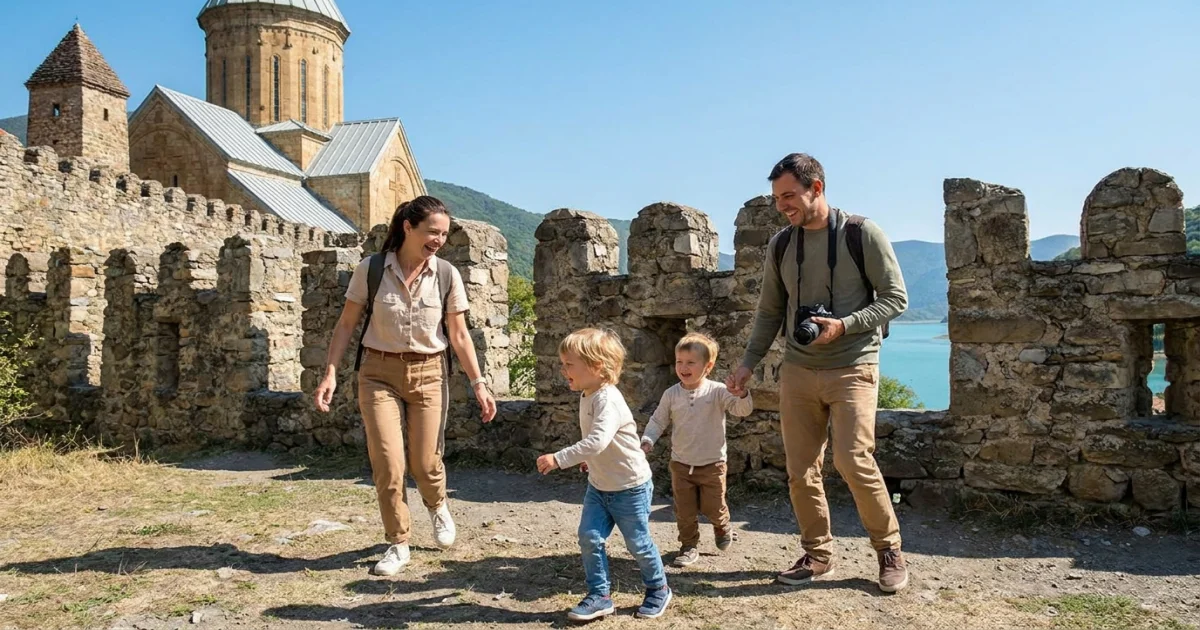
Georgia with kids is one of the easiest family travel decisions you can make. Georgians don't just tolerate children — they genuinely adore them. Your child will receive more warmth and spontaneous attention here than almost anywhere else in Europe. Combined with short flights, safe streets, food children actually want to eat, and extraordinary scenery, Georgia is an underrated family destination worth knowing about.

Why Georgia Works So Well for Family Travel

Georgians don't merely tolerate children. They adore them. Your child in Georgia will get more attention than a rock star: a waiter will bring a free portion without being asked; a taxi driver will tell a story about Kazbek; a grandmother at the market will press churchkhela into small hands "for the little one, just because"; a guesthouse host will feed your child even if you didn't request it.

This isn't a cultural cliche — it's something you feel within an hour of arriving. And it matters profoundly when you're travelling with children, because it means the default environment is welcoming and relaxed rather than neutral or mildly inconvenient.

Quick summary: Georgia is one of the best family travel destinations in the region. Safe country, children adored, remarkable food, mountains and sea and caves all accessible from Tbilisi, and children under 5–7 enter most museums and natural sites free of charge.

Safety

Georgia is one of the safest countries in Europe and Central Asia for families. Children run through Tbilisi's streets until late in the evening — this is normal, not unusual. Street crime is minimal: the 2004 police reforms transformed the country, making it safer than most European capitals by most standard metrics. CCTV is widespread, police response is fast. For visiting families, this means something simple: you can genuinely relax.

Food children actually eat

Georgian food is a family traveller's gift. Khachapuri is bread stuffed with melted cheese — not a stretch from pizza, and universally accepted by children without negotiation. Khinkali are large dumplings filled with spiced meat and broth, eaten with the hands (biting the top and drinking the liquid inside is a genuinely fun ritual that children love). Churchkhela — walnuts or hazelnuts threaded on a string and dipped in concentrated grape juice — is a natural candy that tastes extraordinary and contains no industrial additives. Fresh shoti bread from the clay tandoor oven, still hot and crisp from the bakery: children ask for seconds without prompting.

Georgian food is unfussy, natural, and deeply satisfying. There are no complicated preparations to navigate, and allergic or picky eaters can almost always find something safe and appealing.

Price: genuinely accessible for families

Children's tickets are free or 50% off at almost every attraction in Georgia. Family lunches at a local (non-tourist) restaurant run 40–60 GEL for four people — roughly 15–22 euros. Family rooms in guesthouses start at around 80 GEL (30 euros) per night. The cost of a family trip to Georgia is significantly lower than comparable trips to European destinations, without any meaningful sacrifice in experience.

Short flights

Direct flights from major hubs are short: about 2.5 hours from most Eastern European cities, 4 hours from the Gulf. A short flight means dramatically less stress for everyone, including the children. Tbilisi airport is compact — passport control typically takes 10–15 minutes.

Climate and timing

April through June is ideal for families: 20–28°C, not hot, spring green in the mountains. September to October is the second best window — warm, the harvest season in Kakheti, thinner crowds. July and August in Tbilisi can be hot (35°C+), but the mountains stay comfortable and Batumi is in full beach season.

Where to Go in Georgia with Kids — By Age

DestinationBest ageWhat worksWatch out for
Tbilisi0+Cable car, parks, zoo, puppet theatreHot in July–August
Kakheti3+Farm animals, fresh food, gentle landscapeLong drive (1.5 hrs)
Batumi0+Beach, waterpark, long promenadeFar from Tbilisi (5 hrs by car)
Kazbegi5–7+Mountains, church, snow in winterMountain road, altitude (2,170 m)
Mtskheta0+20 min from Tbilisi, riverside restaurantsCan be dull for under-5s
Borjomi3+National park, mineral springsLimited kids infrastructure

Tbilisi with Kids — What to Do Specifically

The question I hear most from families arriving in Tbilisi: "Where do we start?" My answer is always the same: the cable car. Two lari, two minutes in the air across the Mtkvari River, and a child is happy for the rest of the day. Everything else follows from there.

Cable car (Rike Park to Narikala Fortress)

The Tbilisi cable car runs from Rike Park on the riverbank up to Narikala Fortress on the hill above the Old Town. The ride takes about two minutes and costs 2 GEL per person — children under 6 ride free. The views across the Old Town, the river, and the Metekhi Church are exceptional. At the top: the fortress walls to explore, the Botanical Garden just below (entry 4 GEL), and a walk back down through the old neighbourhood of Abanotubani.

Mtatsminda Park

Tbilisi's hilltop amusement park, reached by funicular (6 GEL). Rides for all ages: a Ferris wheel, carousels, a rollercoaster, bumper cars, and a train that circles the park. There are cafes and picnic areas. The views from the top — over the whole city and out to the mountains — are some of the best in Tbilisi. Open April through November.

Tbilisi Zoo

A compact, manageable zoo with bears, lions, penguins, and a petting area for young children. Entry is 3 GEL for adults; children under 6 are free. Best visited in the morning before the heat builds. The zoo was significantly renovated in recent years and the conditions are decent. Not a world-class zoo, but perfectly good for children who want to see animals.

Rike Park

The park at the base of the cable car has a good children's playground, interactive fountains that children can run through in summer, and the famous "piano benches" — outdoor pianos scattered along the paths. The Bridge of Peace (a glass pedestrian bridge illuminated at night) is right here. All free. This is where Tbilisi families with young children spend weekend mornings.

Rezo Gabriadze Puppet Theatre clock tower

Every hour, a small automated spectacle plays out on the clock tower of the Rezo Gabriadze Puppet Theatre in the Old Town: an angel descends, the sun and moon rotate, figures move. The whole performance lasts about two minutes. Children from age 4–5 upward are reliably enchanted. The theatre building itself is a piece of folk art worth stopping for regardless of the clock show.

★★★★★

Timur adapted our Kazbegi tour so perfectly for our two children (ages 6 and 9). He knew exactly when to stop for a break, which spots would excite them, and where to find proper food when they were hungry. Our 9-year-old said it was the best day of the whole trip. The mountain road was fine — Timur drives very smoothly and the stops kept everyone comfortable.

Sarah & Mark — family of 4, London, April 2026 · Google Maps ★★★★★

Kakheti with Kids — A Day on the Farm

Kakheti is the best single day trip for families with children from age 3 upward. The road is flat and straight (no mountain switchbacks — 1.5 hours from Tbilisi), and at working farms children can feed chickens, collect eggs, watch cheese being pressed, and taste fresh bread straight from the wood-fired oven. Lunch at the farmhouse — khachapuri, grilled meat, salad — is home-cooked and served at a long outdoor table.

In Sighnaghi, the "City of Love" — a restored hilltop town with views across the Alazani Valley — the ancient fortress walls are explorable on foot. Children run along the battlements and climb the towers; there's genuine medieval adventure to be had. In Bodbe Monastery, peacocks wander freely in the garden.

In autumn (September–October), the harvest season in Kakheti offers something extraordinary: children can stomp grapes in the traditional way in a family winery's wooden press. It's messy, joyful, and unforgettable.

Batumi — Sea, Beach, and Waterpark

Batumi is five hours from Tbilisi by road (or a 40-minute flight on Wizz Air from around 30 GEL). The beach is pebble rather than sand — less ideal for very young children to crawl on, but manageable. The Orca Waterpark (entry 35 GEL) compensates fully with slides and pools for all ages. The seafront promenade stretches 7 kilometres: bicycle rentals, electric scooters, children's playgrounds, and fountains all along its length. The Botanical Garden above the city is worth half a day of wandering.

For families, I recommend 2–3 nights in Batumi as an add-on to Tbilisi rather than the primary destination. The flight is faster and cheaper than the drive.

What to Skip with Children in Georgia

A note on taxis: Georgian drivers move fast. The Bolt app has a "with child seat" option, but it only works about 70% of the time. If your child requires a car seat, bring a lightweight foldable seat from home — it weighs 3–4 kg and fits in checked luggage. On Sakhva Travel family tours, a child seat is always in the vehicle.

Practical Tips for Parents

Pushchairs and strollers

The Old Town of Tbilisi is not pushchair-friendly: cobblestones, steps, steep hills, and narrow pavements make it genuinely difficult. Bring a baby carrier or ergonomic backpack for infants. For children aged 2–4, a lightweight umbrella stroller works in flatter areas (the river promenade, Rike Park, Saburtalo) but expect to carry it frequently in the Old Town and Abanotubani. The cable car, Mtatsminda Park, and the zoo are all accessible.

Food for small children

Georgian bakeries (toné) operate on nearly every corner. Shoti bread (hot from the tandoor), achma (layered pastry with cheese), and lobiani (bread filled with spiced beans) all cost 1–3 GEL and serve as instant snacks when a child announces hunger mid-walk. This is genuinely useful — there's rarely more than 5 minutes between you and hot fresh bread in central Tbilisi.

Baby formula (NAN, Nutrilon), pouches (HiPP, Gerber), and nappies (Pampers, Huggies) are available at Carrefour, Goodwill, and Smart supermarkets. Prices are 10–20% higher than in the UK or Germany. If your child has a specific dietary requirement or brand preference, bring a supply.

Water

Tap water in Tbilisi is technically safe but most families opt for bottled water for children. Nabeghlavi and Likani are the main local brands — 1 GEL (35 cents) for 1.5 litres at any shop. In the mountains, natural springs produce exceptionally clean water and children love the ritual of filling a bottle from "a real spring."

Sunscreen and heat

Georgian sun is strong, especially in the mountains. SPF 50 children's sunscreen is harder to source in Tbilisi than at home and costs more. Bring enough from home. In July and August, plan outdoor activities for the morning and use the midday heat for air-conditioned cafes, museums, or rest.

Healthcare

Pharmacy chains Aversi and PSP operate on most major streets and stay open late. Children's medications — ibuprofen, antihistamines, rehydration sachets — are available without prescription. For more serious situations, Todua Medical Centre and MediClub Tbilisi both have English-speaking paediatric staff. Travel insurance with paediatric cover is strongly recommended, but panic is not warranted — the healthcare infrastructure in Tbilisi is genuinely adequate.

How Family Tours with a Private Guide Work

Families make up about a third of all the tours I run. I adapt the itinerary to the ages of the children: more stops, shorter driving segments, lunch earlier in the day, and routes chosen for maximum child engagement alongside adult interest.

On Sakhva Travel family tours, children under 5 travel free. The vehicle always carries a child seat — notify us at booking. If a child needs to return earlier than planned, we turn around without penalty or additional charge.

What children actually do on our tours:

Planning a family trip to Georgia?

Timur adapts every tour to your children's ages and energy levels. Car seat included. Children under 5 travel free. Book directly by WhatsApp — no agencies, no hidden fees.