
Georgians don't drink wine. They live by it. It's not a beverage — it's a language. A toast without wine isn't a toast. When Georgians talk about their culture, they mean three things: the alphabet, polyphonic singing, and wine. One more thing: insurance for Georgia has been mandatory at the border since 2026. More on Georgian toasts and the supra and on the Georgian alphabet itself.
Which Georgian red wines should you try?
Saperavi — the uncrowned king
Georgia's flagship red variety. The name means "dyer" — it stains everything: the glass, your teeth, your shirt. Deep, dense, with notes of dark cherry, blackberry, and dark chocolate. Young Saperavi is firm and tannic. Aged three or more years, it becomes velvety and complex.
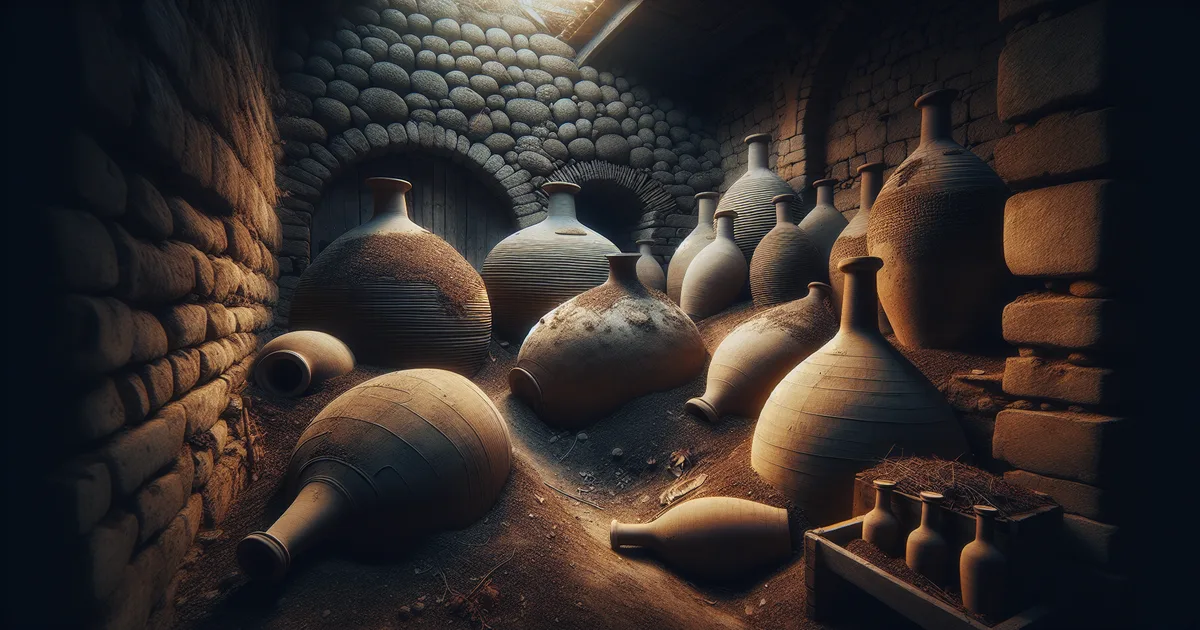
In my experience, most visitors taste Saperavi for the first time in a restaurant and come away disappointed. My recommendation: try it first at a family winery in Kakheti, straight from a qvevri. It's a completely different wine — alive, with personality. After that, the restaurant version tastes thin by comparison.
If you want to do exactly that, book a day trip to a Kakheti winery with a tasting.
Kindzmarauli — the real thing
A semi-sweet red. What you find sold under this name outside Georgia and what genuine Kindzmarauli is are two different drinks. The real thing is made from Saperavi grapes grown within a microzone of just 15 km². The sweetness is natural — residual sugar from an arrested fermentation, not added.
Mukuzani — for serious wine drinkers
A dry red made from Saperavi, aged a minimum of three years in oak. This is the wine for people who drink Cabernet and find Merlot "too soft."
What white wines does Georgia produce?
Rkatsiteli — the chameleon of Georgian winemaking
Rkatsiteli can be made three very different ways:
- European style — light and fresh with floral notes, similar to Pinot Grigio. Drink chilled.
- Kakhetian style (orange wine) — aged in qvevri for 3–6 months. Amber in colour, with tannins, dried fruit, and nutty notes.
- Semi-sweet — Tetra, Tviishi. For those who prefer something off-dry.
Mtsvane — the quiet favourite
"Mtsvane" means "green." A delicate white with aromas of mountain herbs and citrus. Less well-known than Rkatsiteli, but many sommeliers consider it more interesting.
Tsolikouri — a western Georgia character
From the Imereti region. Fresh, mineral, with bright acidity. If Rkatsiteli is Kakheti in a glass, Tsolikouri is Imereti.
What is orange wine and why is Georgia famous for it?
Orange wine is white grapes made like a red wine. Fermenting white juice on the grape skins in a qvevri gives a colour ranging from golden to copper, plus a structure and tannin that conventional white wine simply doesn't have.
Ten years ago only sommeliers knew about Georgian orange wine. Now it's fashionable from New York to Tokyo. A bottle that costs ₾15 in Tbilisi sells for £40 in a London restaurant. Drink it here.
I usually begin tastings with an orange Rkatsiteli from qvevri and watch the reaction. Nine out of ten people say: "I've never tasted anything like this." My guests often leave Georgia with a case of orange wine, even though they arrived determined to drink only red.
Which Georgian regions produce the best wine?
| Region | Known for | Varieties | Style |
|---|---|---|---|
| Kakheti | 70% of Georgia's wine | Saperavi, Rkatsiteli, Mtsvane | Full-bodied, qvevri |
| Kartli | Georgia's sparkling wine | Chinuri, Goruli Mtsvane | Sparkling, light |
| Imereti | Western elegance | Tsolikouri, Tsitska | Light, fresh |
| Racha-Lechkhumi | Semi-sweets | Aleksandrouli, Ojaleshi | Khvanchkara, Kindzmarauli |
How to read a Georgian wine label
Region name (Kakheti, Imereti) — where it comes from. Grape variety (Saperavi, Rkatsiteli) — what it's made from. Appellation (Mukuzani, Tsinandali, Kindzmarauli) — a specific terroir with its own rules and guarantee of origin.
If a label says "Mukuzani," that's not just any Saperavi — it's Saperavi from a defined zone, aged a minimum of three years. Think of the difference between "wine from France" and "Château Margaux."
Georgian script on the label — what the key words mean
The words you'll encounter most often: ღვინო (ghvino) — wine. კახეთი — Kakheti. საფერავი — Saperavi. რქაწითელი — Rkatsiteli. წყნარი — still (non-sparkling). ნახევრად ტკბილი — semi-sweet. მშრალი — dry. Photograph the label — I can translate it, or just search the first two words.
Three rules for buying in a shop
- Price signals quality. A decent qvevri wine doesn't cost less than ₾15–20. A Mukuzani or Tsinandali from a respectable producer starts at ₾18. If a nicely labelled bottle is ₾7, it's an industrial product made from concentrate.
- Sediment is normal. Natural, unfiltered wine is hazy or has sediment at the bottom. Don't shake the bottle — open it and wait ten minutes.
- "Organic" and "natural" labels aren't tightly regulated in Georgia. Ask staff, or look for a certificate. Reliable natural producers: Iago's Wine, Our Wine, Pheasant's Tears, Lapati.
Where to buy Georgian wine as a visitor
- In Tbilisi: 8000 Vintages (Leselidze St) — enormous selection, knowledgeable staff, tastings available. Wines Gallery — chain with several branches, excellent temperature-controlled storage.
- In Kakheti: Directly from the producer. Prices are 3–5× lower than in shops, and the story comes with it. Best timing: Kakheti in autumn during rtveli (the grape harvest).
- What to bring home: 2–3 bottles of Saperavi, 1 orange Rkatsiteli from qvevri, 1 Mtsvane. Buy half-bottles (0.375 l) where available — they let you try four or five different wines for the price of one premium bottle.
Sources on Georgian winemaking