Truso Gorge — The Hidden Valley Near Kazbegi
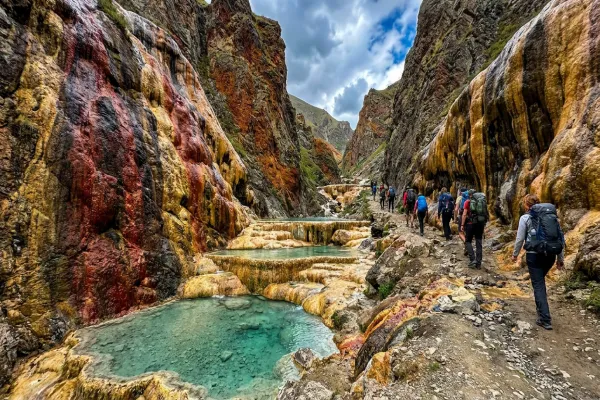
While thousands of tourists visit Gergeti Trinity Church each day, almost none venture into the Truso Gorge. Yet Truso is arguably more spectacular. The gorge runs parallel to Kazbegi along a Terek River tributary, with walls closing in to create a corridor of volcanic rock. At the valley floor, mineral springs bubbling up through iron-rich earth have created orange and ochre travertine formations unlike anything else in Georgia.
The gorge was inhabited until 1991 when the Ossetian-Georgian conflicts caused the local population to leave. The stone towers and farmhouses of Zakagor village remain standing and intact — an abandoned medieval settlement frozen in time. Walking through the empty village with watch towers still upright is one of the most atmospheric experiences available in the entire Caucasus region.
The Mineral Springs of Truso
The main attraction of Truso is the mineral springs and the "narzan" travertine lakes they form, with vivid orange banks made of iron deposits. The water here is saturated with CO₂ and various minerals — the same type of springs as Borjomi mineral water, but completely wild and untouched.
The springs emerge at multiple points along the valley floor. The iron content turns the surrounding rocks and sediment vivid orange, while the springs create small travertine pools and terraces of remarkable beauty. The water is drinkable — strongly fizzy and rich in minerals. Local knowledge holds these springs have medicinal properties; geologists confirm they are among the most mineralised natural water sources in Georgia.
The Kviriki waterfall drops 20 metres into a small canyon at the gorge head. On a clear day the water breaks into thousands of rainbows as it falls. The walk to the waterfall takes about 40 minutes along a dirt trail from the mineral springs.
The Deserted Medieval Villages
The gorge preserves the ruins of several medieval villages abandoned in the 20th century. Stone houses, churches and defensive towers are gradually being reclaimed by nature — but for now they still stand, creating an atmosphere of lost civilisation. The largest and best-preserved is Zakagor, which has watch towers still fully intact and even climbable with care.
Truso Gorge lies close to Kazbegi, so tours can sometimes be combined: see also our Kazbegi tour from Tbilisi.
Full Tour Route — What to See and Do
The Truso Gorge tour starts early in the morning — your guide meets you in Tbilisi and drives north on the comfortable 4x4 towards Kazbegi. Along the way you enjoy scenic mountain views and stop at Ananuri Fortress for photographs above the Zhinvali Reservoir. Then the route continues through Gudauri and over the Cross Pass (2,395 m) towards the Truso valley entrance.
On arrival at the gorge we begin walking along the banks of the travertine springs, where bright orange and green iron deposits create a completely unique landscape. We then head to the Kviriki waterfall, one of the most beautiful spots in the area, before exploring the deserted medieval village of Zakagor with its intact stone towers. The day ends with a riverside picnic before the return drive to Tbilisi, arriving with memories and photographs that will stay with you forever.
Pay attention to the local flora and fauna along the trail: rare plant and animal species live only in this high-altitude region. Your guide will share stories about the culture and history of Georgia throughout the day. In Truso Gorge you can experience true harmony with nature and enjoy the atmosphere of complete solitude, far from city life.
Practical Tips for the Tour
Preparing properly for the Truso Gorge tour will make the day much more enjoyable. The trail involves walking on uneven rocky terrain at altitude, so your footwear choice matters more than for most tours. Light windproof or fleece layers are a good idea since temperatures at altitude are noticeably cooler than in Tbilisi — even in summer.
- Proper footwear. Wear trekking boots or trainers with a good sole. Flat sandals or city shoes will make the rocky trail uncomfortable and can be slippery near the springs.
- Water and snacks. Bring enough drinking water and light snacks (nuts, dried fruit, energy bars) to sustain energy throughout the active hiking portions of the day.
- Sun protection. At high altitude UV radiation is significantly stronger. Bring sunscreen and a hat even if the weather feels cool — you will be outdoors for most of the day.
- Camera or phone. The mineral springs with their orange formations, the waterfall, and the deserted village are all highly photogenic. A good camera or phone with a quality lens is essential for making the most of the scenery.
- Warm layer for the gorge. Summer temperatures in Truso are 15–18°C — a light jacket or fleece is recommended even if Tbilisi was 35°C when you left.
Frequently Asked Questions
How long is the Truso Gorge tour from Tbilisi?
The tour takes a full day, departing early morning and returning in the evening. Total time on the road and in the gorge is approximately 14 hours, including the drive, stops along the Georgian Military Highway, and 5–6 hours of activity inside the gorge itself.
Is this tour suitable for families with children?
Yes, the tour is suitable for families with children, but you should consider your children's level of physical fitness. If they enjoy active outdoor walks and are comfortable on uneven ground, this will be an excellent family experience in a truly wild setting.
Can I book a private tour?
Yes, all Sakhva Travel tours are private — you will not be mixed with strangers. The itinerary can be adapted to your preferences and interests. Contact us in advance and we will discuss all the details.
Why is a 4x4 required for Truso?
The track into Truso crosses rocky riverbeds and becomes impassable for standard vehicles after rain. Even in dry conditions the terrain requires high clearance and four-wheel drive. A 4x4 is mandatory — Timur uses a properly equipped vehicle for all Truso tours, no exceptions.
What makes Truso different from Kazbegi?
Kazbegi is about the mountain panorama and the famous Gergeti Trinity Church. Truso is about true wilderness: orange mineral springs, dramatic travertine geology, an abandoned medieval village, a 20 m waterfall, and almost no other tourists. The landscapes are completely different. Many visitors who have experienced both say Truso was the more memorable of the two.
Timur's Insider Tip
Truso is the least-known gorge near Kazbegi, and that is precisely its value. While tourists crowd Gergeti, I take my groups to the blue mineral springs where water emerges fully saturated with carbon dioxide — it bubbles out of the rock like natural soda water. The road into the gorge is 4x4 only: after the rainy season the dirt track gets washed out badly. A mandatory stop is the medieval village of Zakagor with its abandoned towers. It has stood empty since 1991, but the walls and floors are still intact. The view from the top of the main watch tower across the deserted village and the gorge below is extraordinary. Gorge temperature in summer is +15–18°C — bring a light jacket even if Tbilisi was +35 when you left.
Why Choose This Tour
Truso Gorge in one long day from Tbilisi: CO₂ mineral springs with orange travertine deposits, the abandoned medieval village of Zakagor, a 20 m waterfall, and complete solitude. The trail is 12 km one way, but we cover part of the route in the 4x4 and walk only the most beautiful section on foot. The closest thing to exploring an undiscovered wilderness in the Caucasus — 15 km from Kazbegi, but a world away from the tourist trail.
Included in Price
- 4x4 transfer from Tbilisi hotel and back
- Private English-speaking guide
- Truso gorge trail and mineral springs
- Zakagor and Ketristskhe deserted village visit
- Kviriki waterfall
- Ananuri Fortress stop
Not Included
- Food (bring your own picnic)
- Trekking boots (your own equipment)