
Tbilisi's techno scene is one of the few in the world that earned its global reputation through politics, not marketing. Bassiani, the city's flagship club, sits in a drained Soviet swimming pool and has been written up by Resident Advisor, Mixmag and Boiler Room. This is a local guide to the whole scene — how to get in, what each club is for, face control, prices and the unwritten rules — written by someone who walks guests to these doors regularly.
Going out this weekend? The clubs run Friday and Saturday — see where they fit in a Friday in Tbilisi or a Saturday in Tbilisi.
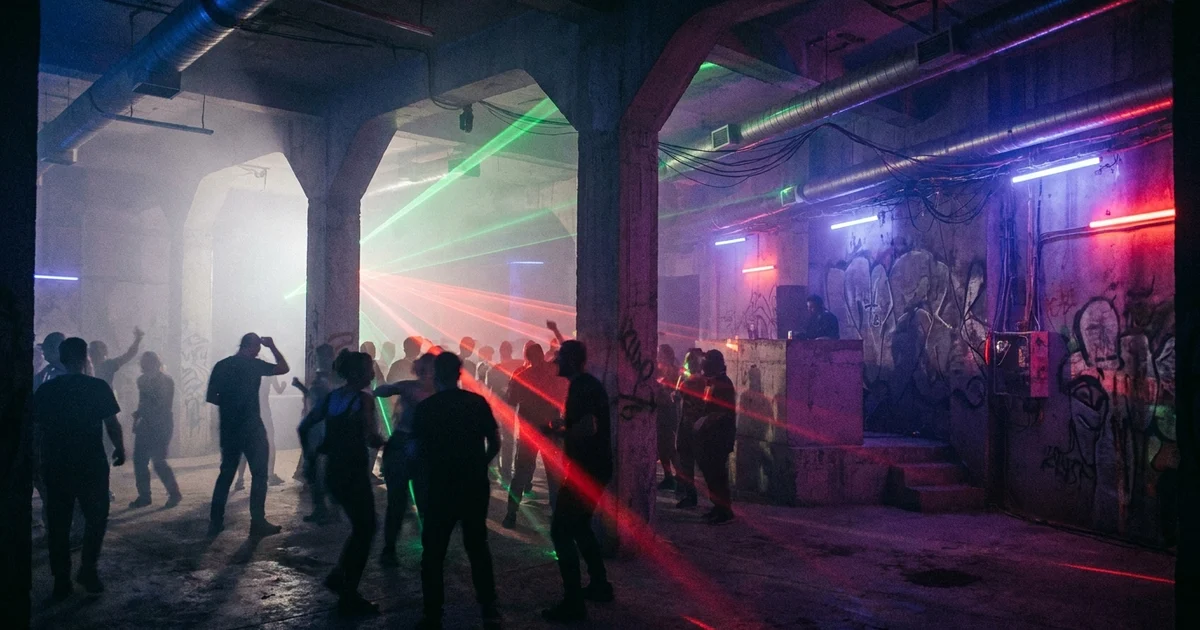
Some cities treat the nightclub as a place to drink and dance to hits. Tbilisi is not one of them. Here, a techno club is closer to a temple — taken seriously, believed in, and once defended on the streets in protest. Over the last decade the Georgian capital has gone from a post-Soviet city with broken pavements to one of Europe's key rave destinations. If you want the broader picture of the city after dark — bars, views, baths — start with the Tbilisi nightlife guide. This article is specifically about the clubs and the rave culture.
Why Tbilisi Became a Techno Capital
To understand Tbilisi's club culture, you need to understand where it came from. After the collapse of the USSR, Georgia went through brutal years: civil conflict, unemployment, power cuts. The generation that grew up in that searched for a space of freedom — and found it in the darkness of the dance floor, where it doesn't matter who you are or where you're from.
In 2014, beneath the stands of the Dinamo Arena stadium, in an abandoned Soviet swimming pool, Bassiani opened. Within a couple of years it had grown into something bigger than a club — a symbol of a new, open, European-leaning young Georgia. Techno here fused with politics: the club openly supported the LGBTQ+ community and spoke out against police brutality and the state's harsh drug policy.
The turning point came in May 2018. After aggressive police raids on Bassiani and Cafe Gallery, thousands gathered outside the parliament on Rustaveli Avenue and staged a "rave protest": instead of chanting slogans, people danced to techno on the steps of parliament. Footage of a crowd dancing in front of the seat of power travelled around the world and became known as the White Noise Movement. From that moment, Tbilisi was firmly on the global electronic music map.
The scene today remains alive and political. It's not a tourist attraction — it's a genuine subculture, which is exactly why it deserves respect rather than to be treated as an "Instagram spot." That sincerity is what makes a Tbilisi rave special: you don't walk into a show, you walk into a community.
Bassiani: How to Get In and What's Inside
Bassiani is essential for anyone seriously into techno. The club occupies the basin of the old pool under the stadium: concrete, minimal light, a monstrous Funktion-One sound system, and an atmosphere that photos can't convey (which is fitting, since photos are banned inside).
Buying a ticket
Tickets are sold online on the club's website in advance for a specific event, or you get on a guestlist. On nights with strong lineups, everything sells out days ahead. Do not count on "showing up and buying at the door" for a top event — it may be full.
Face control and the interview
There's a selection process at the door. It's not about expensive clothes the way it is at glamorous clubs — arrogance and showing off will hurt you here. They may ask how you heard about the club, who's playing tonight, why you came. The right answer is calm and honest: for the music. Stay natural, no aggression, no attempt to "impress."
Rules inside
- Cameras get covered. A sticker goes over your phone lens at the entrance. Filming inside is strictly forbidden — it's about guests' privacy and safety.
- Dark clothing, comfortable shoes. An unspoken dress code. You'll be on your feet for hours.
- Respect the space. No pushing, no invading someone's dance, no harassment. The safe-space principle here is real, not decorative.
- Arrive after 1am. Earlier it's empty and warming up. The peak is from 3am to dawn; many stay until noon.
Khidi, Mtkvarze, Left Bank — The Big Clubs
Bassiani isn't the only large venue. If you want a powerful sound system and a serious lineup without the toughest door, there are alternatives.
Khidi (Georgian for "bridge") sits literally under a road bridge on the bank of the Mtkvari (Kura) river. This is the territory of heavy, industrial sound: hard techno, experimental sets, dark nights until morning. Two floors, concrete, smoke. Khidi is darker and harder than Bassiani musically — people come here for intensity.
Mtkvarze (the name means "on the Mtkvari," i.e. on the river) is a former Soviet glass-box restaurant on the riverbank. There's more house, disco and melodic electronica here, the crowd is more relaxed, and the panoramic windows give you a view of the river and the sunrise over the water. It's the ideal first introduction to the scene: friendly atmosphere, easy to get in.
Left Bank is a relatively new large venue on the left bank, focused on quality sound and a broad spectrum of electronic music. Spacious, modern, without snobbery.
If techno isn't your format but you want a lively evening with music and dinner, a restaurant evening or a wine-focused outing works better — and you can still drop into a bar afterwards. Either way, an easy way to handle the logistics is a guided night tour of Tbilisi.
Cafe Gallery, Success Bar, Drama — Intimate Venues
Not every night calls for a vast dance floor. Smaller clubs and bar-clubs are where it's easiest to start, and where it's nice to return when you want music without the intensity of a big rave.
Cafe Gallery is the oldest club on the Tbilisi scene, open long before Bassiani. By day it's a cafe; by night it's a dance floor playing house and disco. Intimate, homely, with a relaxed door. An excellent entry point for a newcomer.
Success Bar is a small courtyard bar-club, the heart of Tbilisi's queer scene. Friendly, free, without judgement — in summer the party spills right out into the yard. One of the warmest places in the city.
Drama Bar is a central bar with DJs and dancing until morning, no separate door selection. Good for starting the evening or ending it once the big clubs are no longer needed.
Courtyard and rooftop parties pop up across Tbilisi in summer — temporary open-airs in yards and on rooftops. Follow local promoters' Telegram channels to find them.
Daytime Scene and Mutant Radio
Tbilisi's electronic culture doesn't only live at night. Mutant Radio is an independent online radio and cultural space that livestreams DJ sets from a studio near the railway station. You can catch live music here during the day, grab a coffee, and feel the scene without a full night marathon.
In summer there are open-airs outside the city — in nature near reservoirs, in canyons, on abandoned industrial sites. These are essentially 24-hour mini-festivals. You hear about them through communities and word of mouth — and they're arguably the best way to see the scene at its freest.
If you're in town during the day and the clubs are still hours away, drop by Fabrika — a former sewing factory turned cultural hub with bars, cafes and a courtyard where someone is always playing something.
How Much Does Club Entry Cost in Tbilisi?
Prices remain humane by European standards — part of the scene's appeal. Here's a 2026 reference.
| Club | Location | Music | Entry |
|---|---|---|---|
| Bassiani | under Dinamo stadium | Techno | 25–50 ₾ |
| Khidi | under a bridge, riverbank | Hard techno, industrial | 20–40 ₾ |
| Mtkvarze | Mtkvari riverbank | House, disco | 15–35 ₾ |
| Left Bank | left bank | Electronic (mixed) | 20–40 ₾ |
| Cafe Gallery | centre | House, disco | 10–25 ₾ |
| Success Bar | central courtyard | Queer, mixed | 0–15 ₾ |
Drinks inside: beer 6–10 ₾, cocktail 15–25 ₾, water 3–5 ₾. Bring cash in GEL — the cloakroom and door don't always take cards, and there's no ATM inside.
Face Control and Rave Etiquette: What's OK and What's Not
The biggest mistake a tourist makes is treating a Tbilisi club as a tick-box attraction. The scene is built on trust and respect, and it's exactly the breach of those that gets you turned away at the door or escorted out.
What helps you get in
- Calm and sincerity. You came for the music — say so.
- Dark, comfortable clothing without evening "flash."
- Knowing the lineup — at least roughly who's playing tonight.
- Arriving as a small group or a pair, not a drunk crowd.
What definitely hurts
- Visible drunkenness at the door — the number-one reason for rejection.
- Trying to film at the entrance or inside.
- Loud, drunk groups looking to "party for the sake of partying."
- Aggression, pushiness, disrespect toward other guests.
Afterparty: Where to Go at Sunrise
In Tbilisi the night doesn't end when the club closes — it flows into the morning. By 7–10am, when you step out into the light, the city is already alive.
- Khinkali canteens near the station and on Agmashenebeli open early. Hot khinkali and broth after a night out is the best thing you can imagine.
- Tone bakeries in the Old Town bake fresh shoti from dawn. Hot bread from a clay oven at 6am is a ritual of its own.
- Sulfur baths in Abanotubani open early. Hot sulfur water after a sleepless night brings you back to life — full details in the Tbilisi sulfur baths guide.
- The riverbank and the climb to Narikala — to catch sunrise over the city after the rave. Quiet, golden light, empty streets.
This post-rave walk — baths, fresh bread, sunrise over the river — is the part I most love showing guests. If you'd rather walk night Tbilisi with someone who handles the logistics, there's a night tour of Tbilisi — it covers the evening city and atmosphere, and you head into the club yourself, prepared.
Is the Rave Scene Safe, and How Do I Get Around?
Tbilisi's scene is one of the safest and friendliest in Europe. Street crime is rare, tourists are treated well, and the internal culture of the clubs is built on the safe-space principle. But the basic rules of any night city still apply.
- Taxis only through an app. Bolt and Yandex Go run 24/7. Don't get into cars that pull up at the club exit — prices there are inflated. Walk 100–200 metres away and order a ride.
- The metro is closed at night. Last trains around midnight. Back home it's taxi or walking (the centre is compact).
- Cash. Keep 50–80 GEL in cash: cloakroom, door, morning khinkali.
- ID. Bring your passport or a photo of it — age checks happen occasionally.
- Respect the no-photo policy. It's not a whim but protection of guests' privacy — for many, the club is the one free space they have.
In three years of night walks with tourists I've had no serious incidents. The main risks aren't crime but the slippery cobblestones of the Old Town and a dead phone battery. Comfortable shoes and a power bank solve 90% of problems.
And one last thing. Tbilisi's techno scene isn't just "somewhere to go and dance." It's a story about freedom that the city won back from itself over thirty years. So when you step onto the dance floor, you become part of something bigger than a party. Treat it with care, and Tbilisi will return the favour.