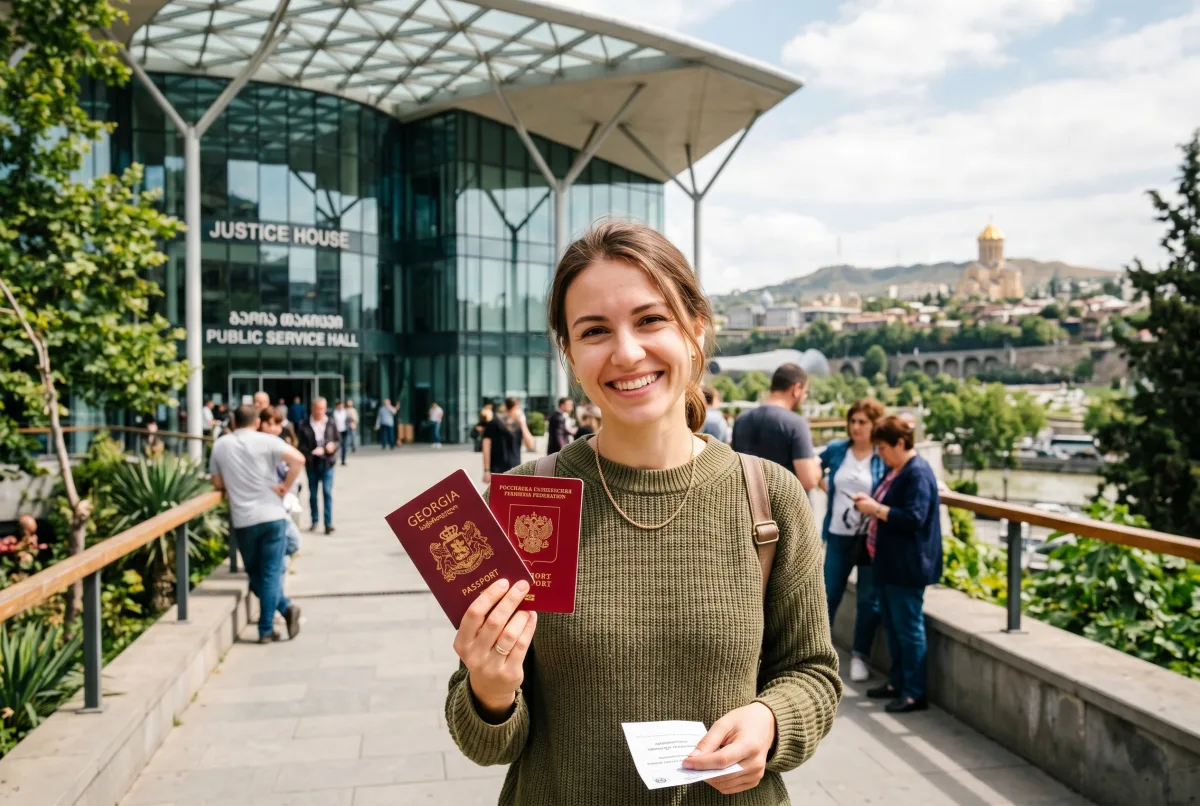
Georgia is one of the most welcoming countries in the world for international travelers. With visa-free access for citizens of over 100 countries, straightforward border procedures, and no registration requirement, entering Georgia is usually hassle-free. But you do need the right documents. This guide covers everything you need to know about Georgia's passport and entry requirements in 2026.
Which Countries Are Visa-Free for Georgia?
Georgia grants visa-free entry to citizens of over 100 countries for stays of up to 1 year (365 days). This is one of the most generous visa-free policies in the world. The list includes:
| Region | Countries | Stay (days) |
|---|---|---|
| European Union (all 27 states) | France, Germany, Italy, Spain, Poland, etc. | 365 |
| North America | USA, Canada, Mexico | 365 |
| United Kingdom | UK (British citizens) | 365 |
| Oceania | Australia, New Zealand | 365 |
| Middle East / Gulf | UAE, Saudi Arabia, Qatar, Kuwait, Bahrain, Oman, Israel | 365 |
| Asia | Japan, South Korea, Singapore, Malaysia, Hong Kong | 365 |
| Latin America | Brazil, Argentina, Chile, Colombia, Peru | 90–365 |
| CIS Countries | Armenia, Azerbaijan, Belarus, Kazakhstan, Kyrgyzstan, Russia, Ukraine | 365 |
For the full official list, check mfa.gov.ge — Georgia's Ministry of Foreign Affairs. Rules can change, so always verify before traveling.
What Documents Do You Need?
Standard Requirements
- Valid international passport (biometric recommended)
- No minimum validity required by law, but 3–6 months beyond your stay is strongly recommended
- Return ticket or onward travel proof (sometimes asked)
- Proof of accommodation (hotel booking, rental agreement, or invitation letter)
- Sufficient funds (no official minimum, but ~$50/day is a practical benchmark)
Can I Use a National ID Card (EU)?
EU citizens from certain countries may enter Georgia using their national ID card instead of a passport. This is possible for citizens of:
- Most EU member states (Germany, France, Italy, Spain, Poland, Czech Republic, etc.)
- The ID card must be valid — expired ID cards are rejected
- Some border officers prefer passports even for EU citizens — carry your passport as backup
Passport Validity — How Long Does It Need to Be?
Georgia has no official minimum passport validity requirement. Unlike many countries that require 6 months of remaining validity, Georgian law does not specify a minimum. However:
- Border officers may use discretion and deny entry if your passport expires very soon
- Most travel insurance policies require a valid passport throughout your trip
- Airlines may refuse boarding if your passport expires before your return flight
- Best practice: have at least 3–6 months of validity remaining
If your passport expires while you are in Georgia, contact your country's embassy in Tbilisi immediately to arrange an emergency passport or travel document.
Entry Points: Airport, Land, and Sea
Tbilisi International Airport
The most common entry point for international tourists. The procedure is straightforward:
- Arrive at passport control (separate lines for Georgian citizens and foreigners)
- Present your passport — open to the photo page
- The officer scans your passport, may ask a few questions (purpose of visit, accommodation, duration)
- Receive an entry stamp (keeps track of your 365-day visa-free period)
- Collect your luggage and exit through customs (green channel for nothing to declare)
Wait times at Tbilisi Airport are typically 10–20 minutes outside of peak summer hours. During busy periods (July–August), it may take 30–45 minutes.
Kutaisi Airport (Imereti Airport)
Kutaisi Airport handles budget airlines (Wizz Air, Ryanair routes from Europe). The procedure is identical to Tbilisi Airport, with generally shorter wait times. From Kutaisi, Tbilisi is approximately 3 hours by marshrutka (shared minibus) or 2.5 hours by private transfer.
Land Border Crossings
Georgia shares land borders with Armenia, Azerbaijan, Turkey, and Russia. The most used crossings for international tourists are:
| Border | Country | Notes |
|---|---|---|
| Sarpi | Turkey | Busy but fast; good road connection to Batumi |
| Vale | Turkey | Quieter alternative to Sarpi |
| Bagratashen/Sadakhlo | Armenia | Main Armenia–Georgia land crossing; straightforward |
| Red Bridge (Kızılburun) | Azerbaijan | Main road connection Baku–Tbilisi; typically fast |
| Upper Lars (Kazbegi) | Russia | Only open road crossing with Russia; frequently congested; queues 4–12 hours in summer |
Batumi Sea Port
Ferry services from Sochi (Russia) and Trabzon (Turkey) arrive at Batumi's international port. Document requirements are the same as at land and air entry points.
What Border Officers Check
Georgian border control is generally professional and efficient. Officers check:
- Passport validity — valid, matching photo
- Previous entry stamps — to verify you have not exceeded the 365-day visa-free period in recent history
- Purpose of visit — tourism, business, transit, or relocation; be honest and brief
- Accommodation — hotel name, Airbnb address, or a friend's address in Georgia
- Return/onward ticket — occasionally requested for first-time visitors; not always required
Common questions you may hear: "How long are you staying?", "Where will you be staying?", "What is the purpose of your visit?", "Do you have return tickets?" — all normal questions, answer honestly and briefly.
Children's Entry Requirements
Traveling with children requires extra documentation. Here is what to prepare:
Children Under 14
- Children's own passport OR entry in a parent's passport (if supported)
- Birth certificate (highly recommended — carry a copy)
- If traveling with both parents: passport + birth certificate is sufficient
- If traveling with one parent: notarized consent letter from the absent parent is strongly recommended
- If traveling alone or with a non-parent guardian: notarized consent from both parents is required
Children 14–18
- Own valid passport required
- If traveling alone or with one parent: notarized parental consent letter is recommended
In practice, border officers do not always request the consent letter, but not having it can cause delays or denial of entry. Better safe than sorry — have it notarized and translated to Georgian or English.
Do You Need Travel Insurance?
Travel insurance is not legally required to enter Georgia. However, it is very strongly recommended. Georgia has no universal public healthcare for tourists, and medical costs without insurance can be significant:
- GP consultation: 40–80 GEL (~$15–30)
- Emergency room visit: 200–500 GEL ($75–185)
- Hospitalization: 500–2000+ GEL per day
- Medical evacuation: can exceed $10,000–50,000
A comprehensive travel insurance policy covering medical emergencies, hospitalization, and evacuation typically costs $3–10 per day — a small price for serious peace of mind.
Travel Insurance for Georgia — Recommended Options
Compare policies from leading insurers and get covered before your trip. Online purchase takes under 5 minutes.
Use Cherehapa — an aggregator comparing 15+ insurers instantly. Enter your travel dates and get instant quotes:
Dual Citizenship and Multiple Passports
If you hold citizenship of multiple countries, you can choose which passport to use when entering Georgia. A few things to keep in mind:
- Enter and exit with the same passport on each trip — inconsistencies can raise red flags
- If one of your nationalities is Georgian, you must use your Georgian passport to enter Georgia (Georgian law requires this)
- Citizens of Israel holding both Israeli and another passport: both work fine; Israeli citizens have visa-free 365 days
- There is no Georgian law against dual citizenship, and officers generally won't ask about it
Extending Your Stay Beyond 365 Days
The standard visa-free period is 365 calendar days per entry. There is no automatic renewal. Options to continue living in Georgia legally:
- Exit and re-enter: Leave Georgia and return — a new 365-day period begins. Many long-term expats do a simple "border run" to Armenia (Yerevan is 3–4 hours from Tbilisi)
- Residence permit: Apply at the Public Service Hall (PSH) in Tbilisi; required for employment, business activity, or family reunion
- Entrepreneurial residence permit: Register a Georgian LLC (one of the world's easiest and cheapest: ~$100) and get a permit tied to business activity
- Long-stay visa (D category): Available for students, employees with work permits, and families
Planning a trip to Tbilisi? Let a local guide show you the best of the city.
Lost or Stolen Passport in Georgia
If your passport is lost or stolen in Georgia, follow these steps:
- Report to local police: File a report at the nearest police station. You need the police report reference number for the embassy.
- Contact your embassy or consulate: Tbilisi has embassies of most major countries. Call immediately — they can issue emergency travel documents.
- Emergency travel document: Most embassies can issue an emergency passport or laissez-passer within 24–72 hours for a fee.
- Inform your accommodation: They can help translate and assist with police procedures if needed.
Key embassy addresses in Tbilisi:
- US Embassy: 11 Georgian-American Friendship Ave (new compound near Krtsanisi)
- UK Embassy: 51 Krtsanisi St
- German Embassy: 166 David Agmashenebeli Ave
- French Embassy: 49 Chavchavadze Ave
Useful Apps and Resources for Entry
Before your trip, download or bookmark these resources:
- VisaHQ / iVisa: Check your visa requirements and apply for e-visas if needed
- evisa.gov.ge: Georgia's official e-Visa portal (for nationalities that need a visa)
- mfa.gov.ge: Full visa-free list from the Ministry of Foreign Affairs
- Google Maps: Navigate to border crossings, embassies, and local police stations
- Wise/Revolut: Best apps for currency exchange — see our GEL Exchange Rate Guide
Read Reviews on TripAdvisor →
Frequently Asked Questions
Free Tbilisi First-Timer Guide
Top 10 things to do, safety tips, transport guide — in your inbox in minutes.

Private tours in Tbilisi since 2023. 460+ tours completed. 4.9/5 rating on Google. Living in Georgia, knowing the country from inside.
Book a Tour