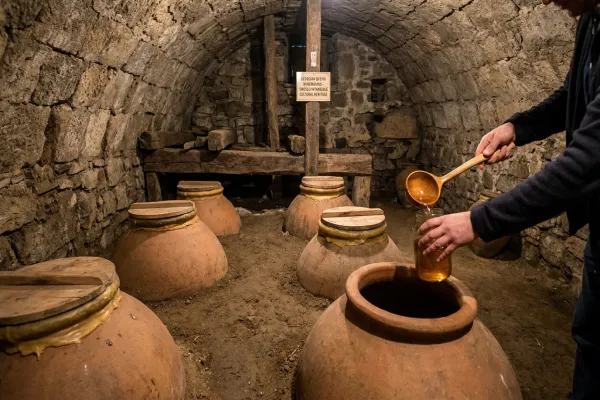
Georgia invented wine. The qvevri — a clay amphora buried underground — is how Georgians have been fermenting grapes for over 8,000 years. This UNESCO-recognised tradition produces amber wines unlike anything made in European oak barrels. This tour takes you to the source: real family wineries in Kakheti, where the winemaker opens the qvevri and pours straight from a ladle.
In short: Qvevri Wine Tour: Ancient Traditions — 10 hours, from ₾175 per person, up to 7 people, departure 09:00. Route includes Second Producer — Natural Wine Specialist, Optional: Village Walk or Vineyard Stroll. Private guide from Sakhva Travel, direct booking with no agency fees.
Unlike a standard tasting at a commercial cellar with stainless steel tanks, this tour visits small producers making 500–2,000 bottles per year, all sold at the gate. You will not find these wines in any shop.
What Is Qvevri Winemaking?
Grapes are crushed and fermented together with the skins, stems and pips inside the clay qvevri for 5–6 months. No sulphites, no filtration, no additives — only grapes and clay. The resulting wine, called amber or orange wine, has a deep amber colour, rich tannins and a nutty, honeyed complexity that European winemakers are only now beginning to replicate.
Georgia's qvevri winemaking was inscribed on UNESCO's List of Intangible Cultural Heritage in 2013. The tradition is at least 8,000 years old — older than Ancient Greece, older than Rome. Kakheti, in eastern Georgia, produces over 70% of the country's wine and is the heartland of qvevri culture.
How This Tour Differs from a Standard Tasting
A standard wine tasting in Kakheti means visiting large commercial estates with European equipment — a pleasant experience, but not the real thing. The qvevri tour focuses on family-run maranebi (wine cellars) where the host has inherited both the vessels and the knowledge from his grandfather.
You will see the qvevri buried in the earthen floor of the marani, watch the winemaker open the clay seal, and taste the wine directly from the amphora. The temperature inside is naturally stable at 12–14°C year-round — the original refrigeration system.
Why Choose This Tour
Over three years working as a guide in Georgia I have led more than 500 tours, including dozens of wine trips. I know which family producers genuinely welcome visitors and which ones simply stage a performance for groups. Every winery on this route has agreed to open the marani fully: you walk in, see the qvevri, ask any questions, and taste at your own pace.
Groups are capped at 7 people. No bus, no crowds, no rushed itinerary. I respond on WhatsApp within 10–15 minutes and send a detailed plan before departure. The cancellation policy is 24 hours — no questions asked. Rating: 4.9/5 across 90+ reviews.
Tour Itinerary
Departure from your hotel in central Tbilisi at 09:00. Drive to the Kakheti wine region (approximately 1.5 hours). The route passes the Alazani Valley — the backbone of Georgian viticulture — with views of the Greater Caucasus range to the north.
09:00
Departure from Tbilisi
Hotel pick-up in central Tbilisi. Comfortable minivan, up to 7 guests.
10:30
Arrival in Kakheti — First Family Winery
Visit the marani (wine cellar). See qvevri buried in the earthen floor. The winemaker explains the process and opens a qvevri for tasting. 3–4 varieties: amber Rkatsiteli, Kakhuri Mtsvane, red Saperavi.
13:00
Lunch at a Local Restaurant
Traditional Georgian spread: churchkhela, badrijani, fresh bread from a tone oven. Approx. ₾20–30 per person (not included).
14:30
Second Producer — Natural Wine Specialist
A smaller operation making 600–800 bottles per year. Extended skin-contact wines, zero sulphites. 3–4 more varieties. Wine available to buy: ₾15–40 per bottle.
16:30
Optional: Village Walk or Vineyard Stroll
Short walk through the Alazani valley vineyards. Signagi hilltop town is nearby if you want a scenic detour (30 min).
18:30
Return to Tbilisi
Arrive back at your hotel by approximately 18:00.
Included
Transfer from Tbilisi and back
English-speaking private tour
Visit to 2 family qvevri wineries
Tasting of 6–8 amber and red wines
Marani (wine cellar) guided tour
Photo stops along the Alazani Valley
Not Included
Lunch (avg. ₾20–30/person)
Wine purchases
Optional Signagi entrance
Timur's Tip
Amber wine can surprise guests who expect it to taste like white wine — it is closer to a light red, with tannins and complexity from the skin contact. If you are new to qvevri wine, start with the Rkatsiteli: it is the most balanced entry point. The best buying opportunity is at the second producer — prices are half what you would pay in a Tbilisi wine shop for the same bottles. Pack an empty corner of your suitcase. They will wrap the bottles securely for the flight.
Ready to book?
Timur — private English-speaking guide, rated 4.9. Groups up to 7 people, hotel pick-up, 10% deposit to secure the date.
In three years I have led over 500 tours and understand what matters to travellers: punctuality, real information instead of rehearsed scripts, and the flexibility to adjust the itinerary on the day. Every tour is private — I never combine strangers into a single group without consent, and the maximum is 7 guests. That means you ask every question you want, stop wherever catches your eye, and spend as long as you need at each location.
A 4.9/5 rating across 87 Google reviews is not coincidence. I reply on WhatsApp within 10–15 minutes, send a detailed pre-trip plan, and stay available after the tour. Many guests come back for a second and third trip — that is the best feedback I know.
How Booking Works
Message me on WhatsApp: +995 511 272 623. I will confirm the date, group size and any preferences, then send a confirmation with the itinerary, meeting time and price. A 10% deposit secures the booking; the remainder is paid on the day of the tour. Free cancellation up to 24 hours before departure.
Practical Tips
Pace yourself. Six to eight wine tastings over a morning adds up. Eat breakfast before departure and drink water between tastings.
Wear comfortable shoes. Marani floors can be uneven. Light trainers or walking sandals are fine.
Bring cash. Family wineries do not take cards. ATMs are available in the nearest town.
Buying wine to take home. Georgian airlines allow wine in checked luggage. Pack bottles in clothing inside a hard-shell suitcase, or ask the winery — they often have bubble wrap.
Best season. September and October are harvest months — you may see the rtveli (grape harvest) in progress. Spring (April–May) is the second-best window. Summer is hot but fully operational.
Tour led by Timur Sakhvadze — licensed Georgia guide (licence No. 8247109128), rating 4.9. English & Russian-speaking, small groups up to 7.
A qvevri is a clay amphora buried underground, used for fermenting and ageing wine. Georgia's qvevri winemaking tradition is over 8,000 years old and is recognised by UNESCO as Intangible Cultural Heritage. The vessels range from 20 litres to 2,000 litres and are lined with beeswax to prevent leakage.
What is amber wine?
Amber wine (also called orange wine) is a white wine made with extended skin contact inside the qvevri, giving it an amber colour and tannins usually found only in red wine. Georgia produces the world's finest amber wines. The flavour profile ranges from honeyed and nutty to deeply tannic depending on the grape variety and skin-contact duration.
Can I buy qvevri wine to take home?
Yes. The family wineries we visit sell their wines on-site, typically ₾15–40 per bottle. They can help you wrap bottles for air travel. Georgian wines exported commercially are far more expensive — buying direct from the producer is always the best value.
How many wines will we taste?
6–8 varieties across 2 wineries, including amber Rkatsiteli, Kakhuri Mtsvane, and red Saperavi made in qvevri. The format is open tasting — you sip at your own pace, not rushed through a fixed programme.
Is this tour suitable for non-drinkers?
Yes. The qvevri craft and the marani itself are fascinating even without alcohol. I can arrange for the winery to prepare grape juice or chacha-free tastings on request — just mention it when booking.