
Chacha is Georgia's national grape spirit — 40–65% ABV, made from grape pomace, drunk in shots at room temperature before eating. Every Georgian family that has a vineyard makes it at home. Every restaurant has it. It is not a souvenir — it is a way of life. Since 2026 Georgia requires travel insurance for all visitors, so sort it out before the trip.
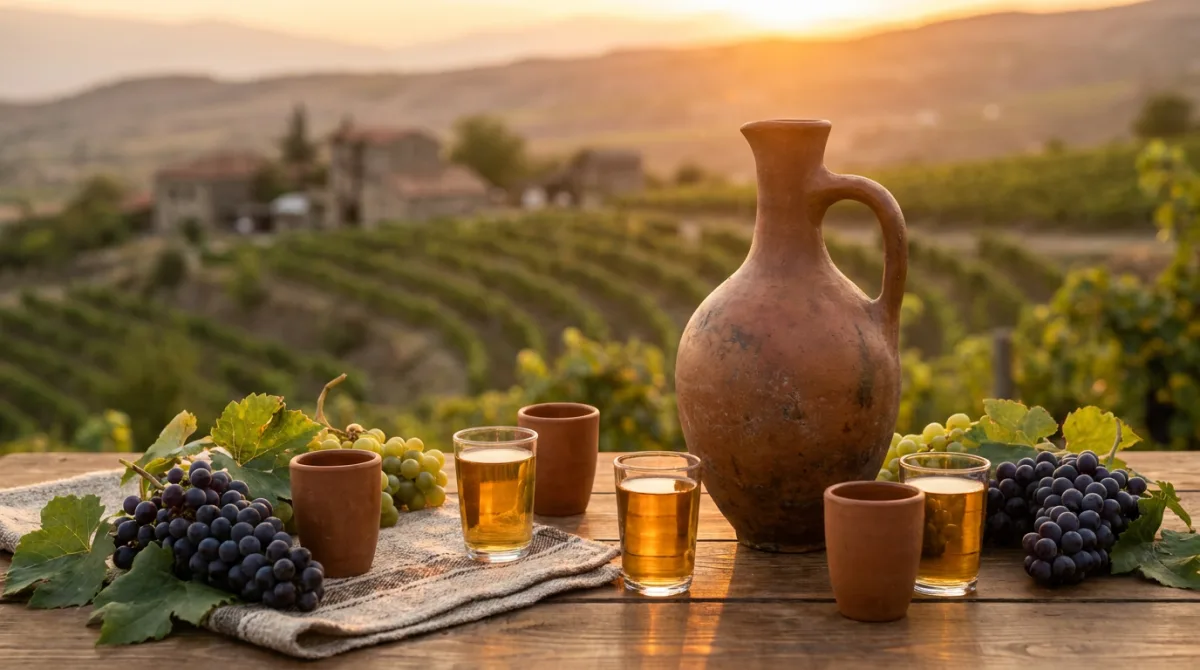
What is chacha and how is it different from grappa
Chacha is a Georgian distilled spirit produced from grape pomace — the skins, seeds, and stems remaining after the grapes have been pressed for wine. It belongs to the same family as Italian grappa, French marc, and Turkish raki. However, Georgian chacha has a longer history, a distinctive production method, and a different cultural context: it is not an after-dinner digestif but a before-meal aperitif drunk at the beginning of a feast.
The key difference from grappa is in the raw material and fermentation time. Georgian winemakers — especially in Kakheti — use a traditional qvevri method where grapes ferment with their skins for weeks or months. This produces a richer, more complex pomace than the quickly pressed Italian equivalent, and the chacha distilled from it carries more character.
Ingredients: what chacha is made from
Traditional Kakhetian chacha uses the pomace of Rkatsiteli (white) or Saperavi (red) grapes. After pressing for wine, the pomace is packed into clay pots or wooden barrels, sealed, and left to ferment for 2–4 weeks. The fermented mass is then distilled, usually twice, in copper pot stills.
Regional variations exist:
- Kakheti — the classic, using amber wine pomace. Earthy, complex, with a faint grape character.
- Western Georgia (Imereti, Adjara) — lighter, made from white grape varieties. Cleaner on the palate.
- Fruit chacha — technically not grape pomace chacha but the same word is used. Made from mulberries, figs, or plums. The mulberry version (tkemali chacha) from the Racha region is particularly prized.
ABV table: factory-made vs homemade chacha
| Type | ABV | Notes |
|---|---|---|
| Factory-made chacha | 40–43% | Diluted to standard spirits strength, consistent quality |
| Homemade, single distillation | 45–55% | The most common in Kakheti villages |
| Homemade, double distillation | 55–65% | Cleaner, stronger — for experienced drinkers |
| Aged (in oak barrel) | 40–45% | Usually diluted after ageing, amber colour |
| First fraction ("pervak") | 70%+ | Not for drinking — traditionally used as antiseptic |
History and drinking traditions
Chacha production is inseparable from Georgian winemaking. As one of the oldest wine cultures in the world (8,000+ years), Georgia naturally developed a use for every part of the grape. Pomace that could not be sold or eaten was distilled — first for medicinal use, then as part of the hospitality culture that defines Georgian society.
At a traditional Georgian supra (feast), chacha appears at the very beginning, before the wine. The tamada (toastmaster) pours the first round, makes a short toast, and everyone drinks in unison. Refusing chacha at a supra is considered impolite, though Georgians understand that foreign guests may have different tolerances and will not press you hard.
How to drink chacha correctly
The Georgian rules for drinking chacha are simple and not negotiable among locals:
- Drink it neat. No ice, no mixer, no cocktail. Good chacha is drunk at room temperature in a small glass (30–50ml).
- Before food, not after. Chacha opens the stomach. In Georgia it arrives before the appetisers, not as a digestif at the end.
- With a toast. Even in informal settings, the first shot is accompanied by a few words. Raise the glass, make eye contact, say something brief.
- Do not nurse it. Chacha is drunk in one measured sip, not over ten minutes. Holding a full shot glass for a long time is socially awkward at a Georgian table.
Types: white, aged, and fruit chacha
White chacha is the standard: clear, unaged, produced directly after distillation. This is what most families make and what you will find at markets. The flavour is raw grape, a faint sweetness from the skins, and heat.
Aged chacha spends at least a year in oak barrels (usually mulberry or chestnut wood rather than French oak). It acquires an amber colour and a rounder, more complex flavour — vanilla, dried fruit, some wood tannin. Much rarer and more expensive than white chacha. The best aged chacha competes with quality Armenian brandy on its own terms.
Fruit chacha (technically called "araki" or "gvinis araki" in some regions) uses fruit other than grapes. Mulberry chacha from Racha is the most celebrated — produced in small quantities in mountain villages, rarely exported. If you find it, buy it.
Where to buy chacha in Tbilisi
| Place | Type | Price | Notes |
|---|---|---|---|
| Wine Gallery (Pekini Ave) | Factory + artisan | 25–80 ₾/bottle | Best selection, knowledgeable staff |
| Deserter's Market | Homemade | 10–20 ₾/litre | Buy from established vendors, ask to try first |
| Carrefour / Nikora | Factory brands | 15–35 ₾/bottle | Consistent quality, safe option |
| Wineries in Kakheti | Estate chacha | 20–50 ₾/bottle | Best terroir expression, buy direct from producer |
| Wine Factory (Kakheti Hwy) | Premium factory | 30–100 ₾/bottle | Aged varieties available |
Export rules: how much chacha to take home
Chacha above 22% ABV is classified as spirits, not wine, for customs purposes. The duty-free allowances that apply:
- EU countries: 1 litre of spirits over 22% ABV, or 2 litres of spirits under 22%.
- UK: 1 litre of spirits over 22% ABV.
- USA: 1 litre duty-free per adult traveller.
- Russia: 3 litres of any alcohol per person.
Homemade vs factory-made chacha: honest comparison
Factory chacha is consistent, safe, and correctly labelled. It is what you should buy if you are not confident about the source of homemade chacha. The best factory brands — Shumi, Old Tbilisi, Sarajishvili — are genuinely good and export-ready.
Homemade chacha from a known source — a Kakheti winemaker, an established Deserter's Market vendor, or a family that has been selling the same product for years — is a different drink. The best versions have a complexity and character that factory production cannot replicate. They also carry more risk if the source is unknown.
The correct approach: buy factory chacha to take home as a gift. Drink homemade chacha on-site in Kakheti, where you can meet the producer.
We did a Kakheti wine tour with Timur and ended up in the cellar of a small family winery near Sighnaghi. The owner brought out a clay jug of his own chacha — completely clear, 52% according to him, smelling of fresh grapes and something almost floral. We had three small cups between four of us, ate some churchkhela, and that was probably the best hour of the entire trip. Timur had warned us it would be strong, and he was right, but also right that it was worth it.