
Short answer: yes. Long answer: yes — but bring a warmer jacket and be prepared for the possibility of a closed mountain pass. For the full trip logistics, see the Kazbegi day trip from Tbilisi guide. Don't forget to get travel insurance — mandatory for entering Georgia since 2026. Current conditions: Kazbegi weather forecast.
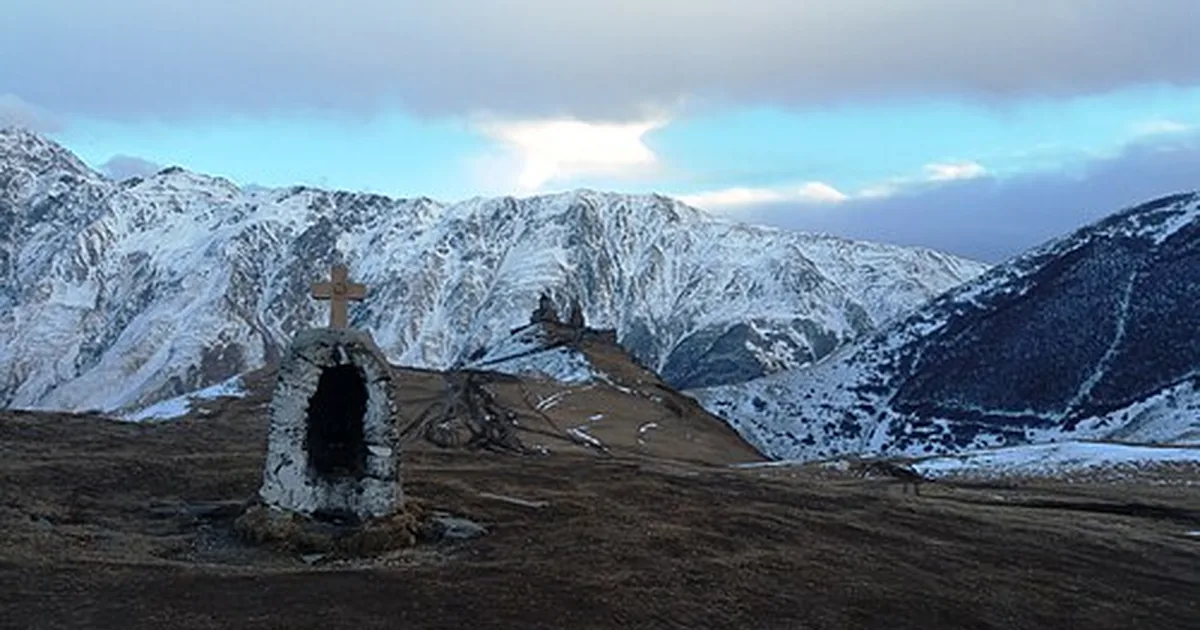
Winter Kazbegi is another planet. In summer, green mountains and wildflowers. In winter — white silence, snow walls along the road, and Gergeti Trinity Church against a Kazbek that looks like it's been painted in white paint on a blue canvas.
Most tourists come in summer. They're right — summer is easier, warmer, more predictable. But they miss something: winter Kazbegi gives you photos that almost no one has. Because almost no one comes in winter.
What to expect in Kazbegi in winter
Temperature: In Stepantsminda: −5 to +5°C. At the Jvari Pass: −10 to −5°C. At Gergeti Trinity Church: −10 to 0°C. Wind amplifies the cold significantly — factor in a wind-chill of 5–10°C lower than the air temperature.
Snow: December through March. Sometimes starts in November. Ends in April. The amount is unpredictable — the best days happen right after a heavy snowfall.
The pass: The Jvari Pass closes 3–5 times per month for 1–3 days due to snow and avalanche risk. Check road status on the Georgian Road Department website or simply ask Timur — he checks every morning.
Daylight: 8–9 hours (sunrise around 08:00, sunset around 17:00). Early departure is essential. In my experience, the best winter trips happen when we leave Tbilisi by 07:30 and arrive by 10:00. The morning sun on fresh snow produces completely different light than midday — softer and warmer in tone.
Advantages of visiting Kazbegi in winter
The photos. Gergeti Trinity Church in snow — a shot worth the whole journey. White Kazbek against a blue sky. Snow walls along the road after a plough has cleared it. Frozen waterfalls in Gveleti Gorge. These images exist only in winter.
Solitude. In summer the church is crowded. In winter — you, the monks, and silence. This is a completely different level of experience.
Prices. Accommodation is 30–40% cheaper than in summer. Guesthouses are genuinely glad to see any guest.
Gudauri. A ski resort sits right on the route. You can combine both: Kazbegi in the morning, skiing in the evening (if you stay two days).
I recommend winter Kazbegi to people who've already seen the summer version — the contrast is striking. Over three years I've taken around 40 groups here in winter, and not one regretted it — even the ones who couldn't reach the church because of snow.
Downsides of a winter trip to Kazbegi
The pass may close. This cannot be predicted a week in advance — it's decided on the day. Book with flexible cancellation conditions.
The church. The 4WD track to the church in winter depends on snow conditions. Sometimes passable, sometimes not. Hiking in winter is only for the prepared — snow, ice, and wind make it a serious undertaking.
Truso Gorge and Gveleti Waterfall. Both are inaccessible in winter (the road to Truso isn't cleared, and Gveleti trail is icy).
The cold. It sounds obvious, but −10°C with wind at 2,170 metres is genuinely serious. Without proper winter clothing, photography becomes impossible.
Full winter packing list for Kazbegi
Clothing (layered system)
- Thermal base layer (top + bottom) — essential if you plan to hike to the church
- Fleece mid-layer or warm jumper
- Down jacket or ski jacket (wind and water resistant outer shell)
- Winter trousers or thermal trousers
- Hat and gloves (ideally mittens over thin liner gloves)
- Neck gaiter or scarf
Footwear
- Winter boots with non-slip soles — critical. The ground near the church can be pure ice.
- Warm socks (wool or trekking — not cotton)
- Optional: trekking poles for hiking in deep snow
Gear
- Thermos with hot tea — priceless. There's no cafe at the top.
- Sunglasses — snow reflects sunlight more intensely than a beach. Eye strain at altitude is real.
- Power bank — cold kills phone batteries 2–3 times faster than normal. Keep your phone in an inside pocket between shots to extend battery life significantly.
- Spare battery for your camera if shooting with a DSLR or mirrorless.
How the roads work in Kazbegi in winter
The Georgian Military Highway is beautiful — and serious. Several things to know.
Hairpin bends. After Gudauri — 23 km of switchbacks with gradients up to 15%. In winter: ice. If you're hiring a taxi with a driver you don't know who lacks winter tyres — that's a real risk. Our vehicles run 4WD with winter tyres and chains; drivers have 3+ years of experience specifically on this route.
The Jvari Pass (2,395 m). Closes during heavy snowfall and avalanche risk — typically for 6–48 hours. If you're on a marshrutka, you could be stuck waiting at a closed barrier for 4–8 hours with no update. If you're with us — I know backup options and always have a Plan B.
When I run winter tours, I check road conditions at 06:30. If the pass is closed — I message clients immediately. If it's open — we go. Checking yourself: the Georgian Road Department publishes real-time status online, or call the tourist information line.
Gudauri + Kazbegi: perfect 2-day winter combo
The Gudauri ski resort (2,196 m) sits right on the route to Kazbegi. If you have two days, this is the ideal combination.
Day 1: Tbilisi → Gudauri (2 hours). Skiing or snowboarding, or simply the mountains. Stay overnight in Gudauri (many options, ₾60–300/night). Season runs December through March.
Day 2: Gudauri → Kazbegi (40 minutes). Gergeti Trinity Church, views of Kazbek, return to Tbilisi in the evening.
Gudauri prices: 1-day ski pass — ₾90–120, full equipment rental — ₾40–70. 57 km of runs across 4 zones. Compared to European resorts: 3–4 times cheaper.
Winter photography tips for Kazbegi
- Golden hour at sunrise — dawn is around 08:00. The first rays turn Kazbek and Gergeti Trinity Church pink. Leave Tbilisi by 06:30 to catch it.
- Right after a snowfall — fresh snow with no footprints. If it snowed overnight, mornings give the perfect texture. This is why staying overnight in Kazbegi (rather than doing a day trip) gives photographers a real advantage.
- Snow walls — after the pass is cleared, walls of snow 2–4 metres high form along the road. A unique shot that simply doesn't exist in summer.
- Clouds below you — in winter the clouds often sit lower than the church. You can be literally above the clouds. This angle exists only in winter.
- Phone and cold: At −10°C an active phone battery dies in 30–40 minutes. Keep it in an inside jacket pocket, warm it with your body heat. Shoot, then put it back.
Who should go to Kazbegi in winter?
Winter Kazbegi is for people who aren't afraid of unpredictability. If the pass is open and the sky is clear — it's one of the best days you can spend in Georgia. If it's closed — we reschedule for free.
I run winter tours from December through March. Departure is always at 08:00, but we return earlier — by 18:00–19:00 (shorter winter days).