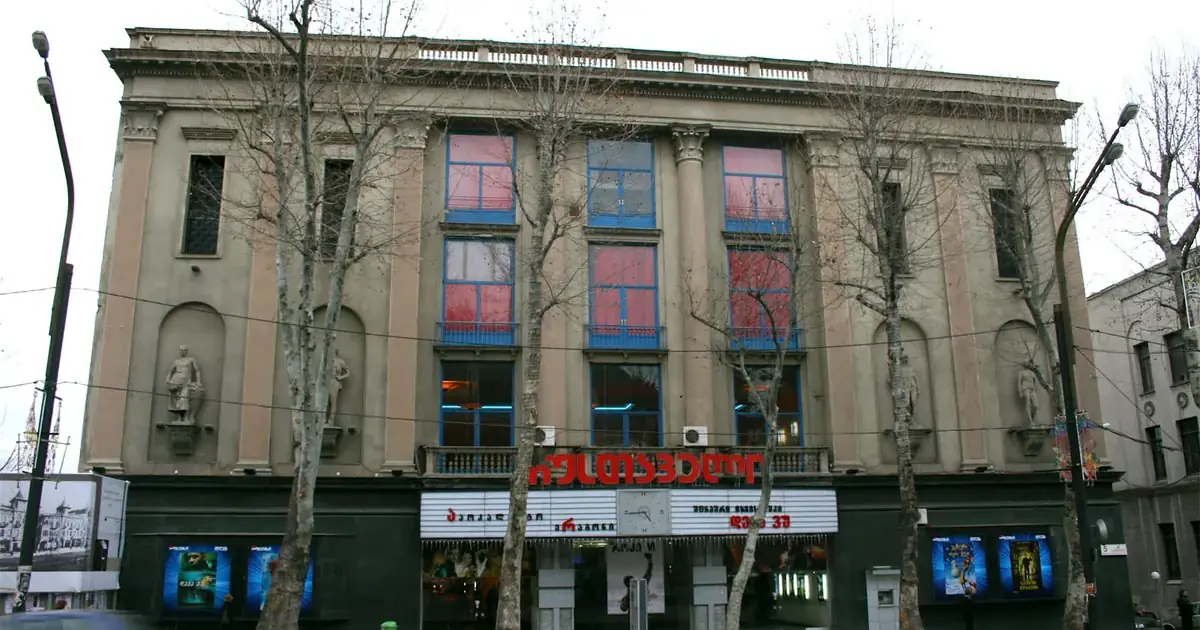
Culture · 10 min read
The Best Georgian Films to Watch Before Visiting Georgia
Tour on this topic: Telavi Day Trip, home town of Mimino — ₾185

In short: if you watch only three Georgian films, start with Tengiz Abuladze's Repentance (1984), Zaza Urushadze's Tangerines (2013) and Levan Akin's And Then We Danced (2019). Classics include Father of a Soldier, Mimino and Falling Leaves. Among recent films, What Do We See When We Look at the Sky? was shot in Kutaisi. Many locations are easy to visit: Telavi, Kakheti, Kutaisi and Tbilisi.
Georgian cinema has a reputation far bigger than the country. In Soviet times it was one of the strongest film schools in the Union, and today Georgian films are again winning prizes in Berlin, Cannes and San Sebastián. Watching a few of them before you travel is the fastest way to understand the country's humour, its feasts and its wounds. Here are the films worth your evening and the places where they were shot.
Why Georgian cinema is special
Georgian films have a recognisable tone: sadness and humour in the same frame, love for the little man and plenty of feasts, songs and landscapes. Films about hard things rarely end in pure darkness, and comedies are almost always a little melancholy. Fellini called Georgian cinema "a remarkable phenomenon, special, philosophically light, delicate and at the same time childishly pure", and the line is still widely quoted.
In the 1960s to 1980s the Georgia-Film studio was home to world-class directors: Tengiz Abuladze, Otar Iosseliani, Revaz Chkheidze, the brothers Giorgi and Eldar Shengelaia and Lana Gogoberidze. Giorgi Danelia worked in Moscow, but his best films are steeped in Georgia.
Key Georgian films at a glance
| Year | Film | Director | Setting |
|---|---|---|---|
| 1964 | Father of a Soldier | Revaz Chkheidze | a Kakhetian winemaker at the front |
| 1966 | Falling Leaves | Otar Iosseliani | a Kakheti winery |
| 1969 | Don't Grieve | Giorgi Danelia | Georgia around 1900 |
| 1977 | Mimino | Giorgi Danelia | Telavi; Omalo and Shenako in Tusheti |
| 1984 | Repentance | Tengiz Abuladze | a provincial town |
| 2013 | Tangerines | Zaza Urushadze | shot in Guria |
| 2019 | And Then We Danced | Levan Akin | Tbilisi |
| 2021 | What Do We See When We Look at the Sky? | Alexandre Koberidze | Kutaisi |
Soviet-era classics: where to start
Father of a Soldier (1964). An elderly Kakhetian winemaker, Giorgi Makharashvili, goes to the front to find his wounded son and ends up marching with the army to Berlin. The most famous scene has him stopping a tank from crushing a grapevine. After this film you understand why vineyards are almost sacred in Georgia.
Mimino (1977). Helicopter pilot Valiko Mizandari ferries mail and sheep between mountain villages but dreams of flying big jets. Danelia's comedy is the most beloved Georgian film across the former USSR. Valiko comes from near Telavi, which appears by a huge old plane tree and in the finale, when Rubik comes looking for his friend. The mountain scenes were shot in Tusheti, in the villages of Omalo and Shenako.
Don't Grieve (1969). Also by Danelia, written by Revaz Gabriadze: young doctor Benjamin Glonti (Vakhtang Kikabidze) returns from St Petersburg to provincial Georgia around 1900 and feasts with friends instead of working. A funny, sad film about living lightly when nothing goes right, with some of the best table songs in Soviet cinema.
Falling Leaves (1966). Otar Iosseliani's debut: a young technician at a Kakhetian winery refuses to release unfinished wine to meet the plan. A quiet, ironic film about honesty and a perfect introduction to Soviet winemaking. If you are heading to Kakheti, watch it first.
There Once Was a Singing Blackbird (1970), also by Iosseliani, follows a Tbilisi musician who is always late and always needed: a portrait of early-1970s Tbilisi, its streets, courtyards and cafés.
Tengiz Abuladze and Repentance
Abuladze's trilogy, The Plea (1967), The Wishing Tree (1976) and Repentance (1984), is the summit of Georgian cinema. The Plea is based on Vazha-Pshavela's poems about the highlanders of Khevsureti. The Wishing Tree is a love story in an early 20th-century Georgian village.
Repentance is a parable about the dictator Varlam Aravidze, whose corpse a woman keeps digging up so the town cannot forget his crimes. Shelved until perestroika, it was released in 1987, won the Grand Prix at Cannes and became a symbol of the era.
New Georgian cinema
After the hard 1990s, Georgian cinema returned to the festival circuit in the 2010s and is now one of Europe's most visible small film industries.
- Tangerines (2013), Zaza Urushadze. During the 1992 war in Abkhazia an Estonian hides a wounded Georgian and a Chechen in his house. Shot in Guria, it was Oscar-nominated for Best Foreign Language Film.
- In Bloom (2013), Nana Ekvtimishvili and Simon Gross. Two teenage girls in Tbilisi in 1992.
- My Happy Family (2017) by the same directors. A 52-year-old teacher leaves her big Tbilisi family to live alone; a perfect picture of Tbilisi apartment life.
- And Then We Danced (2019), Levan Akin. A young dancer prepares to audition for the national ensemble, with many scenes in Tbilisi rehearsal studios and streets. Learn more about the dances themselves in our guide to Georgian dance.
- Beginning (2020), Dea Kulumbegashvili. Winner of the Golden Shell at San Sebastián.
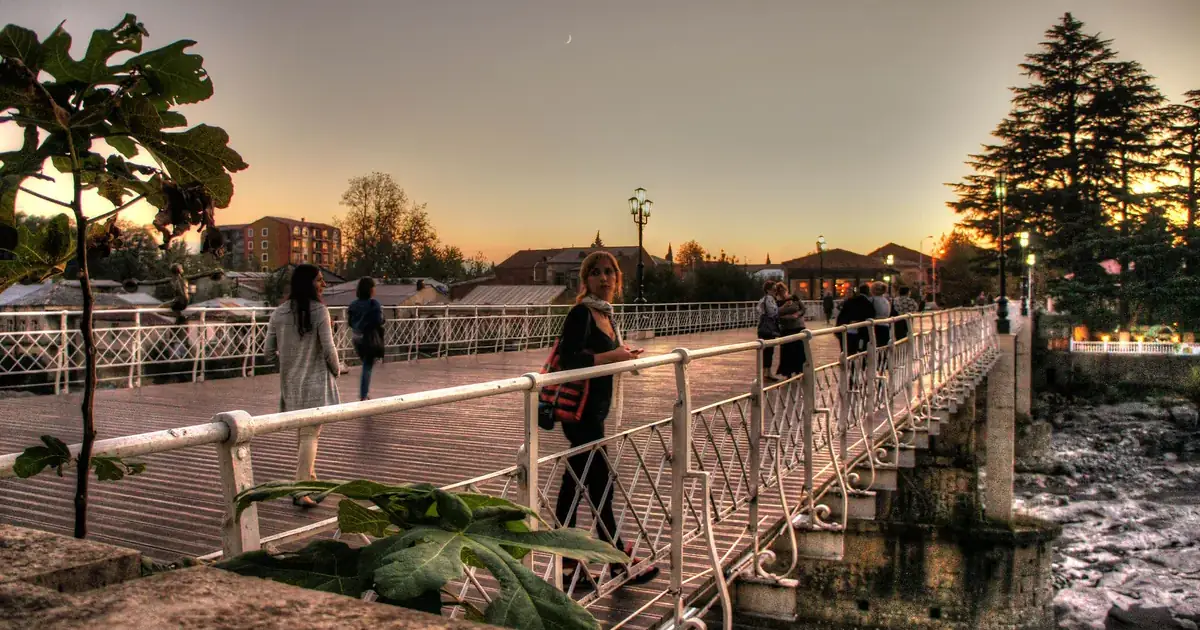
- What Do We See When We Look at the Sky? (2021), Alexandre Koberidze. A fairy tale about cursed lovers, shot in Kutaisi during a World Cup summer. It won the FIPRESCI Prize at the Berlinale and will make you want to see Kutaisi for yourself.
Eight more films if you are hooked
- My Grandmother (1929), Kote Mikaberidze. An avant-garde satire of bureaucrats that was banned for decades, with startlingly modern editing.
- Pirosmani (1969), Giorgi Shengelaia. A film about painter Niko Pirosmani that looks like his canvases come alive. Watch it, then find his work in Tbilisi's National Gallery.
- The Eccentrics (1973), Eldar Shengelaia. A fairy-tale comedy about a dreamer building a flying machine.
- Stepmother Samanishvili (1977), Eldar Shengelaia. A comedy after David Kldiashvili's story about a son searching for a "safe" bride for his father.
- Data Tutashkhia (1977–1978), Giuli Lordkipanidze. A multi-part adaptation of Chabua Amirejibi's novel about a noble outlaw, loved by generations.
- Blue Mountains (1983), Eldar Shengelaia. An absurdist comedy about a writer who cannot get a publishing house to read his manuscript. Still painfully funny.
- Passport (1990), Giorgi Danelia. A Georgian taxi driver ends up in Israel by mistake instead of his brother.
- Blackbird Blackbird Blackberry (2023), Elene Naveriani. A single 48-year-old shopkeeper in an Imeretian village falls in love for the first time. It premiered at Cannes in the Directors' Fortnight.
How to plan a film programme around your trip
On a week-long trip, it works well to match films to your route:
- Before you fly: Mimino and Don't Grieve, for the mood and the humour.
- Before Tbilisi: Singing Blackbird and Pirosmani, then a walk through the Old Town and the National Gallery.
- Before Kakheti: Falling Leaves and Father of a Soldier. You will see the wineries and vineyards with different eyes.
- Before Kutaisi: What Do We See When We Look at the Sky?, then look for the bridges and cafés from the film.
- After the trip: Repentance and Tangerines, serious films best watched once the country feels familiar.
Most Soviet-era classics are available with English subtitles online, and Mosfilm's official channel hosts several of Danelia's films for free. A line from Mimino at a Georgian table is a reliable icebreaker; for more on feast etiquette, see our guide to Georgian toasts.
Filming locations you can visit
| Place | Films | Getting there |
|---|---|---|
| Telavi and Kakheti | Mimino, Father of a Soldier, Falling Leaves | 2 h from Tbilisi, Telavi day trip |
| Tusheti | Mountain scenes of Mimino (Omalo, Shenako) | Road open in summer, Tusheti tour |
| Kutaisi | What Do We See When We Look at the Sky? | 3.5–4 h, Kutaisi day trip |
| Tbilisi | Singing Blackbird, And Then We Danced, My Happy Family | Old Town, Sololaki, Vake |
| Guria | Tangerines | On the way to the sea, 4–5 h |
A bronze monument to Mimino's heroes by Zurab Tsereteli stands in Tbilisi's Avlabari district, with Valiko, Rubik, Volokhov and Danelia himself. In Telavi, locals will happily show you the plane tree from the film. We often suggest a reverse movie night to guests: take the trip first, watch the film after, and many scenes look completely different.
Where to watch Georgian films in Tbilisi
Amirani cinema on Kostava Street and the Georgian National Film Center regularly screen Georgian classics and new releases, often with English subtitles. The National Film Center also hosts some films online. Recent titles appear on streaming services and festival platforms.
Film festivals in Georgia
- Tbilisi International Film Festival in early December (1–12 December in recent years), the country's main festival and a good reason for a winter trip.
- Batumi International Art-house Film Festival (BIAFF) in September, by the sea.
- Amirani International Student Film Festival in October, screened at Amirani cinema.
Visiting Tbilisi in December? Combine the festival with the city in its New Year lights. In autumn, the best pairing is Kakheti during rtveli, the grape harvest, with Falling Leaves in the evening.
★★★★★
«Excellent guide. Showed and told us everything about sunny Georgia. Speaks excellent Russian.»
Georgian films FAQ
What are the best Georgian films to start with?
Repentance (1984), Tangerines (2013), Father of a Soldier (1964), Mimino (1977) and And Then We Danced (2019).
Where is the Mimino monument in Tbilisi?
In the Avlabari district. Zurab Tsereteli's bronze group, unveiled in 2011, shows Valiko, Rubik, Volokhov and director Giorgi Danelia.
Which Georgian film was nominated for an Oscar?
Tangerines (2013) by Zaza Urushadze was nominated for Best Foreign Language Film, submitted by Estonia.
Which Georgian film won at Cannes?
Tengiz Abuladze's Repentance won the Grand Prix at Cannes in 1987.
Where was What Do We See When We Look at the Sky? filmed?
In Kutaisi, Georgia's third-largest city, during a World Cup summer.
When is the Tbilisi International Film Festival?
It takes place in early December.
Read also:
See Mimino's Georgia for yourself
Our Telavi and Kakheti day trip takes in Mimino's home town, wineries straight out of Falling Leaves and the vineyards of Father of a Soldier. From ₾185. Message on WhatsApp
Private guide in Tbilisi since 2023. Over 500 tours. Rated 4.9/5 on Google. I live in Georgia and know the country from the inside.
Book a tour