
The Georgian alphabet looks like a set of mysterious curls — but it is actually one of the most logical writing systems in the world: 33 letters, each read as exactly one sound, with no exceptions and no silent letters. You can learn to read signs over a weekend. This guide has the full table with transliteration, a breakdown of the tricky sounds, and the words that instantly warm up the locals. Heading to Georgia? Don't forget to get travel insurance — since 2026 it is mandatory for entry.
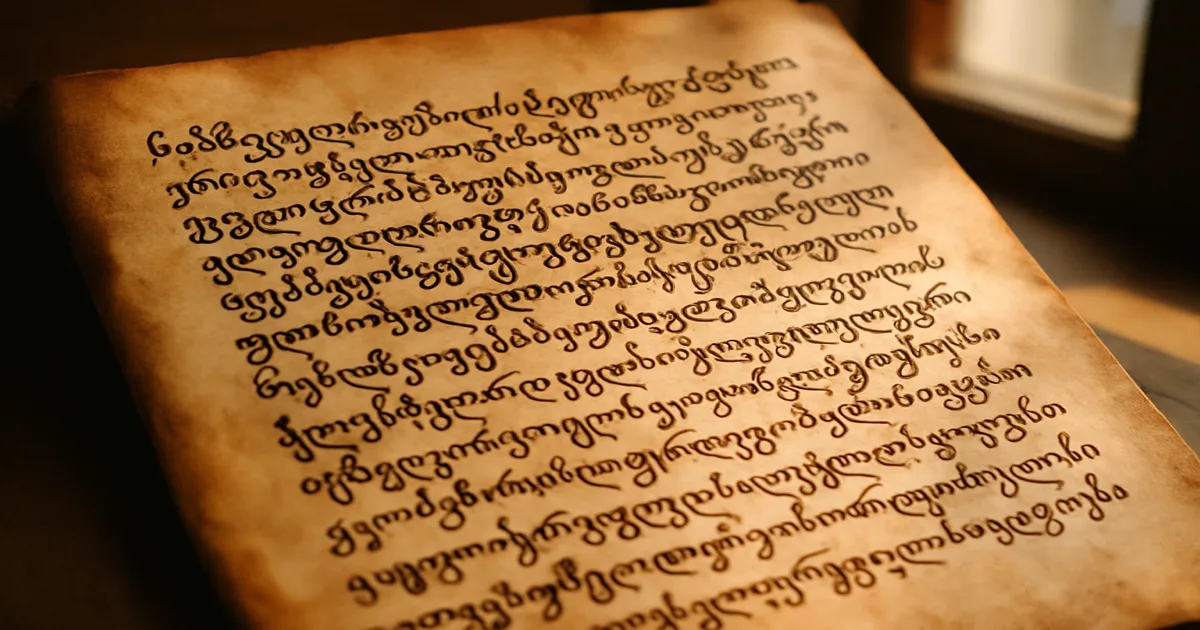
What the Georgian alphabet is — Mkhedruli
The modern Georgian script is called Mkhedruli (მხედრული — "cavalry" or "military" script). It is one of just 14 independent writing systems in the world: it did not descend from Cyrillic, Latin or the Armenian alphabet, but developed along its own path. That is exactly why the letters look so unfamiliar — round, curling, with no sharp corners.
The key thing for a traveler to understand: Georgian writing is strictly phonetic. One letter is always the same one sound. There are no silent letters, no doubling rules, no traps. As it is written, so it is read. That makes Georgian one of the easiest languages in the world to read aloud, even if you don't understand the words.
All 33 letters with transliteration — table
Below is the full Georgian alphabet table: the letter, its name, the Latin transliteration and how it sounds. The five vowels are the simple part — start there.
| Letter | Name | Translit. | How it sounds |
|---|---|---|---|
| ა | ani | a | like "a" in "father" |
| ბ | bani | b | like "b" in "bee" |
| გ | gani | g | like "g" in "go" |
| დ | doni | d | like "d" in "door" |
| ე | eni | e | like "e" in "bet" |
| ვ | vini | v | like "v" in "van" |
| ზ | zeni | z | like "z" in "zoo" |
| თ | tani | t | soft "t" with a puff of air |
| ი | ini | i | like "ee" in "see" |
| კ | kani | k' | sharp, glottal "k" |
| ლ | lasi | l | like "l" in "lamp" |
| მ | mani | m | like "m" in "moon" |
| ნ | nari | n | like "n" in "net" |
| ო | oni | o | like "o" in "for" |
| პ | pari | p' | sharp, glottal "p" |
| ჟ | zhani | zh | like "s" in "measure" |
| რ | rae | r | rolled "r" |
| ს | sani | s | like "s" in "sun" |
| ტ | tari | t' | sharp, glottal "t" |
| უ | uni | u | like "oo" in "moon" |
| ფ | pari | p | soft "p" with a puff of air |
| ქ | kani | k | soft "k" with a puff of air |
| ღ | ghani | gh | throaty "r", like French "r" |
| ყ | qari | q' | deep glottal "k" from the throat |
| შ | shini | sh | like "sh" in "ship" |
| ჩ | chini | ch | soft "ch" with a puff of air |
| ც | tsani | ts | soft "ts" with a puff of air |
| ძ | dzili | dz | "dz" as one sound |
| წ | tsili | ts' | sharp, glottal "ts" |
| ჭ | chari | ch' | sharp, glottal "ch" |
| ხ | khani | kh | like "ch" in Scottish "loch" |
| ჯ | jani | j | like "j" in "jeans" |
| ჰ | hae | h | light "h", like English "hat" |
How to read: vowels and tricky consonants
The vowels are easy — there are five, and they sound clean and pure, without gliding: ა (a), ე (e), ი (i), ო (o), უ (u). There are no "ya", "yu" or "yo" sounds baked into single letters as in some languages — those are written as combinations.
The real challenge is the consonants that English doesn't have. Georgian distinguishes three rows where English hears just one sound:
- Aspirated (with a puff of air): თ, ფ, ქ, ჩ, ც — pronounced softly, releasing a little breath.
- Ejective / glottal (sharp): კ, პ, ტ, წ, ჭ — pronounced abruptly, with a small "click" in the throat and no breath.
- Uvular: ღ (a throaty "gh") and ყ (a deep glottal "k") — formed far back in the throat.
Good news for travelers: if you pronounce the ejective კ as a plain English "k", people will still understand you. The distinction between the rows changes meaning for Georgians, but in your speech it will be forgiven — here an accent only adds charm.
Three Georgian scripts and UNESCO
Georgian writing went through three historical stages, and these are not just different fonts — they are three different writing systems:
- Asomtavruli (ასომთავრული) — the oldest, from the 5th century. Large, angular capital letters used for the first Christian inscriptions and manuscripts.
- Nuskhuri (ნუსხური) — from the 9th century, smaller and slanted, used by the church. Asomtavruli and Nuskhuri together form the ecclesiastical "Khutsuri" script.
- Mkhedruli (მხედრული) — from the 10th–11th century, the secular "military" script that became the modern alphabet. It is the one you see today on signs and in books.
In 2016 UNESCO inscribed "The living culture of three writing systems of the Georgian alphabet" on its list of the Intangible Cultural Heritage of Humanity. All three scripts are still in use today: Mkhedruli everywhere, and Asomtavruli and Nuskhuri in the church, in calligraphy and in design.
On my tours I always show guests how the same word looks in all three scripts — on the walls of Jvari or Svetitskhoveli in Mtskheta you can see ancient Asomtavruli inscriptions more than a thousand years old. Once you realize these curls are a living link to the 5th century, a trip around Georgia reads completely differently.
Useful words and phrases for travelers
You don't have to learn the whole alphabet as a tourist, but a dozen words work wonders. Georgians genuinely light up at any attempt to speak their language — the welcome warms up instantly.
| Georgian | Transliteration | Meaning |
|---|---|---|
| გამარჯობა | gamarjoba | hello |
| მადლობა | madloba | thank you |
| დიახ / კი | diakh / ki | yes |
| არა | ara | no |
| კარგი | kargi | good, okay |
| რა ღირს? | ra ghirs? | how much is it? |
| ბოდიში | bodishi | excuse me / sorry |
| გაგიმარჯოს | gagimarjos | reply to "hello" |
| გაუმარჯოს | gaumarjos | a toast — "to victory!" |
| ნახვამდის | nakhvamdis | goodbye |
A world of its own is the Georgian toast and the supra (feast), where the language truly comes alive. That deserves its own read: the art of Georgian toasts — a whole ritual with its tamada (toastmaster) and its order.
Signs, numbers and what actually helps
In Tbilisi and the tourist towns, almost every sign, street name and metro station is duplicated in Latin script — you won't get lost for not knowing the alphabet. Menus in central cafes are usually in English. But out in the regions — in Kakheti villages, at markets, in small bakeries — there may be no Latin, and being able to read even a sign like "პური" (puri — bread) or "ღვინო" (ghvino — wine) really helps.
A few sign-words worth recognizing:
- აფთიაქი (aptiaki) — pharmacy
- პური (puri) — bread, bakery
- ღვინო (ghvino) — wine
- მეტრო (metro) — metro
- გასასვლელი (gasasvleli) — exit
- ღია / დაკეტილია (ghia / daketilia) — open / closed
Georgians write everyday numbers in ordinary Arabic digits (1, 2, 3), so prices and phone numbers are no problem. The historic letter-based numbering survives only in church and decorative contexts.
Before the trip we learned about ten Georgian words from a cheat sheet like this and how to read signs. At a market in Tbilisi we said "gamarjoba" and "madloba" to a vendor — he broke into a huge smile, gave us churchkhela and spent half an hour telling Timur about his village. A small thing, but it made the whole trip warmer. We actually learned to read the signs in a couple of days too.
How to learn it fast: apps and tips
If you want to go beyond reading signs and learn the alphabet properly, here is what works:
- Start with the vowels and familiar consonants — ბ, გ, დ, მ, ნ sound just like English. That is already half the alphabet.
- Learn through words, not letters — memorize გამარჯობა as a whole and the letters stick by themselves.
- Apps: Ling, Drops, Memrise and free Anki decks for the Georgian alphabet give you a trainer with audio.
- Read signs out loud — in Tbilisi the Georgian and Latin versions sit side by side, so you can check yourself on the go. There's no better practice.
- Don't chase the ejectives — the glottal sounds come with practice and by ear; at the start an approximate pronunciation is plenty.
A realistic goal for a trip: learn to read signs and memorize 10–15 courtesy words over two or three evenings. That's enough to feel like a local rather than a lost tourist.
Dive into the language and culture with a guide
Old Tbilisi — history and inscriptions · Mtskheta — ancient churches and scripts · All tours
See Georgia from the inside — with a local guide
Timur will show you ancient inscriptions, teach you to read signs and to raise a proper toast. Private tour, rated 4.9/5.