Georgia has rich craft traditions. Cloisonné enamel jewellery, woollen goods from Tusheti, Signagi ceramics, spices and tea from Adjara — there's plenty to take home.
In short: Tbilisi Shopping Tour — a 4 h tour, from ₾145 per person, groups of up to 7, departure at 10:00. The route includes Dezerter Bazaar, homemade wine and the Dry Bridge. Local guide from Sakhva Travel, online booking with no hidden fees.
Key facts
| Duration | 4h |
|---|
| Start | 10:00 |
|---|
| Included | Local guide; Dezerter Bazaar — food and spices; Antiques stalls; Old Town jewellery workshops; Bargaining and price tips |
|---|
| Paid separately | Purchases; Transport between stops (as needed) |
|---|
| Payment and cancellation | 10% deposit, the balance on the day; free cancellation up to 48 hours before |
|---|
Dezerter Bazaar
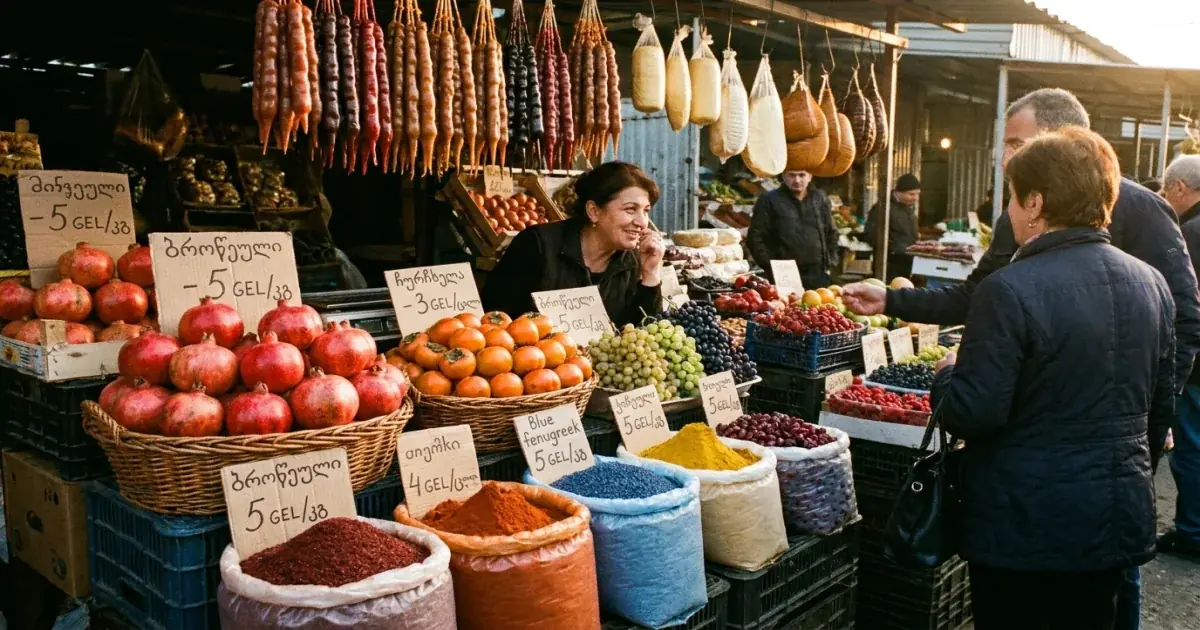
Tbilisi's main market — where locals buy everything. Spices: Svan salt, khmeli-suneli, adjika — 3–4 times cheaper here than in the tourist shops of the Old Town. Your guide will show you trusted sellers and explain which spices to take home.
The wine section: homemade wine sold straight from plastic canisters. It sounds odd, but it's often the best wine you can buy in Tbilisi. Your guide will pick a seller with a proven product.
Jewellery workshops
In the Old Town quarters there are workshops where jewellers make pieces by hand. The traditional Georgian technique — cloisonné enamel — creates unique patterns with pomegranate blossoms.
Antiques stalls by the market: Soviet badges, Georgian coins, old icons (replicas — originals may not be exported), Soviet electronics. Your guide will help you tell an original from a copy and negotiate the price.
Route stop by stop, with times
10:00 — Dezerter Bazaar (125 Davit Aghmashenebeli Avenue). Tbilisi's main food market. Floor 1: seasonal vegetables and fruit (in August, figs at ₾3/kg), cheeses (sulguni from ₾8/kg, Imeretian from ₾6/kg). Floor 2: spices. Svan salt (salt mixed with mountain herbs and garlic) — ₾3–4 for 200 g; the same thing costs ₾10–15 in Old Town souvenir shops. Khmeli-suneli — ₾2–3. Adjika — fresh from ₾4, dried from ₾2.
11:30 — Homemade wine at Dezerter. On the basement level, sellers offer homemade wine straight from 5- and 10-litre jugs. Red Saperavi ₾3–5/litre, white Rkatsiteli ₾3–4/litre. Your guide knows trusted sellers who sell their own (not resold) wine. You can have it poured into a plastic bottle.
12:30 — Dry Bridge Market (the Mtkvari embankment by Metekhi Bridge). An open-air flea market: Soviet porcelain, Georgian jewellery, old books in Georgian and Russian. Open every day from 10:00 to 17:00. Bargaining is the norm — opening prices are 2–3 times too high. A useful phrase: “Ramdeni ghirs?” (“How much is it?”). Your guide bargains in Georgian — saving you 30–50%.
14:00 — Old Town jewellery workshops (Kote Afkhazi and Leselidze streets). Workshops are open from 10:00 to 18:00. The cloisonné enamel technique: a copper base + glass paste + firing. The signature motif is the pomegranate flower. A ring ₾40–80, earrings ₾60–120, a bracelet ₾80–150. This is handmade work by a specific craftsman, not factory goods.
15:00 — Georgian designer shops (Shardeni Street). 5–6 boutiques with Georgian clothing, ceramics and jewellery from local brands. Prices are higher than at the market, but so is the quality, and the origin is guaranteed. “Tbilisi' 87”, “Manavis”, “Gori Dachi” — names worth remembering.
Three specific tips
- At Dezerter Bazaar, don't buy spices from the first seller by the entrance — it's a tourist zone with a 50% markup. Go deeper, to the rows where locals shop.
- Exporting antiques older than 1960 from Georgia requires a permit from the Ministry of Culture. No icon, coin or “genuine” Soviet item from the 1940s should leave the country without documents.
- The best time for the Dry Bridge is Saturday morning (10:00–12:00): the widest selection and sellers in a good mood.
Why choose the shopping tour
Without a guide you'll buy fridge magnets on Rustaveli and pay 3 times too much. With a guide — Dezerter Bazaar (spices 5 times cheaper than at the airport), wine shops with real qvevri wine (₾15–25 a bottle vs ₾50 in tourist shops), antique lanes with silver and enamel. We'll show you where to buy churchkhela, Svan salt, adjika, tkemali and tea — all fresh, from the producers.
Tip
Key places: Dry Bridge Market (antiques, silver, carpets — bargain!), Meidan Bazaar (spices, churchkhela), Galleria mall (international brands). Silver jewellery: ₾30-80 for a ring, minankari from ₾50.
Included in the price
- Local guide
- Dezerter Bazaar — food and spices
- Antiques stalls
- Old Town jewellery workshops
- Bargaining and price tips
Not included
- Purchases
- Transport between stops (as needed)
Frequently asked questions
What can you buy on a shopping tour in Tbilisi?
Georgian wines, chacha, churchkhela, spices, adjika, ceramics, woollen goods, enamel jewellery and souvenirs from the Old Town.
Which markets and shops will we visit?
The Dry Bridge (antiques and unique finds), the Dezerter Bazaar (spices, cheeses, wines) and Georgian designers' boutiques in the Old Town.
Does the guide help with bargaining?
Yes, the guide knows the real prices and will help you avoid overpaying at the markets. Bargaining is expected at the Dry Bridge — the guide will show you how it's done.
How much does the shopping tour cost and what does the price include?
The tour costs from ₾145 per person. The price includes a local guide for 4 hours, a route through the Dezerter Bazaar, the jewellery rows, the Dry Bridge antiques market and souvenir shops, plus help with choosing and bargaining. Your purchases, of course, are paid by you. Because the guide knows fair prices, the savings on purchases usually cover the cost of the tour. 10% prepayment, the rest on the day of the tour.
Can we find quality jewellery and antiques rather than tourist junk?
Yes, that is exactly why people hire a guide. We take you not to tourist shops with mark-ups but to trusted jewellers and antique dealers: Georgian cloisonné enamel (minankari), silver, old carpets, vintage at the Dry Bridge. We will show you how to tell the genuine article from a fake and what a fair price is. If you are looking for something specific, tell us in advance and we will find where to get it.
Do you help with exporting purchases and tax-free?
Yes. Antiques over 50 years old require an export certificate in Georgia — we will tell you which sellers arrange it so there are no problems at the border. For regular purchases in large shops a VAT refund (tax-free) is possible — we will explain where and how. We will help pack fragile items for your luggage. You won't leave anything at customs because you didn't know the rules.
Detailed itinerary
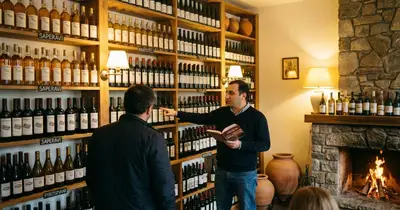
Route: Dezerter Bazaar (the largest market in the Caucasus — spices from 3₾/100g, churchkhela 2-4₾, sulguni 8-12₾/kg), the Meidan area (antiques, handmade carpets from 200₾), Shardeni Street (designer boutiques of Georgian brands: Materiel, Situationist). Separately — the “8000 Vintages” wine shop (vintage wines from 15₾, unique qvevri wines from 40₾). Souvenirs: a wine horn (from 25₾), Shrosha ceramics (from 15₾), minankari — Georgian cloisonné enamel (from 50₾). We help you bargain at the bazaar — a 20-30% discount is realistic.
What to bring
- comfortable shoes
- a roomy bag
- cash in lari
Practical information
The tour starts from your hotel in Tbilisi. We pick you up in a comfortable air-conditioned car. Group: up to 7 people, children welcome. Payment in lari (₾) in cash or by transfer. Booking via WhatsApp — we reply within 10-15 minutes and send a confirmation with the route details.
When to book
In high season (May-October) we recommend booking 3-5 days ahead. In winter and the off-season, a day ahead is fine. Free cancellation up to 48 hours before the start. In case of rain or bad weather, we reschedule at no extra cost.
What’s included in the price
Hotel pick-up and drop-off, local guide services, all entrance tickets along the route, bottled water. Not included: lunch (average restaurant bill 25-40₾), personal purchases and souvenirs.