Guide · 12 min read
Monasteries in Georgia: 19 Sacred Sites and How to Visit Them
Tour on this topic: Mtskheta: Jvari, Svetitskhoveli and Samtavro — from ₾98

In short: the key monasteries in Georgia are Jvari, Svetitskhoveli and Samtavro in Mtskheta, Shio-Mgvime and Betania near Tbilisi, Gergeti below Mount Kazbek, David Gareja on the Azerbaijani border, Bodbe, Alaverdi and Nekresi in Kakheti, Gelati near Kutaisi and the cave monastery of Vardzia. Entry is free almost everywhere; only Vardzia charges. Women need a skirt and headscarf, men long trousers. The nearest sites are 25 km from Tbilisi, with tours from ₾98.
Georgia adopted Christianity in the 4th century, and its monasteries are not museums but living communities: most hold services, monks and nuns live there, and pilgrims come from all over the country on feast days. I take guests to these places all the time. Here are nineteen monasteries and churches worth the trip, plus the rules that will save you an awkward moment at the gate.
19 monasteries and churches in Georgia at a glance
| Monastery | Region | Century | From Tbilisi | Entry |
|---|---|---|---|---|
| Jvari | Mtskheta | 6th | 24 km | free |
| Svetitskhoveli | Mtskheta | 11th | 25 km | free |
| Samtavro | Mtskheta | 4th–11th | 26 km | free |
| Betania | near Tbilisi | 12th | 36 km | free |
| Shio-Mgvime | near Mtskheta | 6th | 37 km | free |
| David Gareja | Kakheti | 6th | 98 km | free |
| Alaverdi | Kakheti | 11th | 105 km | free |
| Bodbe | Kakheti | 9th | 110 km | free |
| Nekresi | Kakheti | 6th | 125 km | free |
| Gergeti (Tsminda Sameba) | Kazbegi | 14th | 159 km | free |
| Vardzia | Samtskhe-Javakheti | 12th | 225 km | ₾15 |
| Gelati | Imereti | 12th | 227 km | free |
| Zedazeni | Mtskheta | 6th | about 35 km | free |
| Ikalto | Kakheti | 6th | about 95 km | free |
| Akhali Shuamta | Kakheti | 16th | about 85 km | free |
| Ubisa | Imereti | 9th | about 165 km | free |
| Sapara | Samtskhe-Javakheti | 9th | about 215 km | free |
| Nikortsminda | Racha | 11th | about 250 km | free |
| Martvili (Chkondidi) | Samegrelo | 7th | about 275 km | free |
Distances are by road. On mountain roads allow about a quarter more time than your navigation app shows. Donations for candles and upkeep are optional.
Dress code and etiquette
- Women — a skirt below the knee, covered shoulders and a headscarf. Big monasteries usually keep scarves and wrap skirts at the entrance; small ones may not.
- Men — long trousers and no hat inside the church.
- Photos — many churches don't allow photos inside, or only without flash. If there is a sign or a monk asks, put the phone away.
- Quiet — during a service don't walk around the church or stand with your back to the altar.
Keep a scarf and a light skirt in your bag: a day trip often includes two or three monasteries, and not all of them have spares.
Monasteries and convents
Visitors are welcome at both monasteries and convents, and the dress code is equally strict everywhere. The convents on this list are Samtavro and Bodbe; Shio-Mgvime, Alaverdi and the David Gareja Lavra are monasteries. Some monasteries close certain areas, such as the cells, to women — follow the signs and the monks' requests.
Inside the church: small rules
Candles are sold at a stand near the entrance; you can light them for health in front of icons and for the departed at the separate stand. Don't touch icons or frescoes, and don't sit on the benches meant for the elderly during a service. Speak quietly, switch the phone to silent, and if a service is on, stand near the back. A small donation in the box is appreciated but never required.
Near Tbilisi
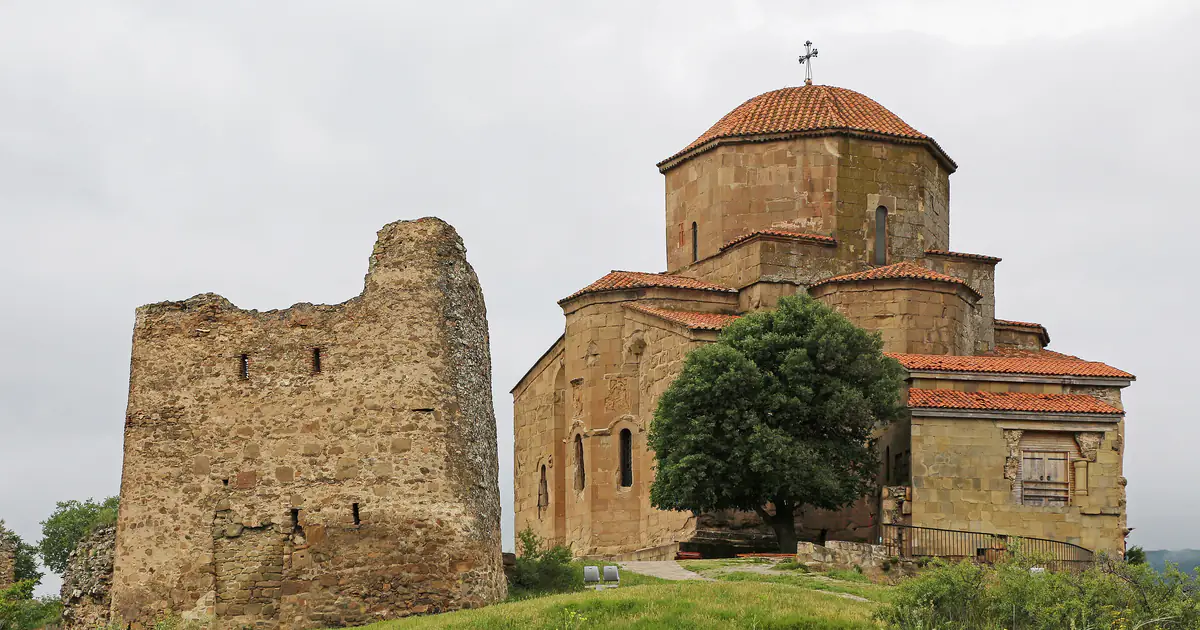
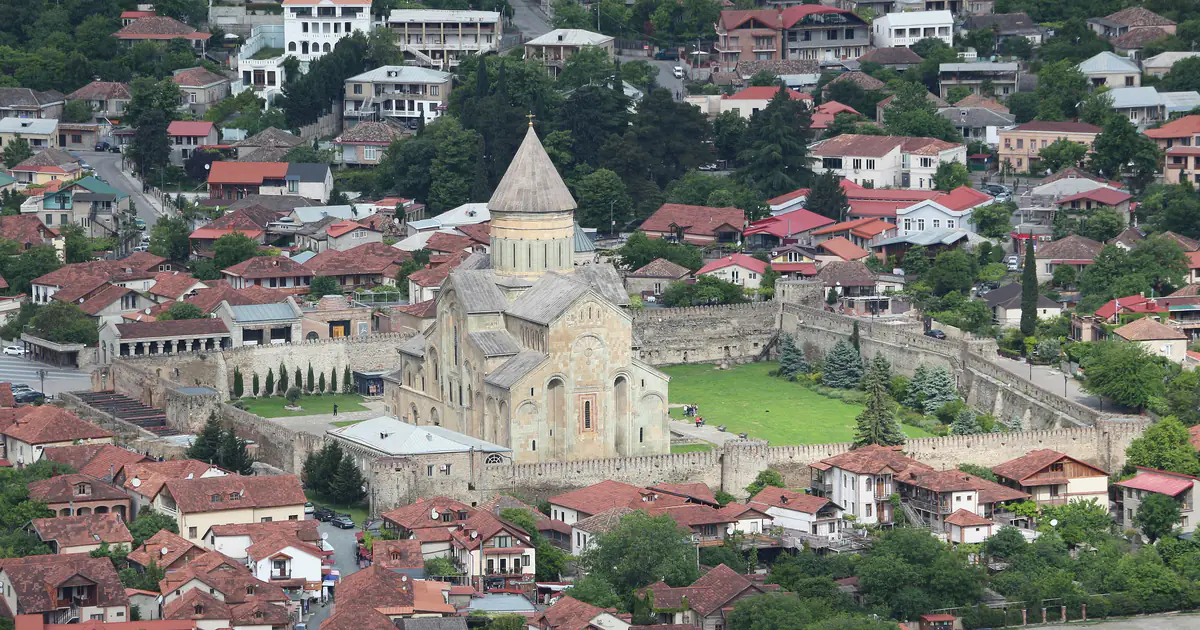
The ancient capital of Mtskheta, half an hour from Tbilisi, is the heart of Georgian Orthodoxy. Jvari is a 6th-century church on a hill above the meeting of the Aragvi and Mtkvari rivers, with one of the best views in the country; there is a dedicated Jvari tour from ₾145. Svetitskhoveli is the 11th-century cathedral where, by tradition, the robe of Christ is kept. Samtavro is a convent with an 11th-century church and the graves of Georgia's first Christian rulers, King Mirian and Queen Nana. All three are UNESCO-listed. I explain how to spend the day in my Mtskheta day trip guide, and the region is covered on the Mtskheta-Mtianeti page.
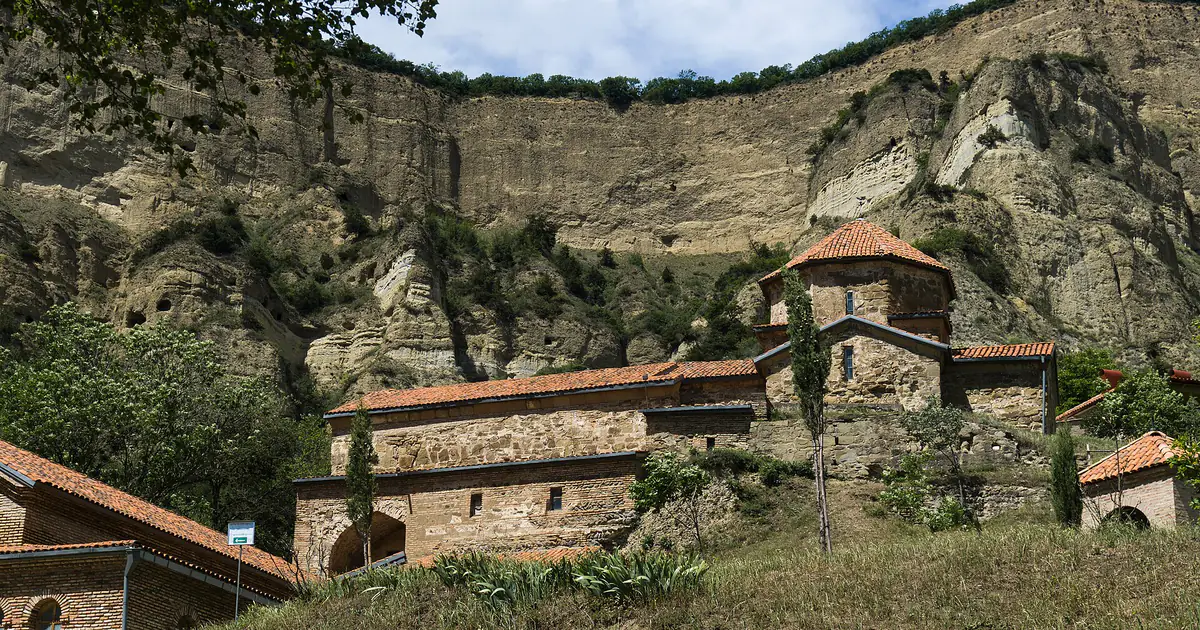
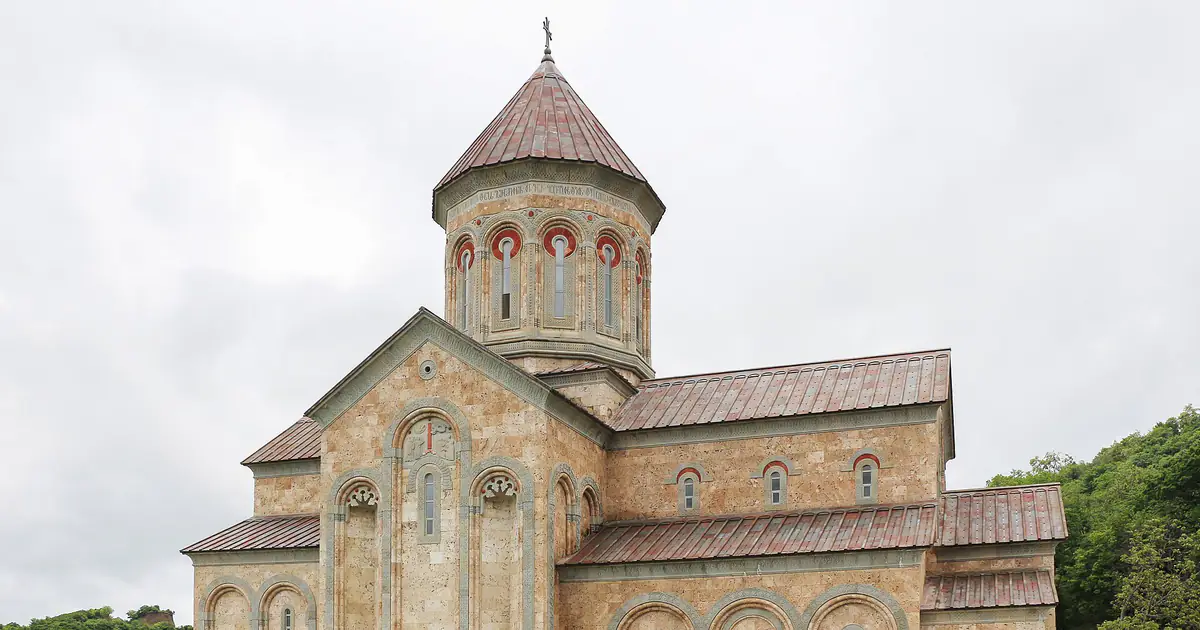
Shio-Mgvime sits in a limestone canyon 10 km from Mtskheta. It was founded in the 6th century by Saint Shio, one of the Thirteen Assyrian Fathers, and his cave cell survives. It sees a fraction of Jvari's crowds. Betania is a small 12th-century monastery in the forest south-west of Tbilisi, known for its fresco of Queen Tamar. The road is narrow and rough — a car with good clearance helps.
East: Kakheti and the desert
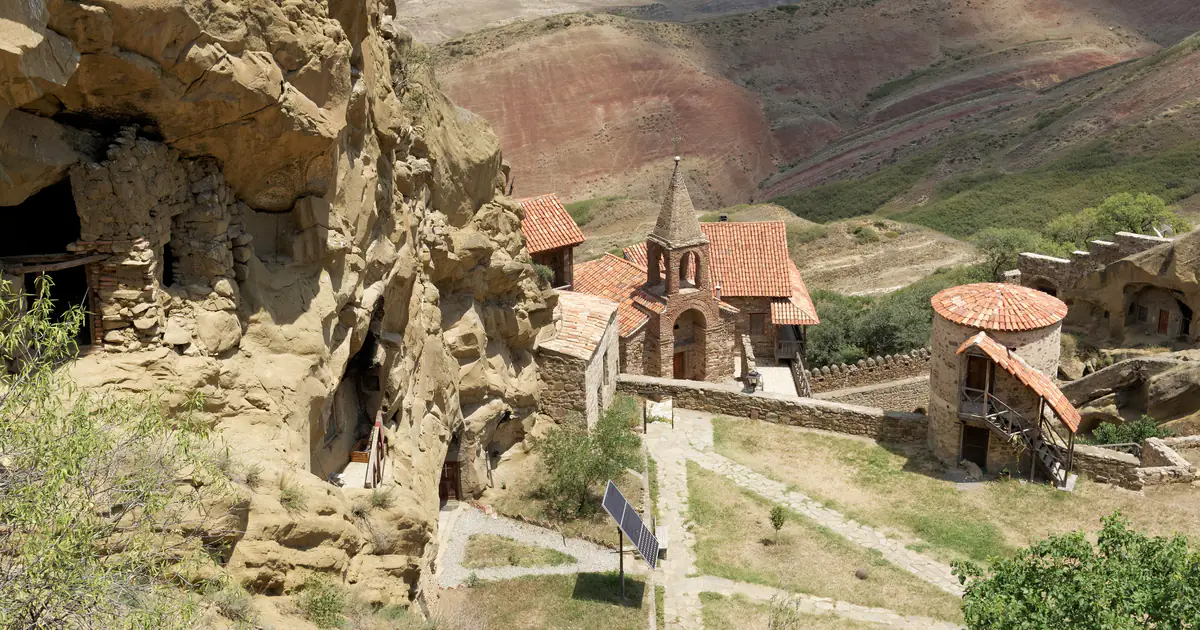
David Gareja is a complex of 6th-century cave monasteries in semi-desert on the Azerbaijani border. The working Lavra below and the trail to the frescoed rock cells of Udabno make one of the most unusual trips in Georgia. Details on the trail, heat and border are in my David Gareja guide, and you can go on the David Gareja tour from ₾225.
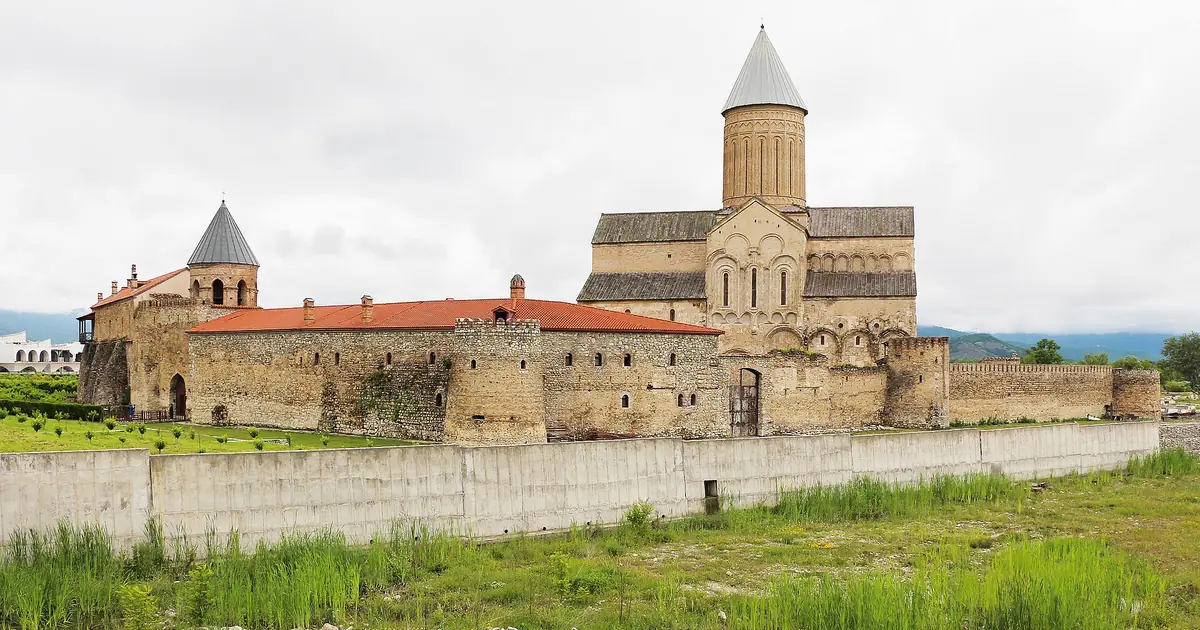
Bodbe is a convent 2 km from Sighnaghi where Saint Nino, who brought Christianity to Georgia, is buried; a steep staircase leads down to a spring. Alaverdi is an 11th-century cathedral, one of the tallest in Georgia, set against the Caucasus, with an old wine cellar in the grounds. Nekresi is a 6th-century monastery on a mountainside above the Alazani valley, reached by a winding road. Bodbe is part of the Kakheti tour from ₾170; to combine the others with wineries see my Kakheti guide.
Mountains and the south
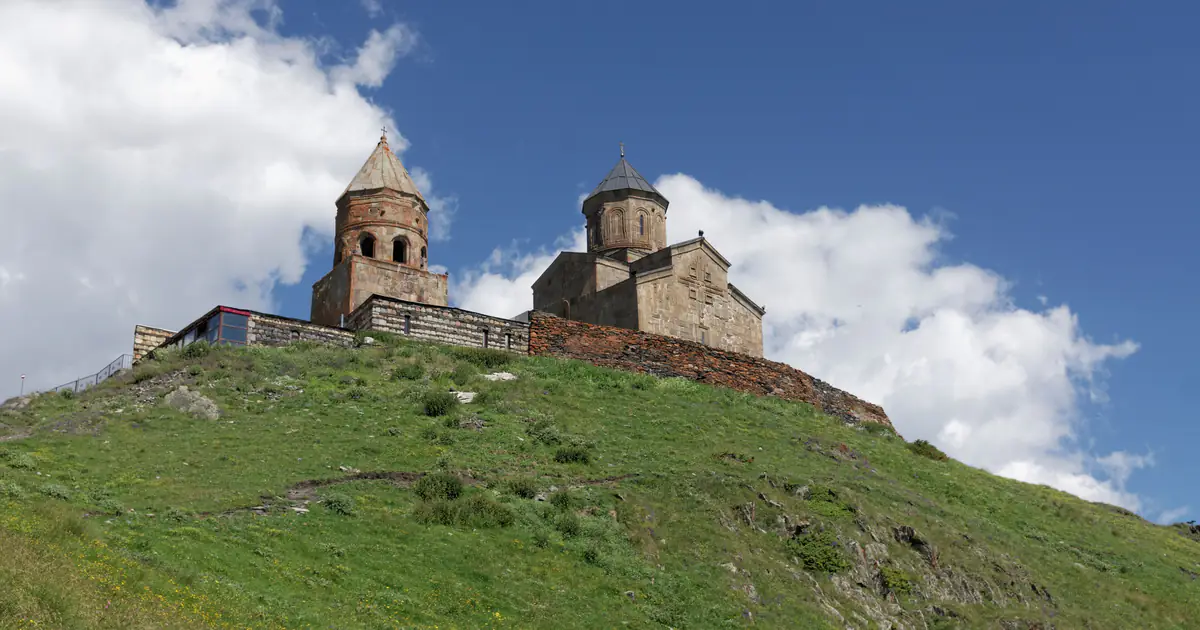
Gergeti, or Tsminda Sameba, is a 14th-century church at 2,170 m above Stepantsminda with Mount Kazbek behind it — Georgia's best-known postcard. It is part of the Kazbegi tour from ₾175; for other stops see things to see in Kazbegi.
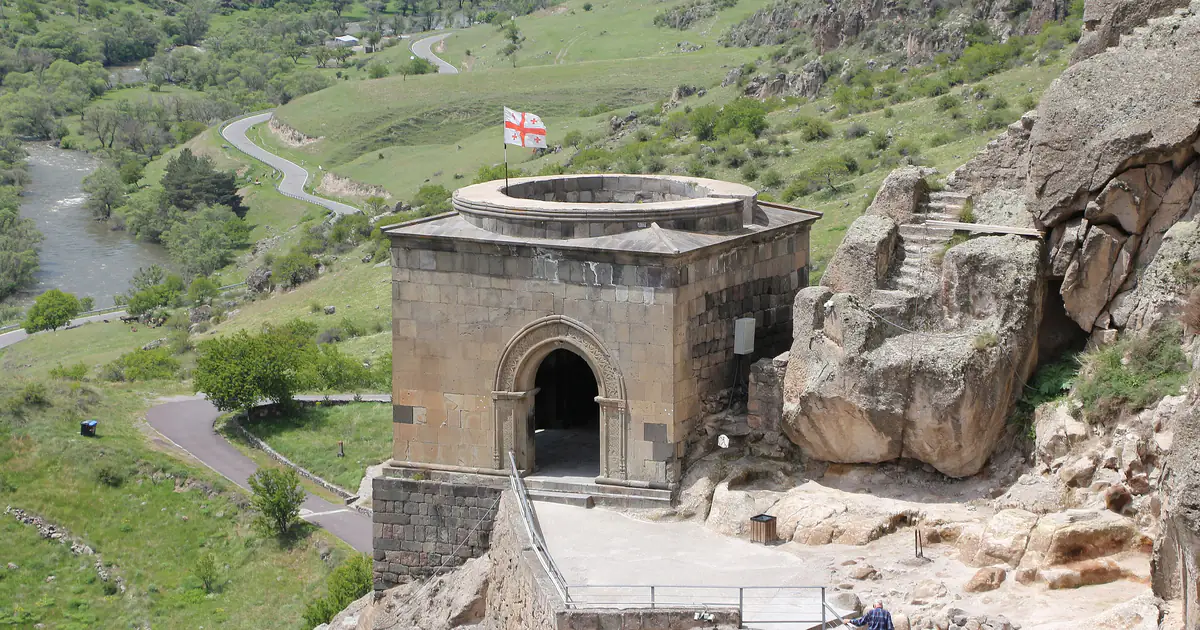
Vardzia is a 12th-century cave monastery from Queen Tamar's era, cut into a cliff above the Mtkvari. It is the only site on this list with a ticket — ₾15. How to get there is in my Vardzia guide; on the way are Rabati and Khertvisi from our castles in Georgia guide. Tour: Vardzia tour from ₾295.
Western Georgia
Gelati was founded in 1106 by King David the Builder as a monastery and academy of Georgia's Golden Age. It is UNESCO-listed, with a 12th-century mosaic and painted interiors. Another monastery, Motsameta, stands above a river 6 km from Kutaisi. Both fit into one day with Kutaisi: the route is in my Kutaisi day trip guide, and the tour is the Kutaisi tour from Tbilisi from ₾183.
Gelati up close
Gelati deserves more than a quick stop. King David the Builder founded it in 1106 as a monastery, an academy and a royal burial place, and by tradition he lies under the monastery gate so that everyone who enters steps over his grave. In the main Church of the Virgin, look up at the apse: the 12th-century mosaic of the Virgin and Child is one of the finest in Georgia. The walls are covered with later frescoes, including portraits of Georgian kings. Allow at least an hour.
Churches in Tbilisi itself
You don't need to leave the capital to start. Three churches show the whole span of Georgian Christianity in one walk:
- Anchiskhati — the oldest surviving church in Tbilisi, a basilica built in 522–534 under King Dachi Ujarmeli. It was destroyed and rebuilt several times during the wars of the 15th–17th centuries, but its old stone walls are still there, a few minutes from Freedom Square.
- Sioni Cathedral — in the Old Town; it keeps one of Georgia's holiest relics, the grapevine cross of Saint Nino. Until 2004 it was the main cathedral of the Patriarch.
- Tsminda Sameba (Holy Trinity) — built in 1995–2004 and consecrated on Saint George's Day, 23 November 2004. It is one of the tallest Orthodox cathedrals in the world, visible from almost anywhere in the city.
Seven more monasteries and churches off the main routes
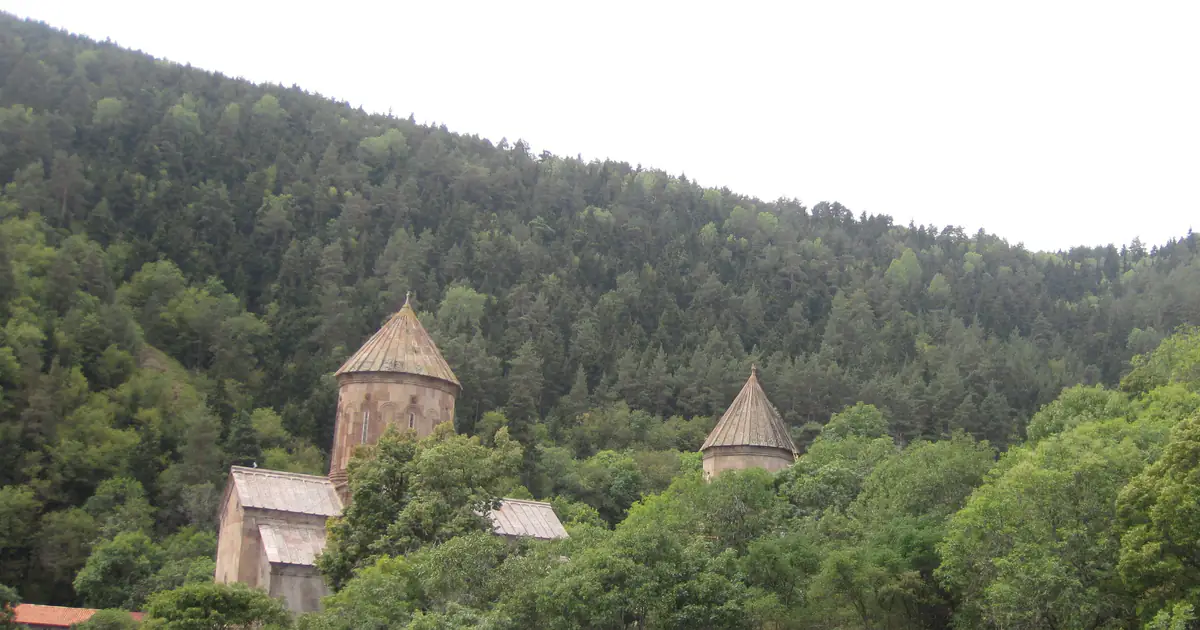
Zedazeni
On a forested ridge above Mtskheta, on the left bank of the Aragvi. In the 540s Saint John of Zedazeni, one of the Thirteen Assyrian Fathers, founded a monastery here on the site of a pagan idol. The main church is an 8th-century basilica of John the Baptist. The view over Mtskheta and the rivers rivals the one from Jvari, with far fewer people.
Ikalto
About 10 km west of Telavi. The monastery was founded by Saint Zenon, another of the Assyrian Fathers, in the late 6th century. In 1106, under David the Builder, Arsen Ikaltoeli opened an academy here — one of the two great schools of medieval Georgia alongside Gelati. Shah Abbas's army burned it in 1616; the ruins of the academy stand next to the church.
Akhali Shuamta
A working 16th-century convent in the forested Gombori hills west of Telavi, founded by Queen Tinatin. Inside are 16th-century frescoes, including portraits of King Levan II, Queen Tinatin and their son Giorgi. The older Dzveli Shuamta stands nearby in the woods.
Sapara
About 12 km south-east of Akhaltsikhe, on a slope above a gorge. The monastery has existed since at least the 9th century and has twelve churches. The largest, St Saba's, was built by Beka Jakeli and has fine 14th-century frescoes. It pairs naturally with Rabati Castle in the same town.
Martvili (Chkondidi)
On a hill in Martvili, Samegrelo. The first church here was built in the late 7th century on the site of a sacred oak — "chkondidi" means "big oak" in Mingrelian. In the 10th century it became a bishop's seat and a centre of learning for western Georgia. It is a short drive from the Martvili Canyon.
Nikortsminda, Racha
A cathedral built in 1010–1014 under King Bagrat III, the first king of a united Georgia, and dedicated to Saint Nicholas. Its facades are covered with some of the richest stone carving in the country; the frescoes inside are from the 17th century. Racha is a long drive, so combine it with a night in the region.
Ubisa, Imereti
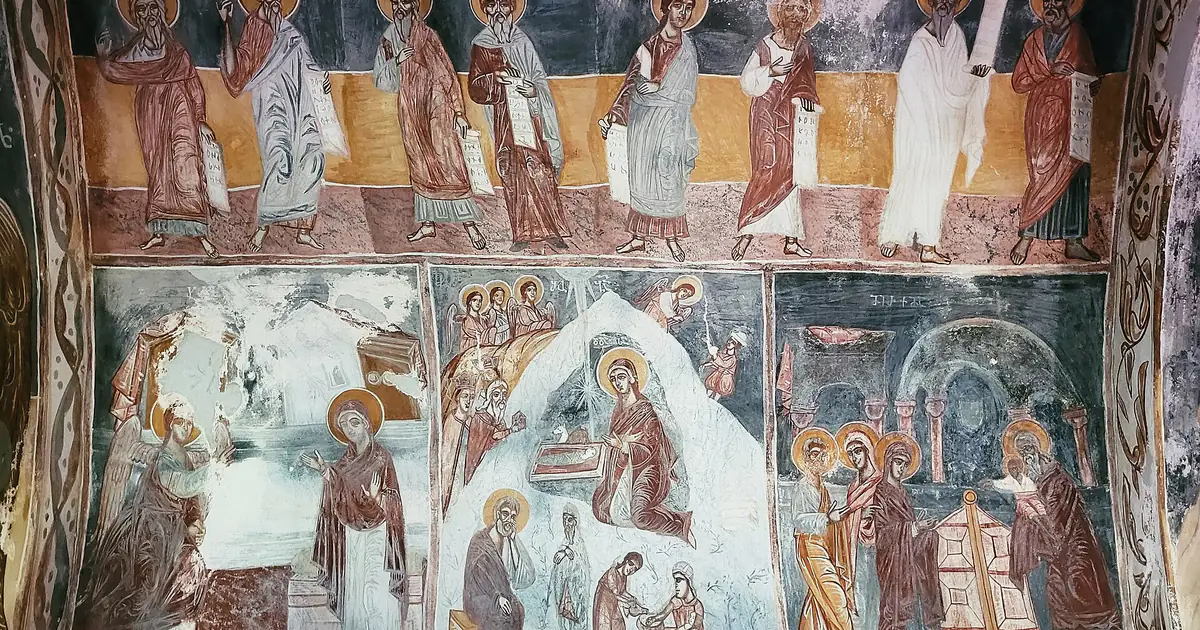
A small monastery on the way between Tbilisi and Kutaisi. The Church of Saint George holds a late-14th-century cycle of frescoes by the painter Damiane — the Creation of the World, the Annunciation and the Last Supper among them. It is an easy detour if you drive west.
What else to see nearby
| Monasteries | What to add on the same day |
|---|---|
| Jvari, Svetitskhoveli, Samtavro, Zedazeni | Old Mtskheta streets; Ananuri on the way north |
| Bodbe, Alaverdi, Nekresi, Ikalto, Shuamta | Sighnaghi walls, Gremi, Batonis Tsikhe in Telavi, a winery |
| Gergeti | Ananuri and the Gudauri viewpoint on the Georgian Military Highway |
| Vardzia, Sapara | Rabati Castle, Khertvisi, Borjomi park |
| Gelati, Motsameta, Martvili | Prometheus Cave, Martvili Canyon, Kutaisi |
When to go: seasons and feast days
Spring and autumn are the most comfortable: David Gareja is scorching in summer, and Gergeti can be cut off when snow closes the Jvari Pass in winter. Monasteries in Mtskheta, Kakheti and Kutaisi are open all year. On feast days the atmosphere is special but the crowds are large: 14 October is Svetitskhovloba in Mtskheta, and 23 November is Giorgoba, Saint George's Day, celebrated in churches across the country. Easter services run through the night. For autumn routes see Georgia in October.
Georgian Christianity in brief
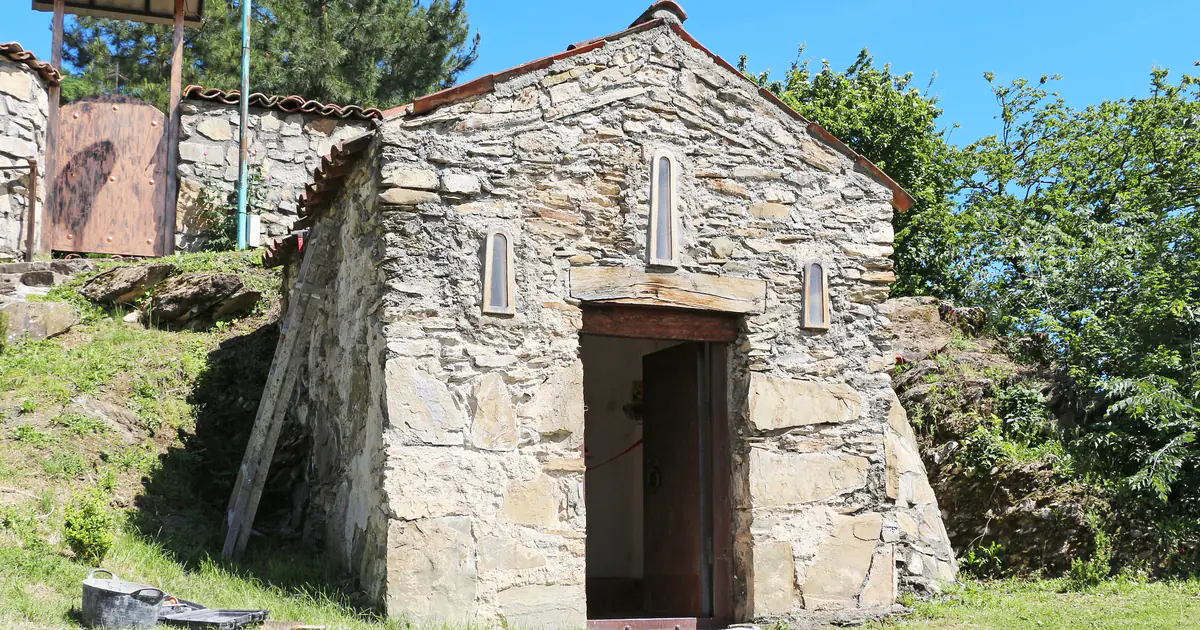
Georgia became one of the first Christian states in the 4th century, when Saint Nino, a woman from Cappadocia, converted King Mirian III and Queen Nana. Their graves are at Samtavro, and Nino herself rests at Bodbe. In the 6th century the Thirteen Assyrian Fathers arrived and founded the monastic tradition: Shio-Mgvime, Zedazeni, Ikalto and David Gareja all trace back to them. The Golden Age came in the 11th–13th centuries under David the Builder and Queen Tamar, the era of Gelati, Vardzia and Svetitskhoveli in its present form.
Today the Georgian Orthodox Church is one of the most trusted institutions in the country, and churches are full on Sundays and feast days. That is why monasteries feel alive: you will see families lighting candles, students, and monks working in the gardens.
How to read a Georgian church
- Basilica — a long hall with a pitched roof, the oldest type. Example: Anchiskhati in Tbilisi.
- Tetraconch "Jvari type" — four apses around a central dome. Jvari was copied across the country, and Kvetera in Kakheti follows the same plan.
- Cross-dome cathedral — a cross-shaped plan with a tall drum and cone, the classic Georgian silhouette: Svetitskhoveli, Alaverdi, Gelati.
- Cave monastery — cells, chapels and refectories cut into rock: Vardzia and David Gareja.
Look outside too: carved stone crosses, vines and animals around windows are typical, and inside, frescoes often show the kings who paid for the church.
Getting there without a car
- Mtskheta — a marshrutka from Tbilisi costs ₾3 and takes about 30 minutes; Bolt is ₾20–30. Jvari is on a hill outside town, so take a taxi up.
- Bodbe — reach Sighnaghi by marshrutka (₾8–10), then walk or take a short taxi ride.
- Gergeti — marshrutka to Stepantsminda (₾15), then about 1.5 hours on foot or a 4×4 up to the church.
- Gelati and Motsameta — from Kutaisi by taxi; both are about a quarter of an hour away.
- David Gareja, Vardzia, Nekresi, Sapara — realistic only by car or on a tour.
One-day routes
- Half a day: Jvari, Svetitskhoveli and Samtavro.
- A day around Mtskheta: Mtskheta and Shio-Mgvime.
- Kakheti: Bodbe and Sighnaghi, or Alaverdi and Nekresi with a winery.
- Desert: David Gareja — best in spring or autumn, summer is very hot.
- Mountains: Ananuri and Gergeti on the way to Kazbegi.
For more ideas, see what to see in Georgia.
★★★★★
«Excellent guide. Showed and told us everything about sunny Georgia. Speaks excellent Russian.»
Monasteries in Georgia FAQ
What are the most famous monasteries in Georgia?
Jvari, Svetitskhoveli and Samtavro in Mtskheta, Gergeti below Kazbek, David Gareja, Bodbe with Saint Nino's grave, Alaverdi, Gelati near Kutaisi and the cave monastery of Vardzia.
Do you pay to enter monasteries in Georgia?
Almost all are free, with optional donations. On this list only Vardzia charges — ₾15.
What should I wear to a monastery in Georgia?
Women: a skirt below the knee, covered shoulders and a headscarf. Men: long trousers and no hat inside. Big monasteries keep scarves and wrap skirts at the entrance.
Which monasteries can I see from Tbilisi in half a day?
Jvari, Svetitskhoveli and Samtavro in Mtskheta, 25 km from Tbilisi. Tours from ₾98.
Where are the convents in Georgia?
The best known are Bodbe near Sighnaghi and Samtavro in Mtskheta.
What is the oldest church in Tbilisi?
Anchiskhati Basilica, built in 522–534 under King Dachi Ujarmeli. It stands a few minutes from Freedom Square.
Where is the cross of Saint Nino kept?
In Sioni Cathedral in Tbilisi's Old Town. The grapevine cross is one of the holiest relics of the Georgian Church.
When did Georgia become Christian?
In the 4th century, when Saint Nino converted King Mirian III and Queen Nana. Georgia is one of the oldest Christian countries in the world.
Can I visit Georgian monasteries without a car?
Yes for Mtskheta, Bodbe, Gergeti and Gelati — by marshrutka and a short taxi. David Gareja, Vardzia, Nekresi and Sapara are realistic only by car or on a tour.
Can I take photos inside Georgian churches?
Often yes, without flash, but many churches forbid it. Follow the signs and any request from a monk or nun; photos outside are almost always fine.
Can I visit Gergeti in winter?
Yes, but the road to Stepantsminda closes for a day or two during heavy snowfall, and the path up to the church gets icy. Check the road on the morning of your trip.
Read also:
Want to visit Georgia's monasteries with a guide?
Timur will tell the story of each site and plan a route for your day: Mtskheta, Kakheti, Kazbegi or Kutaisi. Tours from ₾98 per person. Message on WhatsApp
Private guide in Tbilisi since 2023. Over 500 tours. Rated 4.9/5 on Google. I live in Georgia and know the country from the inside.
Book a tour