History of the monastery
Founded in the sixth century by one of the 13 Syrian Fathers — monks who came to Georgia to spread Christianity. David Garejeli chose this remote spot deliberately: the harsh semi-desert encouraged asceticism.
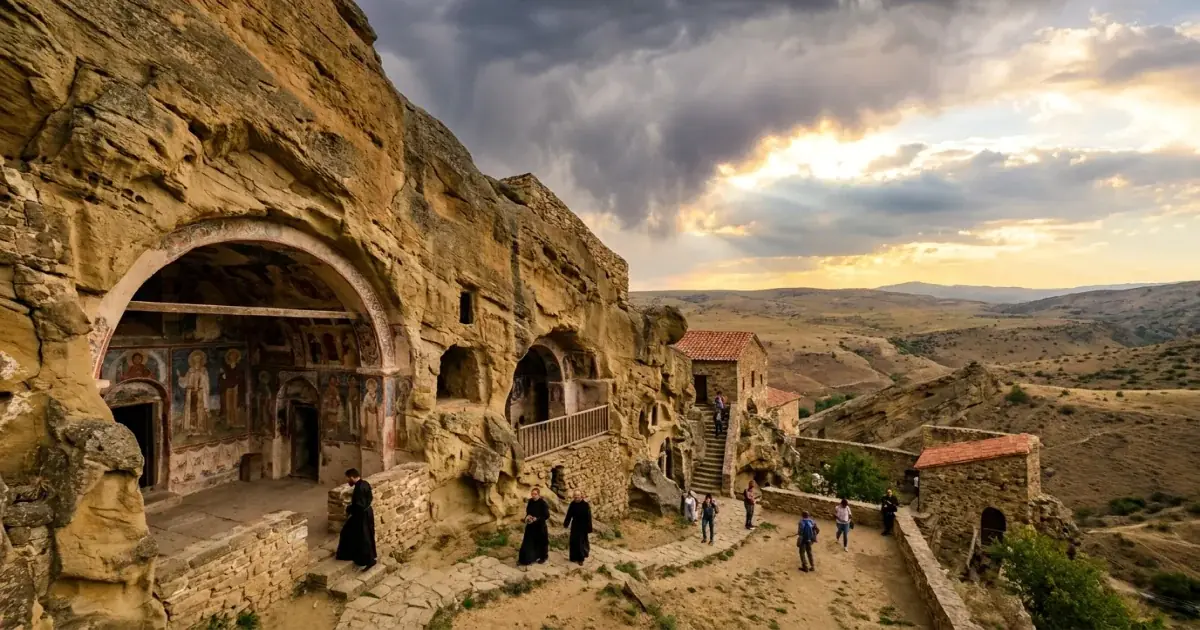
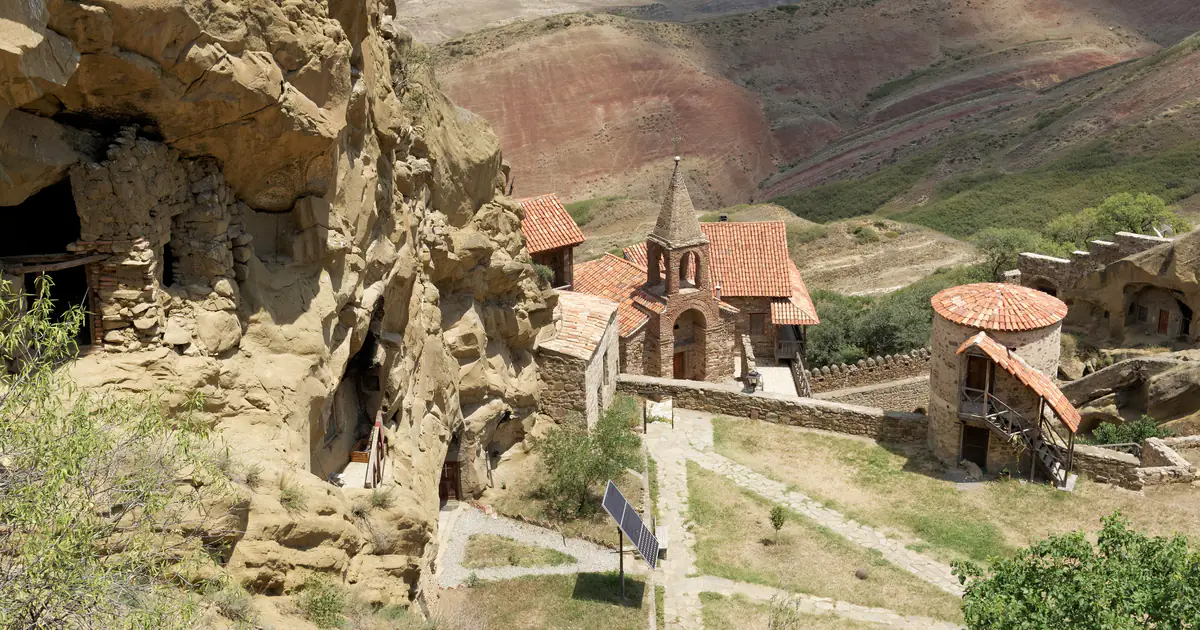
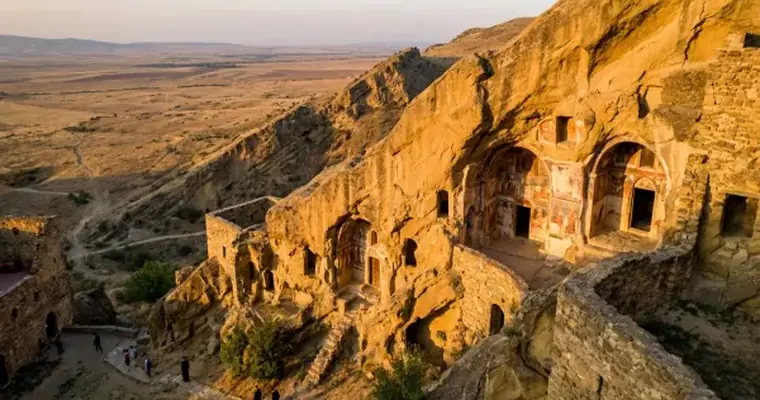
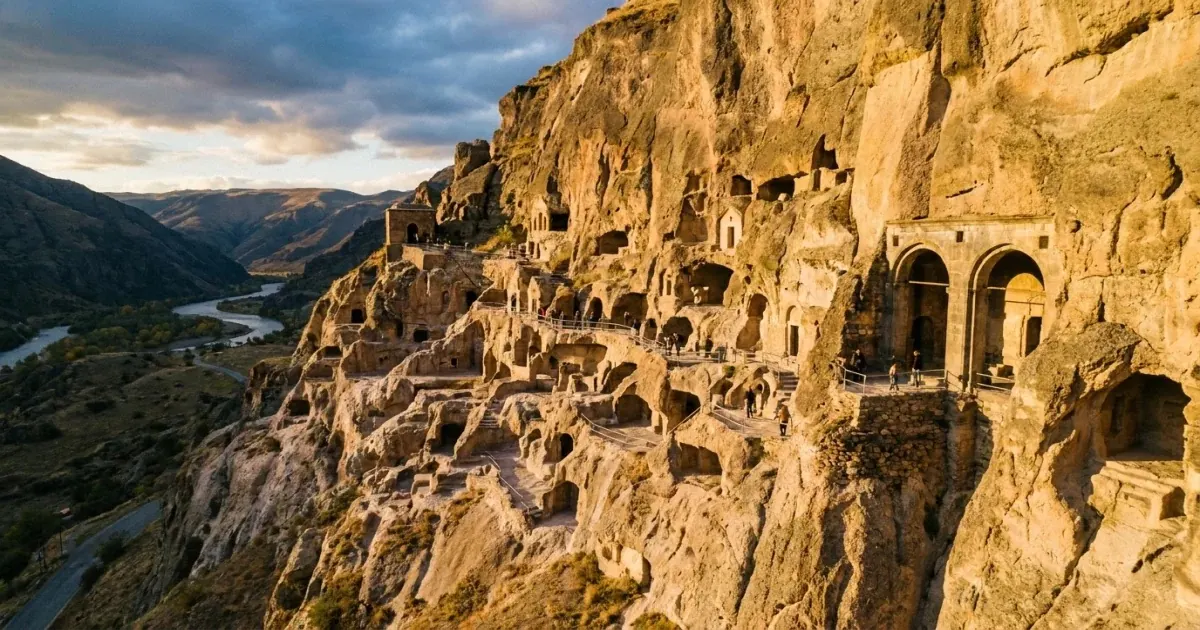
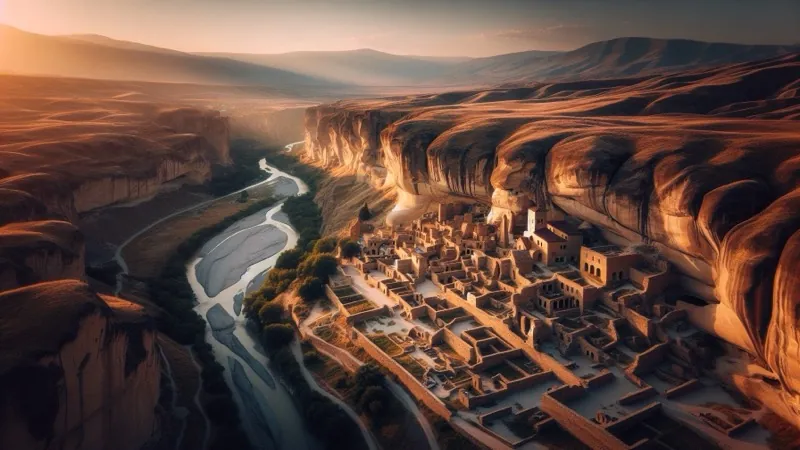
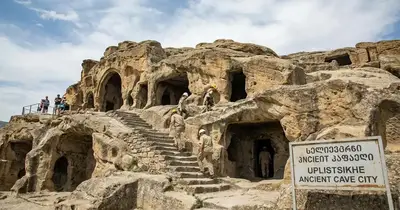
The complex consists of several monasteries carved into the rocks. The Lavra, the central one, is still active. Frescoes from the eleventh to fourteenth centuries have survived in some of the cave churches despite Mongol and Persian raids.
Climb to the ridge
The main visual moment is the climb to the crest of the ridge. From here you see the Georgian side (monasteries in the valleys) and the Azerbaijani side (the scorched Shirvan steppe). The contrast is striking.
The climb takes 30–40 minutes at a moderate pace. Comfortable shoes and a hat are recommended: the sun is fierce here even in April. The best time is early spring or autumn, when the steppe turns green after the rains.
Detailed itinerary and what to see
The tour to David Gareja Monastery starts with a departure from Tbilisi, where an experienced guide will meet you. On the way you can enjoy picturesque Georgian landscapes and learn about the culture and history of the region. The first stop is the village of David Gareja, where your journey to the monastery begins. Here you can see traditional Georgian houses and observe local life.
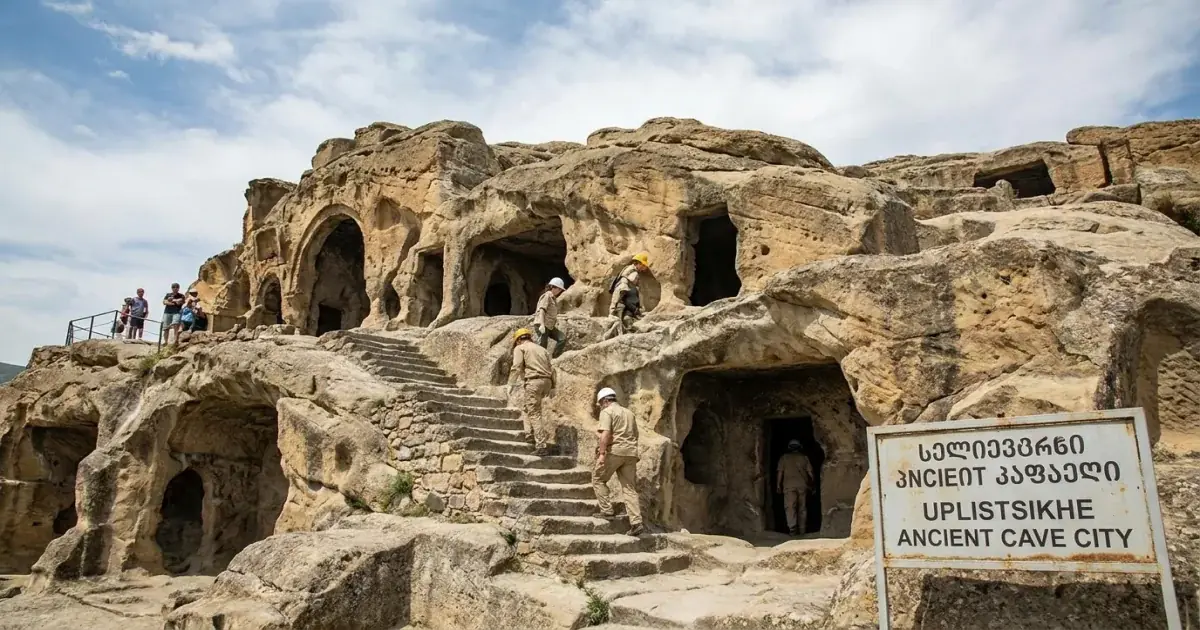
The monastery complex consists of caves and churches carved right into the rock. The main sight is the Church of St. David, where you can see old frescoes and architectural details preserved since the sixth century. Be sure to climb to the viewpoint, which offers a stunning view of the surroundings and the border with Azerbaijan, giving the place a special atmosphere.
During the tour you can also walk the trails surrounded by unique flora and fauna and enjoy the silence and calm of the semi-desert plateau. Your guide will tell you about the monks who once lived here and the monastery’s significance in Georgia’s Christian tradition. This will help you better understand the spiritual value of the place and its role in the country’s history.
Practical tips
Before setting off for David Gareja Monastery, make sure you are well prepared for the trip. Comfortable shoes are recommended, as you will walk a lot on uneven trails and rocks. Also remember to bring water and a light snack to keep your energy up during the tour, as it will be a full day.
- Dress in layers. Depending on the season, temperatures can vary, so it is best to dress in layers so you neither overheat nor get cold.
- Bring sunscreen. In the open spaces of the semi-desert the sun can be very strong, so protect your skin from sunburn.
- Do not forget your camera. The monastery and the surrounding landscapes are very photogenic, so a camera or smartphone will definitely come in handy.
- Plan your trip for spring or autumn. This is the best time to visit, as the weather in these seasons is especially pleasant for walking: not too hot and not too cold.
Frequently asked questions
How do I get to David Gareja monastery?
To reach the monastery you’ll need to drive or join an organised excursion from Tbilisi. The drive takes about 2–3 hours depending on traffic and weather.
How long does the excursion take?
The excursion to the monastery takes a full day, usually about 8–10 hours, including the drive, walking around the monastery and lunch.
Can I bring children?
Yes, the excursion is suitable for families with children. However, keep an eye on children while walking on rocks and uneven paths to avoid injuries.
How much is the David Gareja excursion and what is included?
The price is from ₾225 per person. It includes transfer from Tbilisi and back, a local guide, a visit to the Lavra cave monastery and the climb to Udabno. Meals are not included — bring lunch with you or we stop at a café in Sagarejo on the way. 10% prepayment when booking, the balance in cash (lari) on the day of the tour.
Do I need a passport or visa, since the monastery is on the border with Azerbaijan?
No visa or border crossing is needed: the whole route is on Georgian territory, you simply stand by the border marker and look over to the Azerbaijani side. You won’t cross the border, but it’s best to carry your passport — border guards sometimes check it near the upper Udabno monastery. There are no extra fees for this.
When is the best time of year to visit David Gareja?
April and May are ideal: the steppe is green, poppies and tulips are in bloom and the heat is still mild. In autumn (September–October) the landscape is stark and scorched but also beautiful. We don’t recommend July–August: there’s no shade on the plateau, temperatures reach 35–40°, and the climb to the frescoes takes 25–30 minutes in full sun. In winter the dirt road can be washed out — check the forecast when booking.
Tip
David Gareja is the one place in Georgia where we always tell guests: bring more water than you think you need. The plateau is hot even in May, there is no shade, and the climb along the trail to the panorama takes 25–30 minutes. But at the top there is a border marker: Georgia on the left, Azerbaijan on the right, and below, twelfth-century frescoes in the caves of Udabno Monastery. It is the only place where you can literally stand on the border of two countries and look at medieval paintings at the same time. Leave Tbilisi no later than 9:00 — the drive is about 70 km on the highway plus another 20 km on a dirt road. A regular car can make it, but slowly.
In spring (April–May) the Gareji steppe is covered with wild poppies and tulips — the landscape looks more like Kazakhstan than Georgia. This is the best time here: green grass, a softer desert landscape, and birds. In autumn the steppe is scorched and yellow — a different, harsher character. Both are worth seeing at least once.
David Gareja is a sixth-century cave monastery on the border with Azerbaijan. There are no tourist crowds here, just the steppe and silence. The climb to the upper Udabno Monastery takes 20 minutes, but the views span 360° of desert. Inside, frescoes from the X-XIII centuries have survived.
Practical information
The tour starts from your hotel in Tbilisi. We pick you up in a comfortable air-conditioned car. A maximum of 7 people per group — an individual approach to everyone. The route is flexible: we can add or drop stops as you wish. Languages: Russian, English, Georgian.
Booking and payment
Message us on WhatsApp (+995 511 27 26 23) — we reply within 10-15 minutes, even at night. 10% prepayment when booking, the balance on the day of the tour. We accept cash in lari (₾), bank transfer and cryptocurrency. Free cancellation up to 48 hours in advance. In high season (May-October), book 3-5 days ahead.
What to bring
Comfortable shoes (even on car tours there will be 30-60-minute walks), a bottle of water (we provide extra), cash in lari for lunch and souvenirs. In winter — a warm jacket and gloves. In summer — sunscreen and a hat.