
Prepared by Sakhva Travel Georgia Guide, a tours and travel platform for Georgia. Sakhva Travel office: 14 Merab Kostava St, Tbilisi.
Tour on this topic: Batumi Day Tour from Tbilisi — from ₾250
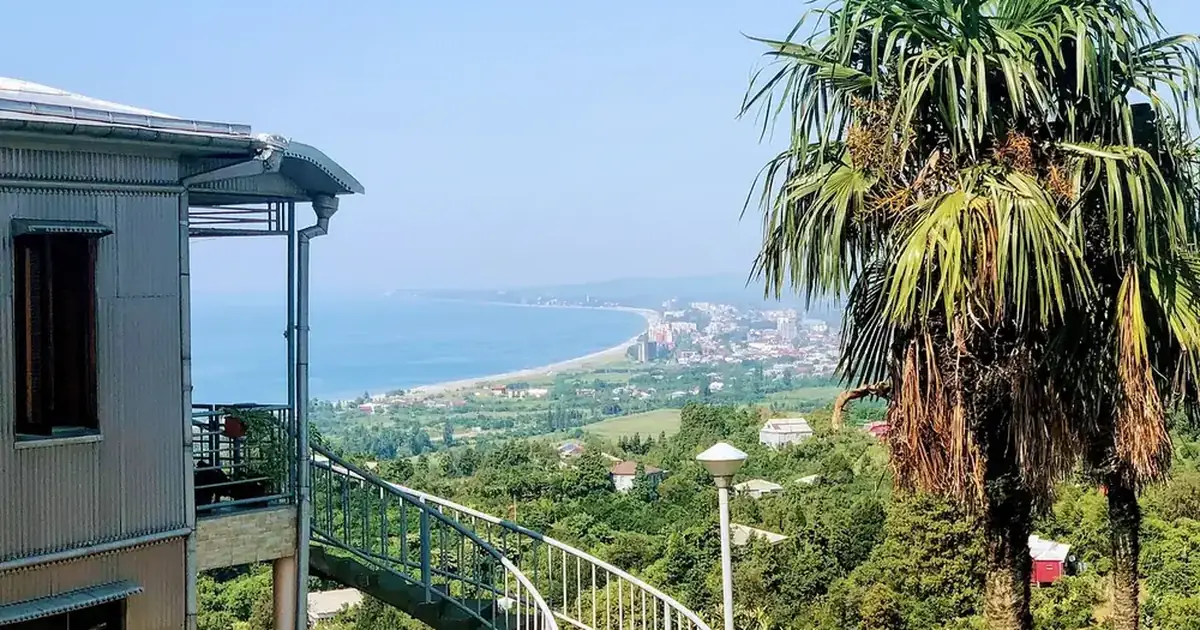
Ask a foreigner about the Georgian seaside and they will say Batumi. Ask a Georgian family where they spend August, and many will name Kobuleti, half an hour up the coast. There are no skyscrapers or casinos here. What you get is a long beach where you never fight for space, pine trees almost at the waterline and the slow rhythm of a resort town that comes out to the promenade every evening. Here is how Kobuleti differs from its neighbours and how to plan a stay.
Who Kobuleti suits
Kobuleti works best if the sea itself is the point of your trip. It is a good fit for:
- families with children: a wide beach, an amusement park and playgrounds along the promenade;
- travellers on a budget: rooms and food usually cost noticeably less than in central Batumi;
- anyone tired of crowds: even in August you can find a quiet stretch of shore;
- people who want sea and mountains: mountainous Adjara and Mtirala National Park are under an hour away.
If you want clubs, rooftop bars and nightlife, base yourself in Batumi and come to Kobuleti for a beach day instead.
What the beach is like
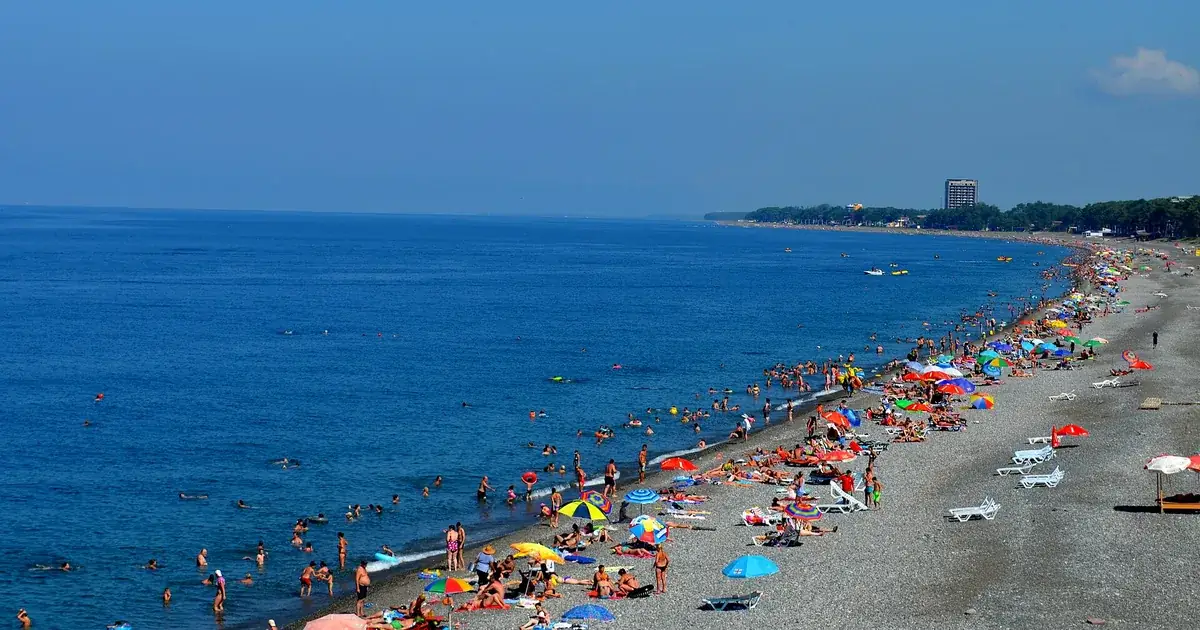
The shoreline stretches for roughly 10 km, one of the longest beaches on the Georgian coast. It is fine to medium pebbles, in places mixed with dark sand. The stones are smaller and kinder to your feet than in central Batumi, but water shoes are still a good idea, especially for kids.
The seabed drops faster than in Ureki, so there is less shallow paddling water. On the other hand, the sea is usually clearer. The central part has sunbeds, cafés and rentals. Towards the edges of town the beach is free and people simply bring a towel.
The beach by neighbourhood
The centre is the liveliest part: the station, market, cafés, sunbed and water-sports rentals. It suits you if you have no car and want everything close. The north is quieter and greener, with fewer cafés, more pines and an emptier beach even in August. The southern edge is closer to Tsikhisdziri and Batumi, handy for day trips but further from the town's facilities.
Kobuleti vs Batumi vs Ureki
| Kobuleti | Batumi | Ureki | |
|---|---|---|---|
| Beach | Fine pebbles and sand | Large pebbles | Black magnetic sand |
| Entry into the sea | Moderate | Steep | Very gradual |
| Atmosphere | Quiet family resort | City and nightlife | Village, toddler-friendly |
| Prices | Mid-range | Higher | Mid-range |
| Facilities | Promenade, cafés, rides | Everything | Basic |
With very small children, Ureki and its shallow sandy water is easier. If you want a city, pick Batumi. Kobuleti sits in between: it still feels like a resort rather than a city, yet cafés, pharmacies and shops are all within walking distance. All the coastal resorts are compared in our Black Sea Georgia guide.
How to get to Kobuleti
| From | How | Travel time |
|---|---|---|
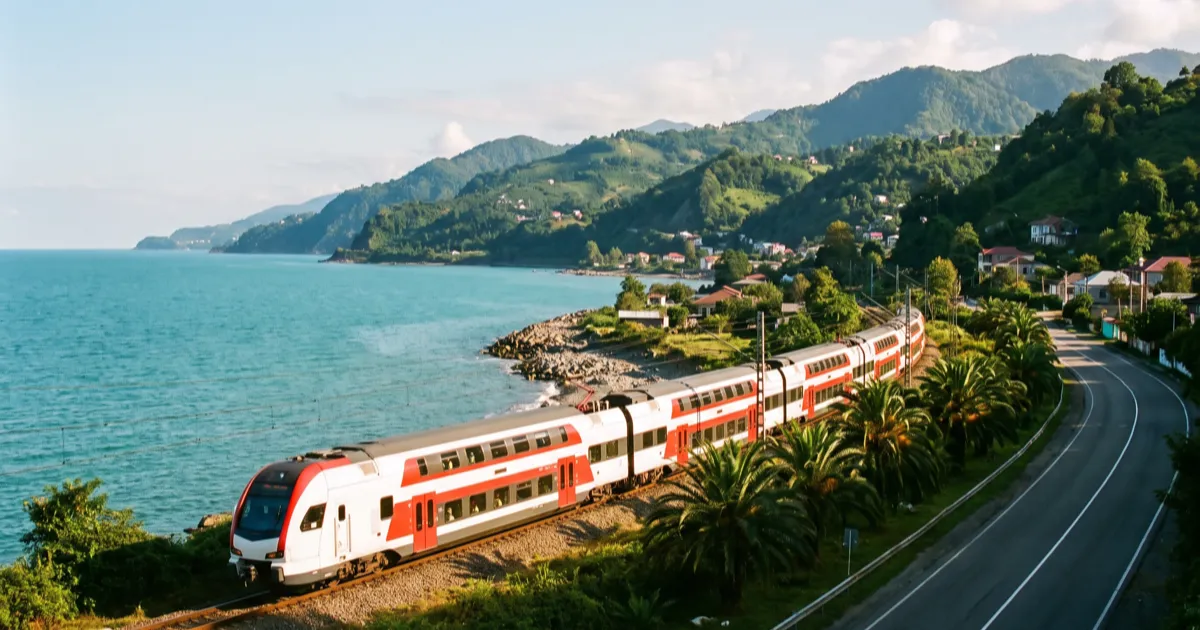
| Tbilisi | Tbilisi–Batumi train, Kobuleti station | about 5 h |
| Tbilisi | Car via Kutaisi | 4.5–5.5 h |
| Batumi | Marshrutka or taxi | 30–40 min |
| Batumi airport | Taxi | about 40 min |
| Kutaisi airport | Taxi or transfer | 1.5–2 h |
From the capital the train is the easiest option. It stops in Kobuleti, and most hotels are a short taxi ride from the station. Summer tickets sell out early, see our Tbilisi–Batumi train guide. Driving? Break the journey in Kutaisi, and check our tips on renting a car in Georgia.
Where to stay and what it costs
The town stretches along the sea, so almost everything is 5–15 minutes on foot from the beach. The centre is the most convenient: the station, market and cafés are close by. The northern end is quieter and greener. Approximate high-season prices for 2026:
| Type | Per night | Best for |
|---|---|---|
| Guesthouse | 60–100 ₾ | Families on a budget |
| Apartment | 80–150 ₾ | Couples and families staying a week or more |
| Beachfront hotel | 120–250 ₾ | Breakfast and full service |
For July and August, book seafront rooms 3–4 weeks ahead. In June and September prices drop and choice grows. Food is mostly simple family cafés. Try Adjarian khachapuri while you are here: this is the region it comes from.
Kobuleti with kids: what to know
Families love Kobuleti, but a pebble beach has its quirks. A few tips from experience:
- Water shoes are a must. The pebbles are small, yet children find them uncomfortable, and stones get bigger right at the waterline.
- Pick a stretch with a gentle slope. The seabed changes along the shore. Walk a little and find a spot that stays shallow for the first few metres.
- Beach time before 11:00 and after 16:00. There is little shade on the beach itself, and the pines grow behind the promenade.
- Evenings are sorted. Playgrounds, bikes and the rides at Tsitsinatela make the evening as much fun as the beach.
- Pharmacies and supermarkets are in every part of town, with baby food and nappies in the chain stores.
If your child is under three and spends hours at the water's edge, consider sandy Ureki, about 20 minutes away by taxi. More ideas in Georgia with kids.
Soviet heritage: sanatoriums and mosaics
In Soviet times Kobuleti was an all-Union resort with dozens of sanatoriums and holiday homes along the sea. Some have been renovated into hotels. Others stand abandoned but keep their facades and mosaic panels. Fans of modernist architecture can walk the promenade and stop at the old buildings. Going inside abandoned buildings is unsafe, so admire them from outside. For the same mood on a bigger scale, see the sanatoriums of Tskaltubo.
Things to do in and around Kobuleti
- The promenade. Everyone walks it in the evening. Rent a bike and ride it end to end.
- Tsitsinatela park. An amusement park whose name means "firefly". It opens in the evenings in season and is the kids' favourite.
- Kobuleti Protected Areas. The Ispani peat bogs are a rare wetland protected under the Ramsar Convention, and you can walk them on a wooden boardwalk.
- Petra Fortress in Tsikhisdziri. Ruins of a Byzantine fortress on a hill above the sea, about 10 km south.
- Batumi Botanical Garden. One of the largest in the region, on the way to Batumi. Allow half a day.
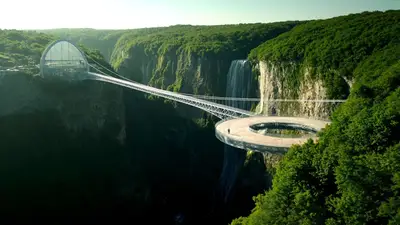
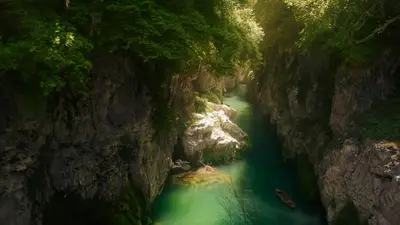
- Mountainous Adjara. Waterfalls, arched stone bridges and gorge villages, easiest with a guide from Batumi.
Day trips from Kobuleti
| Where | Travel time | Highlights |
|---|---|---|
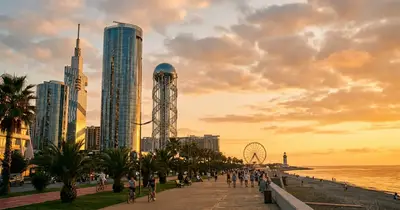
| Batumi | 30–40 min | Old town, boulevard, evening fountains |
| Gonio Fortress | about 1 h | Roman fortress near the Turkish border |
| Mtirala National Park | about 40 min | Rainforest, trails, waterfalls |
| Mountainous Adjara | 1–1.5 h | Makhuntseti, arched bridges, wineries |
| Ureki | about 20 min | Black magnetic sand beach |
The easiest trip is an evening in Batumi: marshrutkas run often and a taxi gets you back. Mountainous Adjara is better with a guide, as the gorge roads are narrow and the best spots are spread across different valleys.
What a week in Kobuleti costs
A rough guide for two people in high season, excluding flights:
| Item | 7 days |
|---|---|
| Accommodation (apartment) | 600–1000 ₾ |
| Food from cafés and the market | 500–800 ₾ |
| Sunbeds and activities | 100–200 ₾ |
| Trips around the region | 150–400 ₾ |
| Total | 1350–2400 ₾ |
In June and September you can stay near the lower end. For prices across the country, see how much a trip to Georgia costs.
What to pack
- Water shoes and a light rain jacket, which you need in Adjara even in summer.
- Mosquito repellent for evenings near the wetlands and pine grove.
- Some cash in lari for the market and marshrutkas, though cafés and shops almost always take cards.
- A local SIM or eSIM: mobile internet works well along the coast, see our SIM card guide.
What to eat in Kobuleti: Adjarian food
Adjarian cooking is noticeably different from Tbilisi's: more butter, cheese and corn, and fish straight from the morning catch. Worth trying:
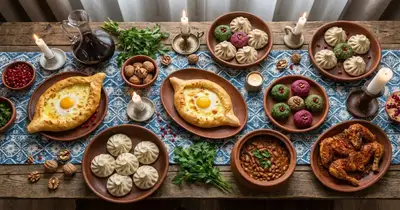
- Adjarian khachapuri, the boat-shaped bread with cheese, egg and a knob of butter. This is its home ground; see our Adjarian khachapuri guide.
- Achma, a layered pie of boiled dough sheets and cheese, Adjara's answer to lasagne.
- Borano, cheese melted in butter, eaten with cornbread.
- Sinori, thin dough rolls with curd cheese baked in butter.
- Black Sea fish: red mullet, horse mackerel and flounder grilled at seafront cafés. Ask what was caught today.
- Fruit: peaches and figs in summer; persimmons, feijoa and tangerines in autumn, grown in gardens all around town.
Seafront cafés charge 10–20% more than places two streets back. In the evening, the best options are small family restaurants where the owners cook.
Kobuleti in autumn and winter
From mid-October Kobuleti empties: most beach cafés and some hotels close, and many guesthouses open only on request. In early October the sea is still about 20–22 °C and swimming is pleasant on sunny days, but autumn is Adjara's wettest season, with downpours that can last several days. Winter is quiet, mild by Georgian standards (around +10 °C by day) and very cheap. The off-season suits seaside walks, trips to Batumi and tangerine picking, not beach holidays. Check the Adjara weather forecast before you go.
When to go to Kobuleti
Swimming season runs from mid-June to the end of September. July and August bring the warmest water and the biggest crowds. Late June and September give the best balance of weather and price. Off-season Kobuleti goes to sleep: many cafés close, but the empty beach is lovely for walks. Monthly weather is on our Adjara weather page.
Four to seven days is enough for most people. Kobuleti combines easily with Batumi and western Georgia in one trip, see the 7-day Georgia itinerary.
«Excellent guide. Showed and told us everything about sunny Georgia. Speaks excellent Russian.»