
Tbilisoba is Tbilisi City Day, when the Georgian capital turns into one big celebration of wine, music and hospitality. If you want to see Georgia at its liveliest in a single visit, come for the first weekend of October. This guide covers when Tbilisoba 2026 happens, the festival's history, the program, the rtveli grape harvest with young-wine tasting, and how to make the most of it. To go deeper into the feasting culture, see our guide to Georgian toasts.
What Tbilisoba is — Tbilisi City Day
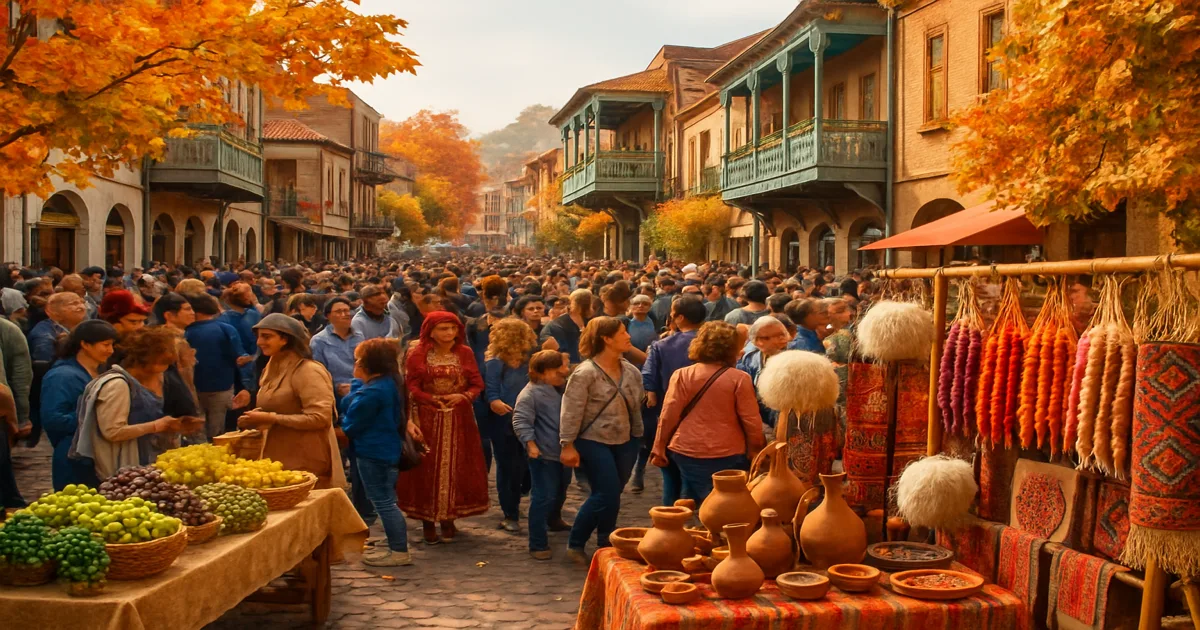
Tbilisoba (თბილისობა) is the main civic festival of the Georgian capital — its birthday. The name translates literally as "the Tbilisi thing," formed the same way as "Kakhetoba," "Batumoba" and other Georgian city and regional festivals. On this day the whole Old Town spills into the streets: concerts, folk dancing, crafts, street food and, of course, wine.
For a visitor, Tbilisoba is a rare chance to see all of Georgian culture compressed into two days: polyphonic singing, dancers in felt cloaks, potters and blacksmiths at work, smoking grills and rivers of young wine. The atmosphere is not a tourist show but a genuine popular festival that the whole city pours out for.
When Tbilisoba happens in 2026
Tbilisoba 2026 takes place on 3 and 4 October (Saturday and Sunday) — Tbilisi City Hall officially announced the dates on 22 September. As every year since 2018, the festival falls on the first weekend of October; this year's budget is 3.1 million GEL.
- Daytime — children's concerts at every venue, sports and entertainment events
- Evenings — theatre performances and music nights
- Open-air cinema, photo zones and chill-out areas
- Food zones: Georgian and international cuisine, cooking master classes
- Fair of traditional sweets, honey and wine
- 4 October, 20:00 — Honorary Citizens of Tbilisi award ceremony (broadcast live)
The hour-by-hour program is published on the Tbilisi City Hall website.
In Tbilisi on 3–4 October? A local guide will take you through the festival venues and the Old Town courtyards where grapes are pressed. Old Tbilisi with a guide — from ₾135 · Message on WhatsApp
The festival lasts two days. The daytime program is fairs, crafts and family activities; in the evening there are big concerts on the main stages and often fireworks over the Kura. The weather in early October in Tbilisi is mild: warm days of 20–24 °C and cool evenings — perfect for wandering the city.
The festival's history since 1979
The first Tbilisoba was held in October 1979 at the initiative of Georgia's leadership at the time. The idea was to revive and showcase the traditional urban culture of Tbilisi — its multi-ethnic makeup, crafts, cuisine and winemaking. The festival quickly won over locals and became an annual event.
Tbilisi has always been a crossroads city: Georgians, Armenians, Azerbaijanis, Jews and Persians lived side by side here for centuries. Tbilisoba celebrates exactly this diversity — different languages ring out in the streets, and Georgian, Armenian and Azerbaijani kitchens stand next to one another. That is why City Day here feels especially warm and homely.
I grew up with Tbilisoba — for locals it's like New Year, only in autumn and outdoors. My favorite moment is when, in Abanotubani by the sulfur baths, they press grapes in huge vats and any passer-by can taste the juice straight from the press. Tourists often walk past the main stages and never reach these courtyard spots, the most heartfelt ones. On my tour I take you exactly there — where the festival is real, not for the cameras.
The program and what happens
The Tbilisoba program changes a little each year, but the core repeats:
- Concerts and festivals — from folk ensembles to pop stars on the main stages.
- Craft fairs — potters, jewelers, carpet weavers and metal-chasers selling and demonstrating live.
- Folk dancing — kartuli, khorumi and others in national costume.
- Street food — khinkali, grilled shashlik, khachapuri, churchkhela, fresh tonis puri from the clay oven.
- Rtveli — harvesting and pressing grapes, tasting young wine and chacha.
- Fireworks — usually in the evening over the Kura river to close the day.
Rtveli — the grape harvest and young wine
Rtveli (რთველი) is the Georgian grape-harvest celebration, and it is the soul of Tbilisoba. October in Georgia is harvest time, when families across the country press grapes and lay wine down in qvevri. At Tbilisoba this ritual is brought straight onto the city streets.
You will see wooden vats where grapes are trodden the old way, taste cloudy young maghari wine and fresh grape juice, and of course churchkhela — the "Georgian Snickers" of nuts set in condensed grape juice. Wine flows generously and often for free at Tbilisoba — it is part of the hospitality. To learn the grape varieties, see our Georgian wine guide.
Venues: where to wander
For 2026 City Hall announced five festival venues:
- Rike Park — the main venue on the Kura, with views of Narikala and the Bridge of Peace.
- Orbeliani Square — next to Shardeni Street and the Old Town.
- Gudiashvili Square — a restored quarter of old Tbilisi.
- Leghvtakhevi — the waterfall gorge beside the Abanotubani sulfur baths.
- Europe Square and Metekhi Bridge — the left bank of the Kura by Metekhi Church.
Parts of the center are closed to cars during the festival, so it is easiest to explore on foot. To avoid getting lost in the crowds and missing the best of it, plan a route in advance or take an Old Tbilisi tour — a guide will lead you past the queues to the most atmospheric spots.
Tips for visitors
- Book accommodation early — 1–2 months ahead, prices in the center rise.
- Carry cash lari — at fairs and with street vendors, cards aren't accepted everywhere.
- Comfortable shoes — you'll walk a lot on the Old Town's cobblestones.
- Arrive by midday — crafts and food by day, concerts and fireworks in the evening.
- Learn a couple of words — "gamarjoba" and "madloba" will open hearts; a cheat sheet is in our Georgian alphabet guide.
Experience Tbilisoba with a local guide
Timur will lead you through the best of the festival, explain the traditions and share young wine where they actually press it. Private tour, rated 4.9/5.